Top 10 Luxe Jachten voor Charter in het Caribisch gebied
Alexandra
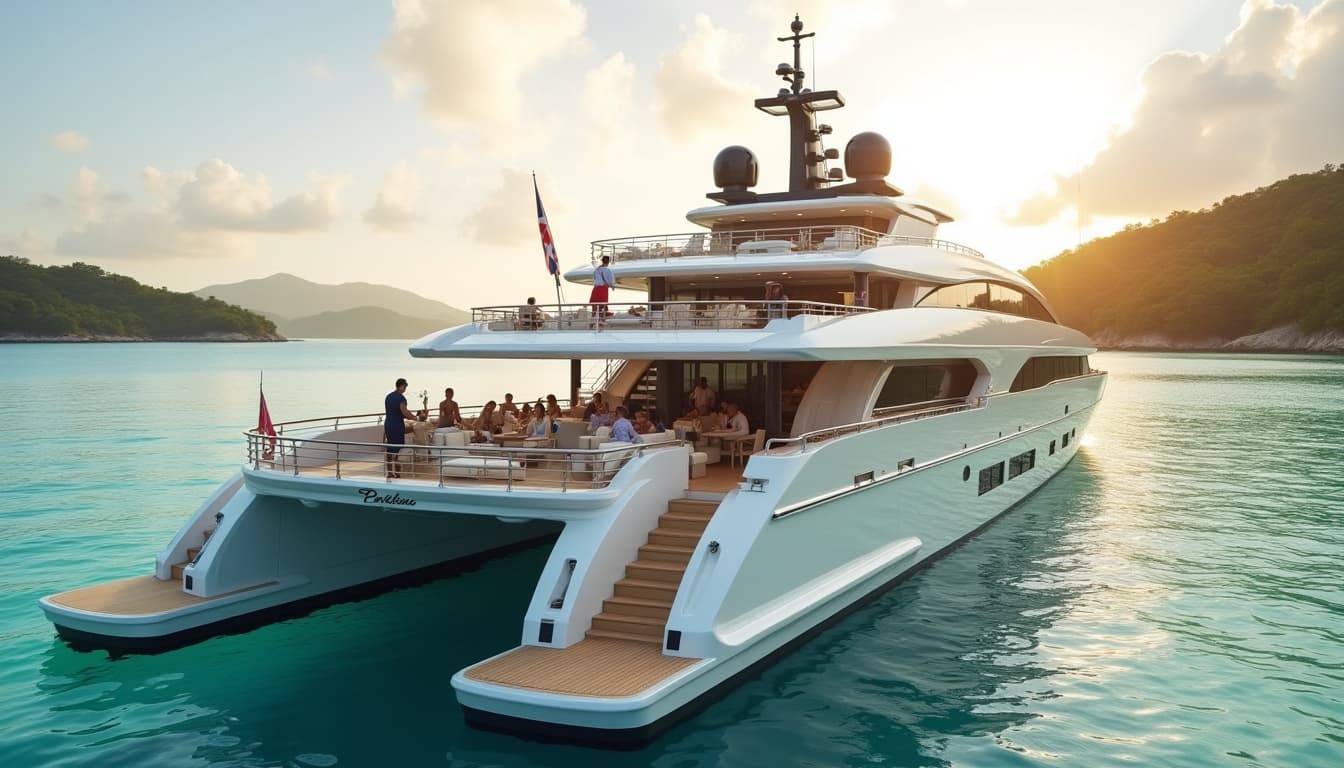
Chartering a luxury yacht is less about picking a single "best" boat and more about matching the right category of yacht to your group, route and budget. This guide breaks the luxury charter market into the three formats that matter — superyachts, catamarans and sailing yachts — explains what each does well, and shows what actually drives the price so you can choose with confidence.
Superyachts: Space, Crew and Statement
Motor superyachts (roughly 30 m / 100 ft and up) are the floating-resort end of the market: multiple decks, a professional crew of 6–20, and amenities that can include a spa, gym, cinema room, jacuzzi and a "garage" of water toys. They suit large groups, multi-generational families and events — weddings, milestone birthdays, corporate retreats — where onboard space and service matter more than sailing for its own sake.
The trade-off is cost: weekly base rates for crewed superyachts typically start in the low six figures and climb steeply with length, age and builder pedigree, before the running expenses (see below).
📚 You may also like
Catamarans: Stability and Value for Groups
Crewed sailing or power catamarans are the value sweet spot for families and groups of up to ~8–12. The twin-hull design gives a stable, level platform — far less roll at anchor than a monohull — plus huge deck and saloon space for the length. Most cruising catamarans carry kayaks, paddleboards and snorkelling gear as standard, which makes them ideal for active, water-focused trips in the Caribbean, Mediterranean or Southeast Asia.
You get much of the social space of a far larger motor yacht at a fraction of the weekly rate, with shallower draft that reaches anchorages bigger boats can't.
Sailing Yachts: For the Sail Itself
Crewed monohull sailing yachts appeal to guests who want the genuine feel of being under sail — heeling into the wind, quiet passages, classic lines — without giving up comfort. Modern luxury sailing yachts pair teak decks and refined interiors with the option to actively sail or simply relax while the crew handles everything. They tend to carry fewer guests than a catamaran of similar length, trading some interior volume for sailing performance and character.
What Actually Drives the Price
- Base charter fee — the weekly rate for the yacht and its crew, set by length, age, builder and how in-demand the boat is.
- APA (Advance Provisioning Allowance) — typically 20–30% of the base fee, paid up front to cover fuel, food, drinks, port and marina fees; unspent funds are returned.
- Crew gratuity — customary 10–20% of the base fee, at the charterer's discretion.
- Season and region — peak weeks (Caribbean in winter, Mediterranean in summer) command the highest rates; shoulder season offers real savings.
- Taxes — VAT or local charter tax applies in many cruising grounds.
Because every element stacks on top of the base fee, the headline weekly price is only the starting point — budget realistically for APA, gratuity and tax on top.
How to Choose — and Book Without the Guesswork
Start from the group and the route, not the boat: how many guests, how much you want to actively sail versus relax, and which cruising ground fits your dates. Then match the format — superyacht for space and events, catamaran for stable group value, sailing yacht for the passage itself. A broker who knows the fleet can match verified, well-reviewed boats to your brief and handle the contract, APA and itinerary. GetBoat works this way across 100+ countries with no booking mark-up for charterers — send one request and compare matched offers instead of vetting dozens of listings yourself.
Frequently Asked Questions
How much does it cost to charter a luxury yacht?
Crewed luxury charters are priced per week on a base fee that starts in the low six figures for a smaller crewed yacht and rises sharply with length and pedigree. On top of the base fee you pay an APA of 20–30% for fuel and provisioning, a 10–20% crew gratuity, and any local VAT or charter tax. Always budget the full stack, not just the advertised base rate.
What is the difference between a superyacht, a catamaran and a sailing yacht charter?
A superyacht is a large crewed motor yacht built for space, service and amenities — best for big groups and events. A catamaran is a stable twin-hull boat offering the most social space and value for families and groups up to about 12. A sailing yacht is a monohull for guests who want the genuine experience of being under sail, trading some interior volume for performance and character.
Which is better for a family charter — a catamaran or a motor yacht?
For most families a crewed catamaran wins on value and comfort: the level, stable platform reduces seasickness, the deck space suits kids and groups, and water toys are usually included. A motor yacht makes sense when you need many cabins, longer range between islands, or resort-style amenities and are comfortable with the higher weekly cost.
What does APA mean on a yacht charter?
APA is the Advance Provisioning Allowance — a deposit, usually 20–30% of the base charter fee, paid before the trip to cover running costs like fuel, food, drinks and port fees. The crew tracks spending against it and returns any unused balance at the end, so it is best understood as a prepaid expenses fund rather than an extra charter charge.