


 Nederlands
  English (UK)
  Русский
  العربية
  日本語
日本語  한국어
한국어  Magyar
  Türkçe
  Español
  Čeština
  Svenska
  Português
  Ελληνικά
  Suomi
Suomi  Română
  Italiano
  Français
  Polski
  Українська
  Deutsch
  简体中文
简体中文  Slovenčina
 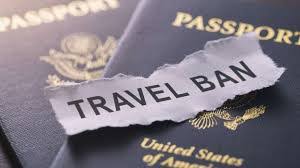 VS breidt reisverboden uit en voegt 20 landen en de Palestijnse Autoriteit toe">

Overview of the Expanded US Travel Restrictions
The United States has recently broadened its travel restrictions, increasing the list of affected countries by 20 and including the Palestinian Authority for the first time. These restrictions, announced citing security concerns, enforce either full or partial travel bans depending on the country.
The expansion affects a wide spectrum of travelers seeking entry to the US, including those applying for visas and immigrants, with certain exemptions such as current visa holders, lawful permanent residents, diplomats, and athletes.
Details of the New Travel Ban
The travel ban now fully suspends entry from five countries while partially restricting visitors from fifteen others. The administration also entirely bars travel for individuals using travel documents issued by the Palestinian Authority. This decision comes amidst concerns over security risks following specific incidents involving foreign nationals.
The administration justified the restrictions by highlighting challenges including widespread corruption, unreliable identification documents, criminal records, and elevated visa overstay rates originating from the listed countries. Furthermore, some governments’ refusal to cooperate in repatriation efforts adds to the difficulty in effective vetting.
Exemptions and Specifics
- Current visa holders and lawful permanent residents remain exempt.
- Diplomats and athletes may also be exempted.
- Entry could be granted in cases where it serves US strategic interests.
The timing for the enforcement of these new rules was not explicitly stated by the authorities at the time of the announcement.
Countries Affected by Full and Partial Bans
| Full Travel Ban Countries | Partial Restrictions Countries |
|---|---|
| Afghanistan, Myanmar, Chad, Republic of Congo, Equatorial Guinea, Eritrea, Haiti, Iran, Libya, Somalia, Sudan, Yemen, Burkina Faso, Mali, Niger, South Sudan, Syria, Laos, Sierra Leone | Burundi, Cuba, Togo, Turkmenistan, Venezuela, Angola, Antigua and Barbuda, Benin, Ivory Coast, Dominica, Gabon, Gambia, Malawi, Mauritania, Nigeria, Senegal, Tanzania, Tonga, Zambia, Zimbabwe |
Note: The Palestinian Authority travel documents are also completely restricted.
Historical Context of US Travel Restrictions
The policy of limiting travel from certain countries is not new in the US. It traces back to earlier travel bans introduced in the initial term of the previous administration, where several nations faced similar restrictions due to concerns over national security and immigration system vulnerabilities.
Originally announced in mid-2017, these bans targeted a smaller group of countries perceived to pose higher risks based on various criteria such as terrorism activities and irregular documentation.
Over the years, the policies have been modified in scope and targets due to legal challenges, geopolitical considerations, and changing security assessments.
Evolution of Travel Bans in Recent Years
- The initial ban included 12 countries with a mix of full and partial restrictions.
- Subsequent additions incorporated new nations, refining criteria based on evolving intelligence.
- Measures involving the Palestinian Authority intensified, moving from difficulty in obtaining travel documents to a full ban on emigration.
Implications for Global Travel and Tourism
The expansion of travel restrictions carries significant consequences for international tourism flows, particularly affecting visitors and immigrants from the impacted regions. These limitations could reduce the number of travelers to the United States, potentially influencing sectors dependent on foreign visitors, including leisure, business tourism, and international exchanges.
Travel bans generally serve as a cautionary example of how security policies can reshape tourist flows and affect related industries worldwide. While nations aim to safeguard their borders and citizens, such policies may also create barriers impacting the global tourism ecosystem.
Potential Effects on Sailing and Boating Tourism
Coastal cities and marine resorts that typically attract a diverse international clientele may see shifts in tourist demographics, potentially affecting yachting and boating activities. Sailors and yacht charters depend on the fluid movement of international travelers, so increased restrictions might influence boat rentals and marina visits, especially in regions closely connected with the affected countries.
A Glance at the Broader Tourism Impact
- Reduced tourist arrivals from affected nations may impact local businesses supporting international visitors.
- International events requiring participation by diplomats, athletes, and business travelers could face challenges despite exemptions.
- Regions rich in beach, sailing, and boating tourism might experience variations in visitor patterns.
Outlook on Travel Restrictions and International Tourism
Security-related travel restrictions will likely continue evolving, balancing risk management with open travel policies. As the global tourism market grows increasingly interconnected, the hospitality industry and mode-specific tourism sectors, like yachting, could face new challenges and adjustments.
Forecasts suggest that while such policies may momentarily influence travel volumes, long-term tourism trends still lean towards growth driven by emerging markets and sustained demand for diverse experiences.
Summary of Key Points
| Highlights | Details |
|---|---|
| Expansion | 20 countries plus Palestinian Authority added to US travel bans. |
| Types of Restrictions | Five countries fully banned; fifteen with partial restrictions. |
| Exemptions | Visa holders, permanent residents, diplomats, athletes, and cases serving US interests. |
| Reasons | Security concerns, document reliability issues, high overstay rates, and cooperation challenges. |
| Tourism Impact | Potential decrease in visitors from affected regions, influencing various travel sectors. |
For those engaged in sailing, yachting, or boat rental businesses near the affected regions or in global hubs, understanding these evolving travel restrictions is crucial for adapting to shifting patterns of international movement and tourism activities.
GetBoat is an international marketplace for renting sailing boats and yachts, catering to every taste and budget. It continuously monitors changes in global travel policies to provide the best options and experiences for those seeking adventures on the water, whether on vast oceans, serene lakes, or vibrant gulfs.