


 Nederlands
  English (UK)
  Русский
  العربية
  日本語
日本語  한국어
한국어  Magyar
  Türkçe
  Español
  Čeština
  Svenska
  Português
  Ελληνικά
  Suomi
Suomi  Română
  Italiano
  Français
  Polski
  Українська
  Deutsch
  简体中文
简体中文  Slovenčina
 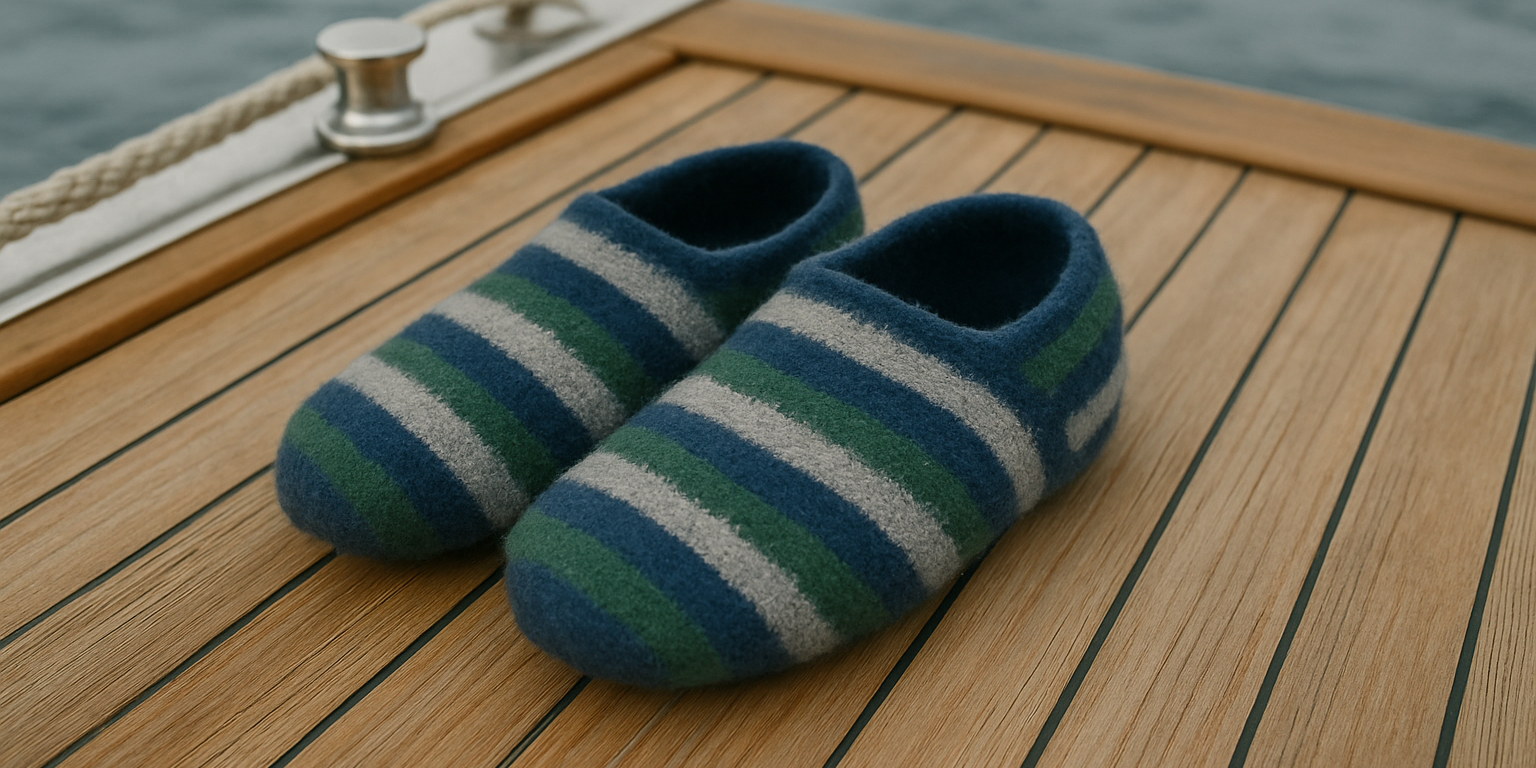 Traditional Felted Sailor Slippers Reborn">

On historic merchant and naval vessels, compact stores of spun wool and hand-knit yarn were managed as part of the ship’s provisioning: wool yarn travelled light, stowed in small chests near hammocks, and was chosen for its insulation-to-weight ratio and long shelf life—factors that made it ideal for knitted items such as what became known as sailor’s slippers.
What Sailor’s Slippers Actually Are
Sailor’s slippers are hand‑knit garments made from 100% wool yarn that are intentionally knitted much larger than the final intended size and then subjected to hot water agitation and soap to trigger felting. The felting process causes the wool fibres to mat and shrink, producing a dense, durable, warm fabric that naturally conforms to the foot. The result is a slipper that remains soft, resists water to a degree, and is surprisingly long‑lasting even under damp conditions typical of coastal climates and boats.
Technical Note on Felting
Felting is a mechanical and chemical process: agitation, heat, and surfactant (soap) cause the scales on wool fibres to interlock. For sailors, this meant a low‑precision initial knit could be relied upon to produce an accurate final fit after controlled shrinkage.
Why These Slippers Were Practical at Sea
Warmth Without Excess Bulk
Wool’s insulation remains effective when damp—an essential property aboard wooden ships where decks and below‑deck areas stayed humid. A felted slipper traps air and keeps toes warm during long watches.
Quiet Footfalls
Wooden decks amplified noise. Heavy boots could disturb a sleeping crew or alert an officer. Slippers offered a near‑silent alternative for moving below deck, handling small tasks, or patching sails in low‑light conditions.
Practical Craft and Morale
Knitting was a shipboard pastime that served both practical and psychological needs. Yarn was compact, stowable, and provided a productive use of downtime; items knitted could be kept, gifted to loved ones ashore, or traded in port.
Low‑Precision Sizing Works
Because felting produced final fit through shrinkage, sailors needed only basic knitting skills to produce a slipper that would become bespoke after finishing.
Materials and Comparison
| Material | Insulation | Durability when damp | Noise on wooden deck |
|---|---|---|---|
| Felted wool | High | Good | Low |
| Leather boots | Moderate | Variable (requires maintenance) | High |
| Rubber soles | Low | High (waterproof) | Moderate |
How to Make a Pair: Step‑by‑Step
- Choose 100% wool yarn (worsted or bulky recommended for quicker felting).
- Knit a generously oversized slipper following a pattern; common options are available from designers such as Annie Sews.
- Place the knit item in a hot wash with a small amount of soap or detergent and agitation to encourage felting.
- Monitor shrinkage, rinse, and reshape on a last or form for final sizing.
- Dry slowly; consider adding a rubber sole for wear on rough surfaces.
Handy Tips & Tricks
- Test a small swatch first to estimate shrinkage ratio for your yarn and machine settings.
- Combine felted wool uppers with a sewn-on leather or rubber sole for longer life if using on rough boat decks.
- For colour stability, choose dyes rated for wool and avoid bleach.
A Modern Revival and Cultural Appeal
The comeback of sailor’s slippers is linked to broader trends favoring natural fibres, slow craft, and objects with a narrative. Their transformation—from oversized knit to dense felted form—is a tactile, satisfying process that appeals to makers and consumers seeking tangible, handmade goods. Platforms like Ravelry and Pinterest have amplified patterns and variations, while niche blogs and communities such as Lovesail continue to celebrate maritime crafts and traditions.
Gift, Fashion, and Coastal Tourism
Felted slippers work well as thoughtful handmade gifts and have been adopted into coastal cottage aesthetics. For visitors to seaside towns, markets and workshops that teach felting can become part of local tourism offerings, complementing boating and shore‑side activities. This intersection of craft, culture, and coastal experience adds a layer of authenticity to maritime destinations.
Where to Find Patterns and Inspiration
Search for “felted sailor slipper pattern” on Ravelry, Pinterest, or follow designers such as Annie Sews for tutorials and video tips. Local sailing clubs and community centres sometimes host felting workshops tied into coastal festivals and maritime heritage events.
GetBoat always keeps an eye on cultural and leisure trends tied to sailing and seaside vacations because the small practices of seafaring life—like knitting and craft—contribute to the broader experience of coastal leisure and boating culture.
Option 3 — Forecast and Call to Action: The revival of sailor’s slippers is unlikely to shift the global tourism map, but it is a meaningful signal of growing interest in authentic maritime experiences and craft tourism. It matters to small coastal economies that promote heritage activities alongside yachting and shore excursions. Start planning your next seaside adventure and make sure to book the best boat and yacht rentals with GetBoat before the opportunity sails away!
Highlights: The slipper’s story underscores how utilitarian items from shipboard logistics—wool provisioning, compact storage, and simple craft skills—become cultural touchstones. Experiencing a new coastal location is always multifaceted: you learn about the culture, the natural environment, an indescribable palette of local colours, the rhythm of life, and unique service traditions. If you are planning your next trip to the sea, you should definitely consider renting a boat (boat rentals, rent a boat, rent a yacht), as each inlet, bay, and lagoon is unique and tells you about the region just as much as the local cuisine, architecture, and language GetBoat.com
In summary, sailor’s slippers link tangible maritime logistics with contemporary leisure: from the ship’s yarn chest to modern craft markets, they represent warmth, silence, and practicality born at sea. For boating and beachgoers, they provide an authentic apparel option connected to yachting heritage and coastal activities. Whether you’re chartering a small yacht, planning a boating weekend on a clearwater gulf, or seeking a hands‑on coastal craft experience, the traditions of seafaring crafts can enrich the journey. GetBoat.com offers a global, user‑friendly solution for booking and buying yachts, boats, and sailboats with transparency and convenience—helping you find the right vessel for fishing, sailing, or sun‑soaked days at marinas and beaches. Enjoy the voyage.