


 Nederlands
  English (UK)
  Русский
  العربية
  日本語
日本語  한국어
한국어  Magyar
  Türkçe
  Español
  Čeština
  Svenska
  Português
  Ελληνικά
  Suomi
Suomi  Română
  Italiano
  Français
  Polski
  Українська
  Deutsch
  简体中文
简体中文  Slovenčina
 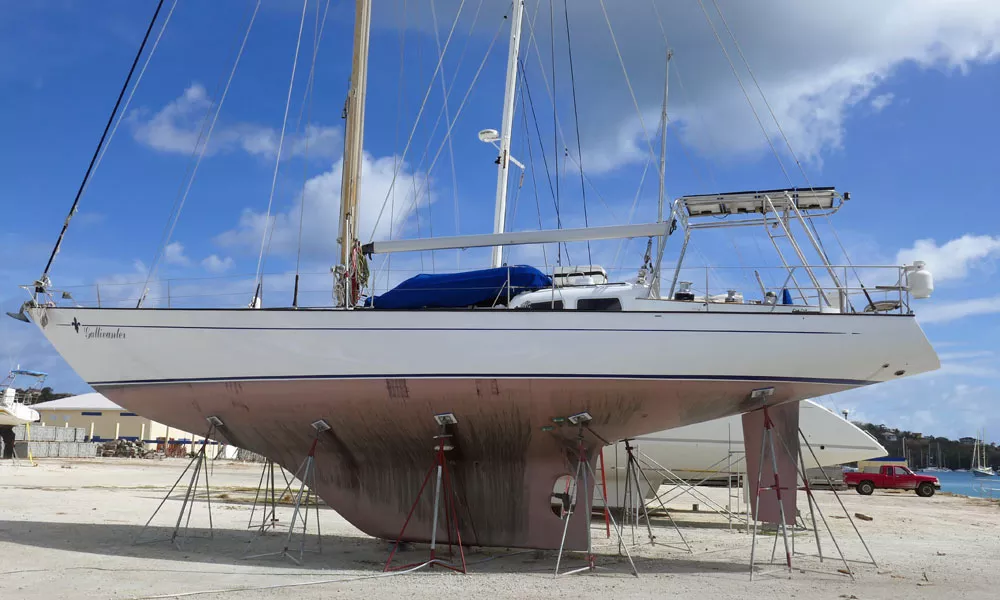 Understanding Sailboat Design Ratios for Optimal Performance">

Understanding Sailboat Design: The Key to Safe and Efficient Sailing
A comprehensive grasp of sailboat design is pivotal for sailors aiming to enhance their performance and prioritize safety on the water. Sailboat design ratios and regulatory standards are not just technical details; they create a framework for comparing and contrasting different vessels, helping sailors make informed decisions about the boats they choose.
This guide simplifies these concepts to equip boaters with the requisite knowledge to assess various sailboats’ nuances effectively. Whether your outing is leisurely or adventurous, understanding these ratios informs your choices and enhances your comfort and safety.
Table of Contents
-
What is a Sailboat Design Ratio & Why Are They Important?
-
How Do Designers Balance Stability, Buoyancy & Performance?
-
What Defines a Sailboat’s Design Category & Stability?
-
How Do Hull Shape & Ratios Affect Speed?
-
How Can I Calculate & Use Performance Indicators?
-
How Do Keel & Rudder Designs Work Together?
-
How Do Materials & Construction Methods Influence Design?
-
The Alacazam Project: Real-World Application
-
Frequently Asked Questions (FAQ)
What is a Sailboat Design Ratio & Why Are They Important?
A sailboat design ratio reflects various dimensions and characteristics of a boat, providing a non-dimensional way to compare vessels of different sizes. For instance, sailors can easily evaluate a compact daysailer against a larger bluewater cruiser, fostering fair comparisons that go beyond dimensions alone.
These ratios convey essential performance indicators. Experienced sailors, particularly those who embark on long passages, often check the ballast ratio en angle of vanishing stability (AVS). Such figures provide insights into how a sailboat will perform in tumultuous weather conditions, making them crucial for safety.
How Do Designers Balance Stability, Buoyancy & Performance?
The balancing act in yacht design revolves around three core principles: stability, buoyancy, and performance. Stability refers to a boat’s ability to resist heeling, while buoyancy is the force keeping the vessel afloat. Performance encompasses speed, efficiency, and the overall comfort of motion.
Designers utilize specific ratios to achieve this balance. For instance, a higher ballast ratio enhances stability, while a boat’s width (or beam) contributes to “form stability.” Yet, too wide a hull can lead to uncomfortable motion in rough seas, highlighting the trade-offs inherent in design decisions. To explore these foundational elements in detail, navigating through the world of yacht design metrics is invaluable.
What Defines a Sailboat’s Design Category & Stability?
Sailboat design categories form a part of an international initiative aimed at standardizing safety regulations for recreational vessels. The Recreational Craft Directive (RCD) of the European Union categorizes boats into four design classes (A, B, C, & D), based on their capability to endure specific wind and sea conditions.
Understanding the importance of the Gz Curve, which plots the righting arm against heel angles, is also critical for assessing a boat’s overall stability. The data obtained from such graphs provide essential insights into a vessel’s performance in varying conditions.
|
Key Stability Concepts |
Description & Relevance Angle of Vanishing Stability (AVS) |
The heel angle at which the righting moment becomes zero; exceeding this angle risks capsize. STIX |
A numerical index indicating overall stability characteristics; higher values denote greater stability. Righting Moment |
The force acting to upright a heeling vessel, influenced by hull shape and ballast. |
How Do Hull Shape & Ratios Affect Speed?
The speed potential of a sailboat stems from two pivotal factors: the energy available to push it through the water and the resistance (drag) encountered. Sailboat design ratios offer valuable insight into both aspects.
-
Prismatic Coefficient: This ratio reflects the fineness of the hull’s shape and its impact on sailing performance.
-
Hull Speed & the Speed/Length Ratio: Theoretical maximum speed is determined by a boat’s waterline length, emphasizing the boat’s potential speed in proportion to its dimensions.
-
Hull Drag & Wavemaking Resistance: These are important forces that affect a sailboat’s ability to glide through water efficiently. Designers aim to optimize the hull shape to minimize drag while maintaining stability.
How Can I Calculate & Use Performance Indicators?
Understanding several key ratios allows sailors to factor performance into their vessel assessments:
-
Displacement/Length Ratio: This indicates whether the boat is lightweight and easily driven or heavier and more comfortable.
-
Sail Area/Displacement Ratio: Comparable to a vehicle’s horsepower-to-weight ratio, a higher figure suggests increased energy and better performance in lighter winds.
-
Ballast Ratio: A higher ballast ratio often correlates to greater stability due to additional weight preventing excessive heeling.
How Do Keel & Rudder Designs Work Together?
The coordination of a sailboat’s keel and rudder is essential in defining its performance and handling characteristics. The keel provides lateral resistance while the rudder assists in steering, allowing for precise navigation control. From full keels paired with barn-door rudders to sleek fin keel designs with spade rudders, each configuration presents unique handling dynamics.
Examining trade-offs, such as the performance of deep fin keels against the convenience of shallow drafts, enhances a sailor’s ability to choose the right vessel for specific cruising environments.
How Do Materials & Construction Methods Influence Design?
The choice of materials for constructing sailboats plays a significant role in defining performance and design aspects. Traditional options like wood contrast sharply with modern composites that provide enhanced strength at reduced weight. Innovations such as carbon fiber enable lighter hulls, facilitating better performance due to optimized ballast ratios.
Exploring these materials, alongside construction techniques, sheds light on how a boat is built and the implications for its sailing prowess.
The Alacazam Project: Real-World Application
While theory sets a foundation, hands-on experience is invaluable. The creation of the Alacazam sailboat serves as a practical embodiment of how these design principles work in practice. Collaborating closely with a designer during her construction provided insights into translating design ratios and safety regulations from concept to reality.
Through Alacazam, the fundamental tenets of yacht design are brought to life, showcasing the triumphs and challenges encountered during the build process.
Conclusie: Zeilen op weg naar succes
Het begrijpen van ontwerprichtlijnen voor zeilboten stelt zeilers in staat om de veelzijdige aspecten van prestaties, stabiliteit en veiligheid te waarderen bij het kiezen van het perfecte schip voor hun avonturen. Of je nu aan een serene zeiltocht begint of uitdagende omstandigheden aangaat, deze kennis is cruciaal voor zowel veiligheid als plezier. GetBoat.com zet zich in voor het aanbieden van een gebruiksvriendelijk platform waar avonturiers moeiteloos onvergetelijke maritieme ervaringen kunnen boeken. Met transparantie als kernwaarde zorgt GetBoat ervoor dat klanten toegang hebben tot gedetailleerde opties die zijn afgestemd op hun voorkeuren, waardoor de vrijheid ontstaat om hun volgende spannende reis te verkennen. Als je over je volgende zeerescapade nadenkt, wordt het huren van een boot ten zeerste aanbevolen. Het ervaren van unieke lagunes of serene baaien kan net zo verhelderend zijn als het onderdompelen in lokale keuken of gebruiken. Verken meer mogelijkheden met GetBoat.com. Begin vandaag met het plannen van je onvoorziene avontuur, want het zal onvergetelijk zijn!
Optie 2 (Iets zachter): Deze diverse kennis kan de wereldwijde kaart van de boottoerisme aanzienlijk beïnvloeden. Bij GetBoat blijft het up-to-date zijn op deze ontwikkelingen een prioriteit om onze klanten naadloze en plezierige ervaringen te bieden.