


 Nederlands
  English (UK)
  Русский
  العربية
  日本語
日本語  한국어
한국어  Magyar
  Türkçe
  Español
  Čeština
  Svenska
  Português
  Ελληνικά
  Suomi
Suomi  Română
  Italiano
  Français
  Polski
  Українська
  Deutsch
  简体中文
简体中文  Slovenčina
  Watchkeeping, COLREGS and Safe Passage Systems">

A closing speed of 15 knots between a 10‑metre cruising yacht and a 200‑metre container ship reduces the decision window to under six minutes at a 3 nautical mile range; at 1.5 nm that window is down to 90 seconds. Such hard numbers show why continuous look‑out and automated alarms are non‑negotiable on ocean passages.
Legal Reality: COLREGS Rule 5 and Continuous Look‑out
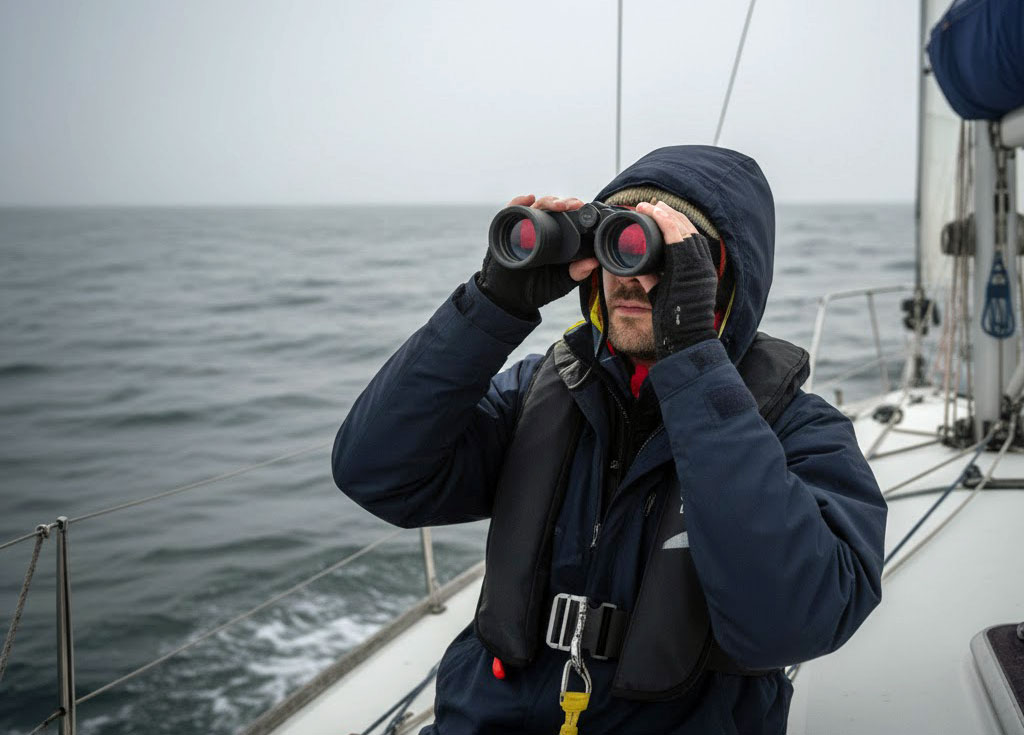
The International Regulations for Preventing Collisions at Sea (COLREGS) sets the baseline: Rule 5 requires every vessel to maintain a proper look‑out by sight, hearing and all available means appropriate to prevailing conditions. For offshore passages this effectively mandates a sustained operational watch system — whether human, electronic or, more commonly, a hybrid of both.
Compliance is both a matter of law and of seamanship. A recreational yacht left unattended at night is at legal risk and at practical risk of collision with merchant traffic, fishing vessels, or unlit obstacles. Even in areas outside main shipping lanes, local traffic, fishing gear, and unexpected weather amplify collision risk.
Risk Profile for Small Yachts on Passage
Typical risks facing small yachts at sea include:
- High closing speeds with large commercial vessels giving limited reaction time;
- Low radar cross section of small yachts making detection difficult at range;
- Reduced visibility from darkness, precipitation or glare;
- Electronic failures caused by power loss, antenna failure or software faults;
- Human fatigue leading to missed alarms or reduced situational awareness.
How This Affects Charterers and Renters
For anyone booking a bareboat or skippered charter, understanding watchkeeping obligations is essential. Charter agreements often stipulate whether the vessel must be operated by a licensed skipper; renters should confirm who is responsible for night watches, AIS settings, and emergency procedures before departure.
Electronic Watch Systems: Tools to Reduce Risk
Modern single‑handers and short‑handed crews rely on a suite of electronics that, properly configured and powered, close the gap between COLREGS intent and human limitations. Below is a concise comparison of commonly used systems.
| System | Primaire functie | Minimum Requirement | Operational Note |
|---|---|---|---|
| AIS (Automatic Identification System) | Identify and track vessels with transponders | Class B transponder for yachts | Show targets on chartplotter; beware non‑transponder traffic |
| Radar | Detect targets independent of transponder | Solid‑state radar with MARPA | MARPA provides CPA/TCPA alarms; use guard zones |
| Autopilot | Maintain course to reduce helmsman fatigue | Reliable marine autopilot with alarm outputs | Integrate with AIS/radar alarms to interrupt if needed |
| Watch alarms & MOB systems | Alert for CPA, anchor drag, man overboard | CPA/TCPA settings on chartplotter; dedicated MOB tags | Test before departure; assign alarm responsibilty |
| Night vision & deck lighting | Enhance visual detection at night | Low‑glare, directed floodlights and IR options | Avoid blinding other vessels; use pulsed search modes |
Power, Redundancy and Charging Regimes
All electronic systems are only as good as the vessel’s power supply. Recommended resilience measures include:
- Dedicated starting battery plus a house battery bank with capacity sized for 48–72 hours of essential electronics;
- Redundant charging sources: alternator with smart regulator, solar array, wind generator and portable fuel‑efficient generator;
- DC distribution with battery isolators, voltage monitoring and alarm thresholds for low state of charge;
- Regular testing of inverters and charging circuits, and a clear plan for power rationing at sea.
Practical Charging Checklist
- Verify alternator output under autopilot load before departure.
- Monitor battery voltage and state of charge hourly on long passages.
- Keep backup power for AIS and VHF for at least 24 hours.
- Inspect cabling and fuses as part of pre‑departure checks.
Human Factors: Rotas, Sleep and Fatigue Management
Best practice for watch rotas depends on crew size:
- Two‑person crew: 3 / 3 or 4 / 4 hour watches with rest periods and cross‑checks;
- Short‑handed: employ polyphasic sleep, strategic napping and conservative routing to reduce night transits;
- Solo: enforce strict alarmed sleep systems, degrade autopilot setpoints for yaw limits, and use audible CPA/TCPA warnings.
Maintain a watch log and brief incoming watch on recent radar/AIS contacts, course changes and weather evolution.
Checklist for Charter Operators and Guests
- Clarify watchkeeping responsibilities in the charter contract;
- Provide a walkthrough of electronic watch systems and alarm settings;
- Ensure renters know how to set CPA/TCPA alarms and activate MOB procedures;
- Offer optional skipper services for inexperienced crews or night passages.
GetBoat always keeps an eye on news related to sailing and seaside vacations, as we truly understand what it means to enjoy great leisure and love the ocean. The service values freedom, energy, and the ability to choose your own course, placing no limits on a good life and helping clients find vessels to match preferences, budget and taste.
Start planning your next seaside adventure and make sure to book the best boat and yacht rentals with GetBoat before the opportunity sails away!
Key highlights: maintaining a proper look‑out under COLREGS is the legal and practical heart of safe coastal and offshore passage; electronic systems like AIS, radar and dependable autopilots greatly reduce risk when powered and configured correctly; human factors — rotas, fatigue management and clear handovers — remain decisive. Experiencing a new location is always a multifaceted process, where one learns about the culture, nature, the indescribable palette of local colors its rhythm of life and also the unique aspects of the service. If you are planning your next trip to the sea, you should definitely consider renting a boat (boat rentals, rent a boat, rent a yacht), as each inlet, bay, and lagoon is unique and tells you about the region just as much as the local cuisine, architecture, and language GetBoat.com
Summary: Safe passage depends on a layered approach — strict adherence to COLREGS, robust electronic watch systems, reliable charging and considered human watch rotas. Whether you charter a yacht, rent a small cruiser or plan a skippered holiday, prioritise AIS/radar configuration, alarm testing, and clear watch assignments before departure. GetBoat.com supports these needs by offering transparent listings where you can compare make, model, specs and ratings to choose the right yacht or motorboat for your itinerary. From superyacht charters to modest day‑boats for fishing or coastal cruising, the platform simplifies booking, sale and discovery of destinations, marinas and boating activities — helping you enjoy the sea, ocean and gulf with confidence. Make waves with confidence.