How to Change Gears and Keep Boatspeed
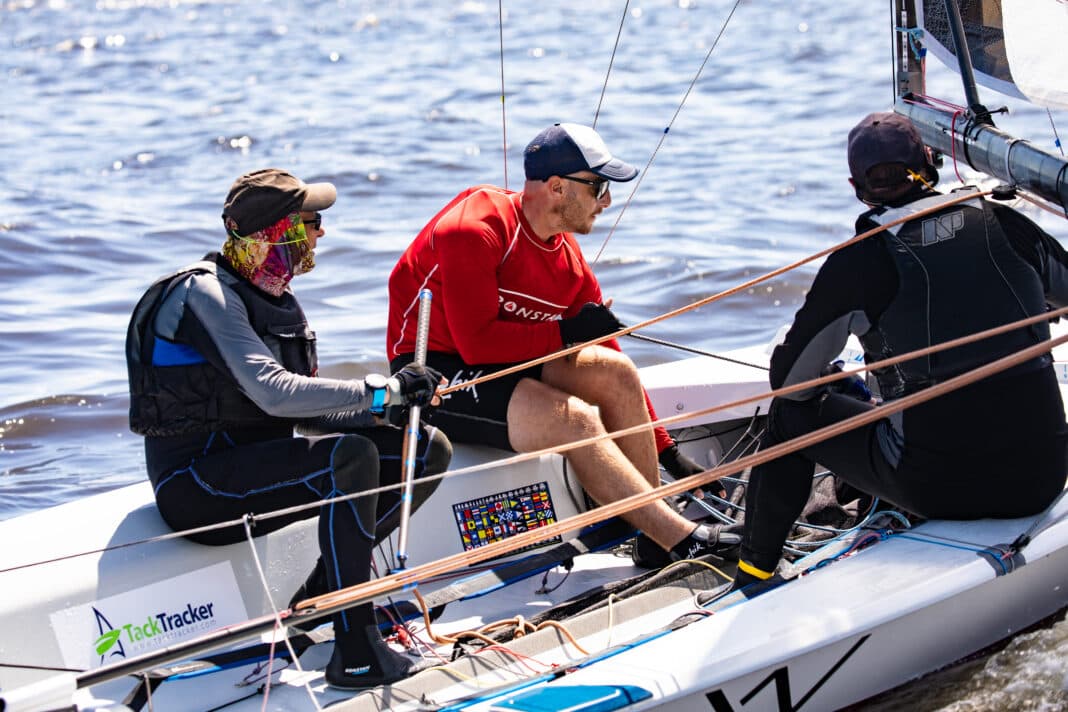
A sudden drop from 15–20 knots to 5 knots across a short race leg forces immediate reallocation of crew tasks, on-deck equipment adjustments, and changes in spare-parts logistics; failing to update rig tension and sail trim rapidly can cost multiple boat lengths and alter finishing order.
Why changing gear is a logistical and tactical necessity
In fleet racing, gear changes are not just sail adjustments — they are operational shifts that affect crew workflow, communication protocols and timing of maneuvers. When wind velocity falls, the team must prioritise powering up the rig: easing depower controls and increasing sail camber to maintain drive. Conversely, as the breeze increases, the crew must depower without degrading boatspeed or course.
Being slow to react creates both tactical and logistical problems: lanes close, leeward overlaps form, and the need to tack or gybe becomes constrained by boat traffic. The quickest crews are those that integrate trim changes into their standard operating procedures so that adjustments are executed while retaining course and speed.
📚 You may also like
Common scenarios where rapid adjustments win
- Downwind lull after a gusty start: teams that immediately relax vang and ease outhaul regain drive and avoid being overpowered by nearby boats.
- Approach to a mark in shifting wind: altering centreboard depth and sheeting angle can secure the lane into the windward mark.
- Venue transitions: moving from open sea to a sheltered bay often requires a quick reset of rig tension and sail shape to match the new gradient of wind.
Controls, effects and when to use them
Knowing the function of each control and its relative impact on sail shape is the cornerstone of effective gear changing. The table below summarises the most common controls and their primary effects.
| Control | Primary effect on sail | Use when |
|---|---|---|
| Vang | Controls leech tension and twist; limits boom lift | Reduce twist in puffs or when powering up/down downwind |
| Cunningham | Flattens the luff and adjusts draft position | Power up in light wind by easing; flatten in strong wind by tensioning |
| Outhaul | Adjusts foot tension and overall sail depth | Easier outhaul for more power in light air; tighter for high winds |
| Centreboard/Keel trim | Balances lateral resistance and pointing ability | Lower for pointing in strong winds; raise slightly to reduce drag in light air |
Practice protocols for in-race adjustments
Improving on-the-fly changes requires deliberate training that simulates both gusts and lulls. Create drills where helm and trimmer execute a preset sequence of adjustments while maintaining course and boatspeed. Key elements include:
- Predefined calls for when to change — e.g., “lull +20s” or “puff hold”
- One-person responsibility for each control to avoid cross-commands
- Short debriefs after each drill to confirm the feel and effectiveness of the setting
Venue-specific considerations
Different venues demand different frequencies and magnitudes of gear change. Lake sailing is typically more gusty with rapid velocity swings, so expect continuous small adjustments. Coastal races near headlands require planning for sustained shifts and stronger gusts coming off topography.
Before racing at an unfamiliar venue, consult local sailors and arrive early if possible. On-the-water reconnaissance will let you map gust corridors and decide which controls yield the biggest performance gains for your boat and crew weight.
Quick checklist before a coastal or lake regatta
- Verify running rigging condition and spare lines logistics
- Identify two primary controls to prioritise (commonly vang and cunningham)
- Practice reaching in and trimming without interrupting helm control
- Set communication keywords for lulls, puffs and shifts
How top sailors change gear without losing speed
The best sailors make micro-adjustments while steering at full pace. They reach for a vang or Cunningham and make a measured change, allowing the helmsman and trimmer to feel the effect before any further input. This requires trust, practice, and a clear feedback loop: crew calls the feel, helmsman adjusts course in small increments, and the trimmer confirms the sail shape has stabilised.
Resistance to reaching in often stems from fear of upsetting the helm. The remedy is repetitive training designed to desensitise the crew to small perturbations in boat balance, so corrections become a normal part of rhythm rather than a crisis response.
Practical tips for charterers and renters
When renting a boat or yacht for a regatta or coastal cruise, prioritise vessels with well-labelled and led control lines, and ask for a short systems briefing from the owner or charter company. On charter boats, identify which controls move quickly and which are slower or stiffer; that knowledge will guide how aggressively you can change gear without disrupting boat handling.
GetBoat always keeps an eye on news related to sailing and seaside vacations, as we truly understand what it means to enjoy great leisure and love the ocean. The service values freedom, energy, and the ability to choose your own course, placing no limits on a good life and helping sailors find the right vessel for their taste and budget.
Highlights: effective gear changing is one of the most impactful skills for both racing success and enjoyable cruising. It saves boat lengths, reduces stress on crew, and adapts your boat to changing sea state and wind patterns. Remember that experiencing a new location is always a multifaceted process where you learn about culture, nature, the indescribable palette of local colors, its rhythm of life and also the unique aspects of the service; if you are planning your next trip to the sea, you should definitely consider renting a boat (boat rentals, rent a boat, rent a yacht), as each inlet, bay, and lagoon is unique and tells you about the region just as much as the local cuisine, architecture, and language GetBoat.com
Forecast and call to action: this guidance on gear management is unlikely to reshape the global tourism map, but it is highly relevant to sailors, charterers and recreational boaters worldwide. To keep pace with the changing world and prepare for smoother, faster sailing, start planning your next seaside adventure and make sure to book the best boat and yacht rentals with GetBoat before the opportunity sails away!
Summary: timely and practiced gear changes improve performance and enjoyment whether you race a Laser or cruise on a charter yacht. Understand each control — vang, Cunningham, outhaul, centreboard — and prioritise the ones that deliver the biggest gains for your boat and crew. Train to make small adjustments without losing course, adapt settings to venue specifics (lake vs coastal headlands) and establish clear crew communications. For those looking to turn knowledge into experience, GetBoat.com provides a transparent, user-friendly platform to book or buy yachts, boats and charters across global marinas; it helps match captains and charterers to the right vessels and offers detailed listings to compare make, model and ratings. Enjoy the sea, the freedom of choice, and remember: No limits on a good life.