


 Nederlands
  English (UK)
  Русский
  العربية
  日本語
日本語  한국어
한국어  Magyar
  Türkçe
  Español
  Čeština
  Svenska
  Português
  Ελληνικά
  Suomi
Suomi  Română
  Italiano
  Français
  Polski
  Українська
  Deutsch
  简体中文
简体中文  Slovenčina
 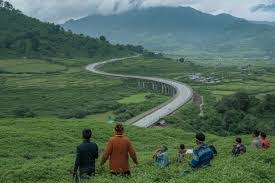 Northeast Regio Bevordert Integratie van Wereldklasse Toerisme en Infrastructuur">

Enhancing Tourism and Transport in Northeast India
The northeastern states of India are advancing ambitious plans to boost their tourism appeal through integrated development strategies. Recent high-level task force meetings emphasized creating world-class tourist circuits alongside critical upgrades in transport infrastructure, aiming for a seamless visitor experience and stronger regional collaboration.
High-Level Coordination for Regional Growth
Union Minister Jyotiraditya M. Scindia played a pivotal role in three consecutive meetings designed to align tourism, agriculture, and transport initiatives across the region, involving leadership from Mizoram, Meghalaya, and Sikkim. The objective is clear: move beyond isolated efforts by individual states towards a harmonized development approach benefiting the entire Northeast.
The meetings fostered interstate collaboration and highlighted the importance of viewing the region as an interconnected network rather than a collection of separate destinations. This approach is expected to improve policy coherence and optimize resource allocation while nurturing unique local strengths.
The North East Economic Corridor: A Backbone for Connectivity
Chaired by Mizoram’s Chief Minister Pu Lalduhoma, the task force examined short-, medium-, and long-term plans to bolster transport links, including roads, railways, air routes, and inland waterways. Emphasis was also placed on enhancing energy supply, digital connectivity, and trade corridors, with a focus on boosting cross-border trade infrastructure.
Contributions from Meghalaya, Assam, and Manipur enriched the discussions, culminating in plans for a comprehensive report that integrates all regional feedback before implementation.
Developing World-Class Tourist Circuits
Tourism discussions led by Meghalaya’s Chief Minister Conrad Sangma centered on crafting compelling tourist circuits. These circuits envisage connecting various cultural, natural, and historical attractions via well-planned routes and services, ensuring visitors enjoy an immersive experience that’s both diverse and authentic.
A bottom-up action plan is being advocated to involve local communities actively, ensuring sustainable tourism that respects regional heritage and environment.
Advancing Agriculture, Horticulture, and Local Branding
The third task force, under the leadership of Sikkim’s Chief Minister Prem Singh Tamang, reviewed ongoing agricultural and horticultural projects across the region. Discussions underscored strategies to add value through improved processing and market linkages for key products, including the creation of integrated cold chain infrastructure and promotion of organic farming.
Region-specific products are targeted for unified branding under an “Organic” label to enhance their appeal in broader markets, strengthening rural livelihoods and supporting eco-friendly practices.
Historical Context of Regional Tourism Development
The Northeast of India, known for its unmatched biodiversity, cultural richness, and pristine landscapes, has historically been less accessible compared to other parts of the country. This has limited tourist inflows despite its natural potential. In recent decades, infrastructural bottlenecks and fragmented policies have constrained cohesive tourism growth.
Efforts to elevate transport infrastructure, such as upgrading road and rail networks and improving airport connectivity, are not new but have gained renewed momentum as part of regional integration goals. These elements are crucial, as accessibility directly impacts tourist numbers and overall satisfaction.
The region’s traditional agricultural economy is also transforming, with an eye towards supporting tourism-linked economic diversification. By promoting organic horticulture and preserving local heritage, the Northeast is laying the groundwork for sustainable and diversified growth.
The Importance of Transport and Tourism Integration
Transport connectivity remains the lifeline of tourism development. An integrated system across road, rail, air, and waterways facilitates smoother journeys and enhances access to remote yet alluring destinations. Investments in digital infrastructure complement physical networks, enabling better tourist information systems and management.
Drawing parallels from global examples, regions that coordinate transport upgrades closely with tourism development see amplified economic benefits. The creation of transport corridors also encourages local business growth, supports cultural exchange, and helps in distributing tourist traffic more evenly.
Transport Components Critical for Tourism Growth
| Transport Mode | Role in Tourism Development | Examples/Focus Areas |
|---|---|---|
| Road | Provides flexible access to rural and mountainous areas. | Upgraded highways, scenic tourist routes, inter-state connectivity. |
| Rail | Supports large-volume, long-distance travel with comfort. | Rail link expansions and passenger services connecting key cities. |
| Air | Enables fast access to remote destinations and international tourists. | Airport expansions, regional air connectivity schemes. |
| Inland Waterways | Offers eco-friendly and scenic transport options, especially near lakes and rivers. | Development of navigable routes and tourism-focused boat services. |
Looking Ahead: Expectations for Northeast Tourism
The combined focus on infrastructure, tourism circuit development, and agriculture holds promising prospects for the Northeast’s tourism sector. Integrated cold chains and organic branding could attract more eco-conscious travelers and gourmet enthusiasts, while improved transport will open up new water, mountain, and cultural routes.
This holistic development model aligns well with international trends where tourism thrives best when linked with local economies and supported by robust infrastructure. While challenges remain, the potential to elevate the region as a distinctive destination on the global tourism map is growing stronger.
Potential Impact on Marine and Sailing Tourism
Though the Northeast is primarily landlocked with mountainous terrain, the enhancement of waterways and transport corridors could encourage freshwater boating and related recreational activities. As transport integration improves, connecting lakes and river systems for leisure boating can be a niche tourism attraction, complementing broader regional offerings.
Summary and Conclusion
The recent task force meetings spotlight a comprehensive effort to develop the Northeast’s tourism by uniting tourism circuits, agriculture, and transport improvements under a shared vision. From upgrading roads and digital infrastructure to promoting organic produce and world-class visitor experiences, the region is poised for transformational growth.
This multifaceted approach acknowledges that sustainable tourism development requires both accessibility and authentic local engagement, factors that improve the quality of tourist experiences and regional prosperity alike.
For travelers seeking adventure amid rich cultural and natural landscapes, the integrated tourism circuits and upgraded infrastructure will create opportunities to explore the Northeast with greater ease and enjoyment. Even for those interested in water activities, future development of inland waterways could add a fresh dimension to boating and cruising options.
For more insights on destinations where sailing yachts and boats enrich the travel experience, and to find the perfect charter for your next adventure, explore GetBoat.com – a global marketplace connecting enthusiasts with the ideal boat rentals, from cozy sails on serene lakes to grand voyages along the ocean coastlines.