Ragtime: The 1960s ULDB Returns to the Water
Alexandra
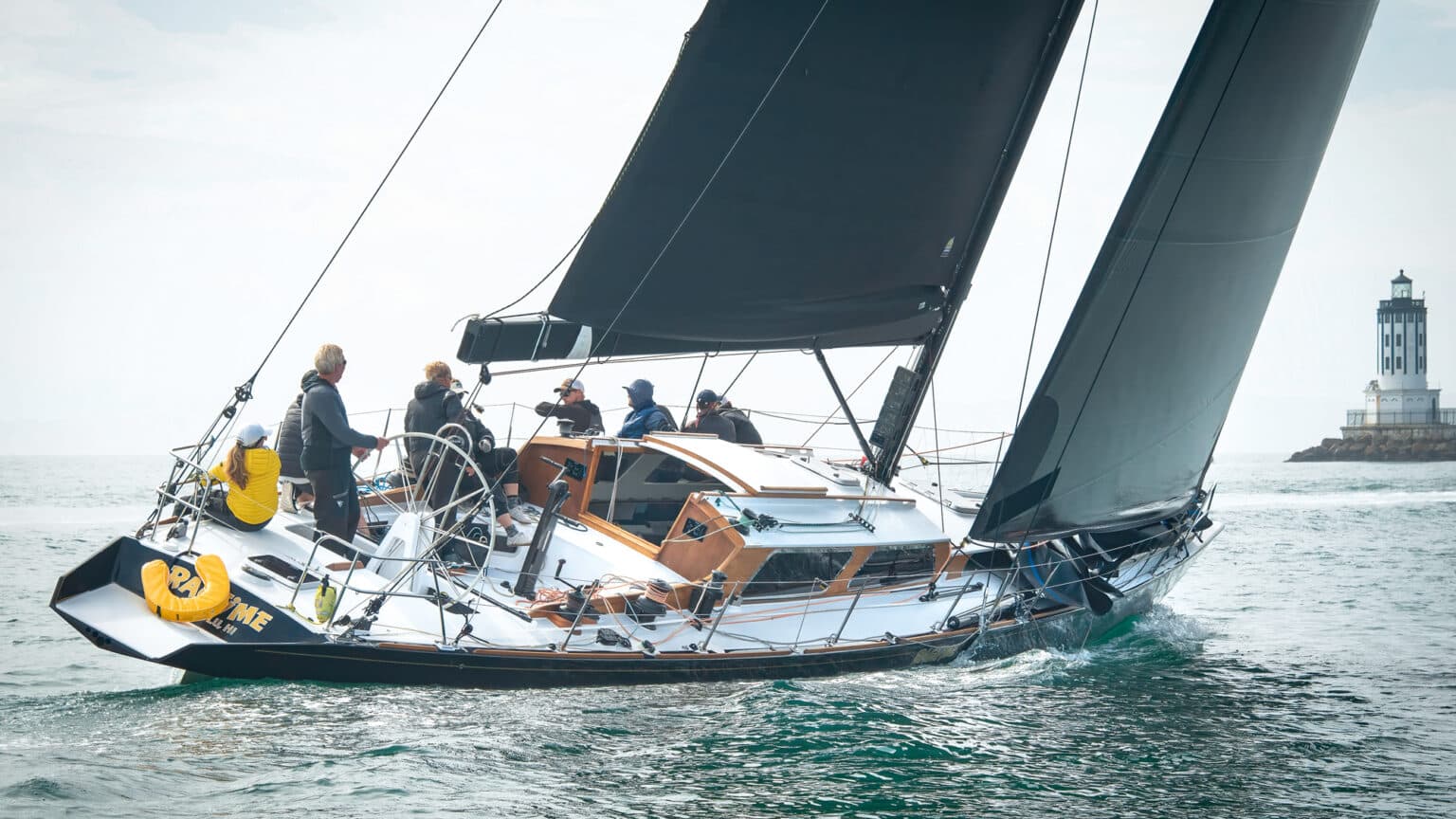
The two-year refit of the 61ft 8in yacht Ragtime involved staged dry-docking, shipment of over 10 tonnes of marine plywood and kauri timber, replacement spars dispatched from California suppliers, and a phased reinstallation of rigging to meet contemporary safety and class inspection standards before relaunch at a Newport Beach yard.
Restoration logistics and key interventions
The refit program followed a tight sequence: hull assessment and structural ply replacement, keel and chine repairs, new through-bolts and sealants, re-bed of deck fittings, and modernized steering and auxiliary systems to comply with US maritime regulations. Project management coordinated subcontractors for carpentry, metalwork, and rigging while arranging temporary storage for original artifacts and archival drawings.
Major tasks completed
- Hull: selective replacement of marine plywood panels, re-lamination of hard chines, anti-fouling and epoxy saturation of critical joints.
- Structure: keel bolt surveys, reinforcement of frames where rot was detected, and new fastenings to preserve original lines.
- Deck & superstructure: kauri cabinhouse conservation, re-caulked deck seams, new toerails and restored hatches.
- Rigging & spars: fabrication of new spars mirroring original geometry, replacement standing and running rigging for safe offshore use.
- Systems: installation of a compact auxiliary engine, updated pumps and navigation lights for compliance with modern race and coastal rules.
Refit timeline
| Phase | Work | Duration |
|---|---|---|
| Survey & planning | Full hull & documentation review | 2 months |
| Structural repairs | Plywood replacement, keel work | 6 months |
| Systems & rigging | Spars, rigging, engine install | 8 months |
| Finishing & sea trials | Paint, fittings, on-water testing | 6 months |
Design heritage and construction details
Ragtime began life as Infidel, designed and built single-handedly by New Zealander John Spencer in 1963–64 for industrialist and racing driver Sir Tom Clark. The hull form and construction were radical for the time: a large hard-chined plywood hull with a marine-plywood shell, a tall kauri cabinhouse, and a construction approach that prioritized light displacement and downwind speed.
📚 You may also like
The original displacement was around 10 tons, and the hull’s hard chines run the waterline over a length of roughly 50ft 8in. Spencer’s shop dimensions dictated the overall length; the 61ft 8in LOA left bow and stern protruding past the sliding doors when the boat was launched.
Design features that launched a genre
- Ultra-Light Displacement: reduced displacement relative to hull length to maximize surfing and downwind velocity.
- Hard chines: abrupt hull angles to enhance planing and form stability at speed.
- Simplicity: originally tiller-steered and without an engine, emphasizing weight savings and responsiveness.
Racing career and influence
Infidel immediately disrupted established rating expectations, beating proven maxi-type racers and prompting rule-makers to reconsider how speed potential was judged. After a move to California in 1969 — sold in Newport Beach and renamed Ragtime — the boat cemented its reputation by claiming first-to-finish in the 1973 Transpac Race, defeating much larger contenders over 2,225 miles.
Key racing milestones:
- Regional dominance in New Zealand sailing events shortly after launch.
- Controversies and exclusions based on perceived seaworthiness and rating fairness.
- 1973 Transpac first-to-finish ahead of 73-footer Windward Passage by just minutes over an ocean course.
Why Ragtime mattered to yacht design
The performance of Ragtime validated the ULDB concept and influenced a generation of designers and sailors who sought higher downwind averages and lighter rigs. Builders and racing teams learned to optimize plywood construction and hard-chine geometry for speed, laying groundwork for later fast cruisers and racer-cruisers.
What the restoration preserves and what it changes
The conservation effort prioritized the yacht’s original profile and hull geometry while discreetly adding modern safety and propulsion systems. The auxiliary engine and updated steering make Ragtime more practical for charter and coastal cruising, without erasing the defining characteristics that made her a benchmark of ultra-light design.
Implications for charter, rentals and heritage fleets
Restored classics like Ragtime are attractive to niche charter markets and private owners seeking historic performance with contemporary reliability. Owners and managers must balance authenticity with insurance, class approval and charter regulations — factors that can influence where and how such yachts operate in marinas and regattas.
GetBoat always keeps an eye on news related to sailing and seaside vacations, as we truly understand what it means to enjoy great leisure and love the ocean. The GetBoat service values freedom, energy, and the ability to choose your own course. The service places no limits on a good life, allowing clients to find a vessel that suits their preferences, budget, and taste.
Practical considerations for owners and enthusiasts
Owners thinking of restoring a heritage racer should budget for ongoing maintenance, specialized carpentry and period-accurate materials. Insurance premiums for classic racers can be higher, and berth availability in popular marinas may require advance planning. For sailors seeking to experience a restored ULDB, charter arrangements typically include an experienced captain familiar with the boat’s handling peculiarities.
If you want to see how a historic restoration can enhance regional boating culture and draw enthusiasts to local ports, note that Ragtime’s return will likely boost interest in classic yacht events and the boutique charter market. Provide time for sea trials and allow for an extended familiarization period before any charter operations commence. Start planning your next seaside adventure and make sure to book the best boat and yacht rentals with GetBoat before the opportunity sails away!
Highlights of this story include the technical boldness of the ULDB concept, Ragtime’s decisive 1973 Transpac performance, the meticulous logistics of a two-year refit, and the way heritage yachts knit together design history, maritime craft skills and coastal tourism. Experiencing a new location is always a multifaceted process, where one learns about the culture, nature, the indescribable palette of local colors its rhythm of life and also the unique aspects of the service. If you are planning your next trip to the sea, you should definitely consider renting a boat (boat rentals, rent a boat, rent a yacht), as each inlet, bay, and lagoon is unique and tells you about the region just as much as the local cuisine, architecture, and language GetBoat.com
In summary, Ragtime’s restoration secures a seminal piece of yachting history and keeps the ULDB legacy alive for future generations of sailors, charterers and designers. The refit demonstrates how careful logistical planning — from timber procurement to staged dry-docking and modern compliance upgrades — can return a classic yacht to competitive and charter-ready condition. For sailors, captains and vacationers seeking an authentic experience, the revival of Ragtime is a reminder that yacht heritage, charter opportunities and the wider world of boating, sailing and yachting continue to offer rich destinations, activities and memorable time on the sea, ocean, gulf, lake or clearwater marinas — whether aboard a classic yacht, a modern superyacht or a simple rental boat.