How Marine Ropes Are Made and Used Aboard
Alexandra
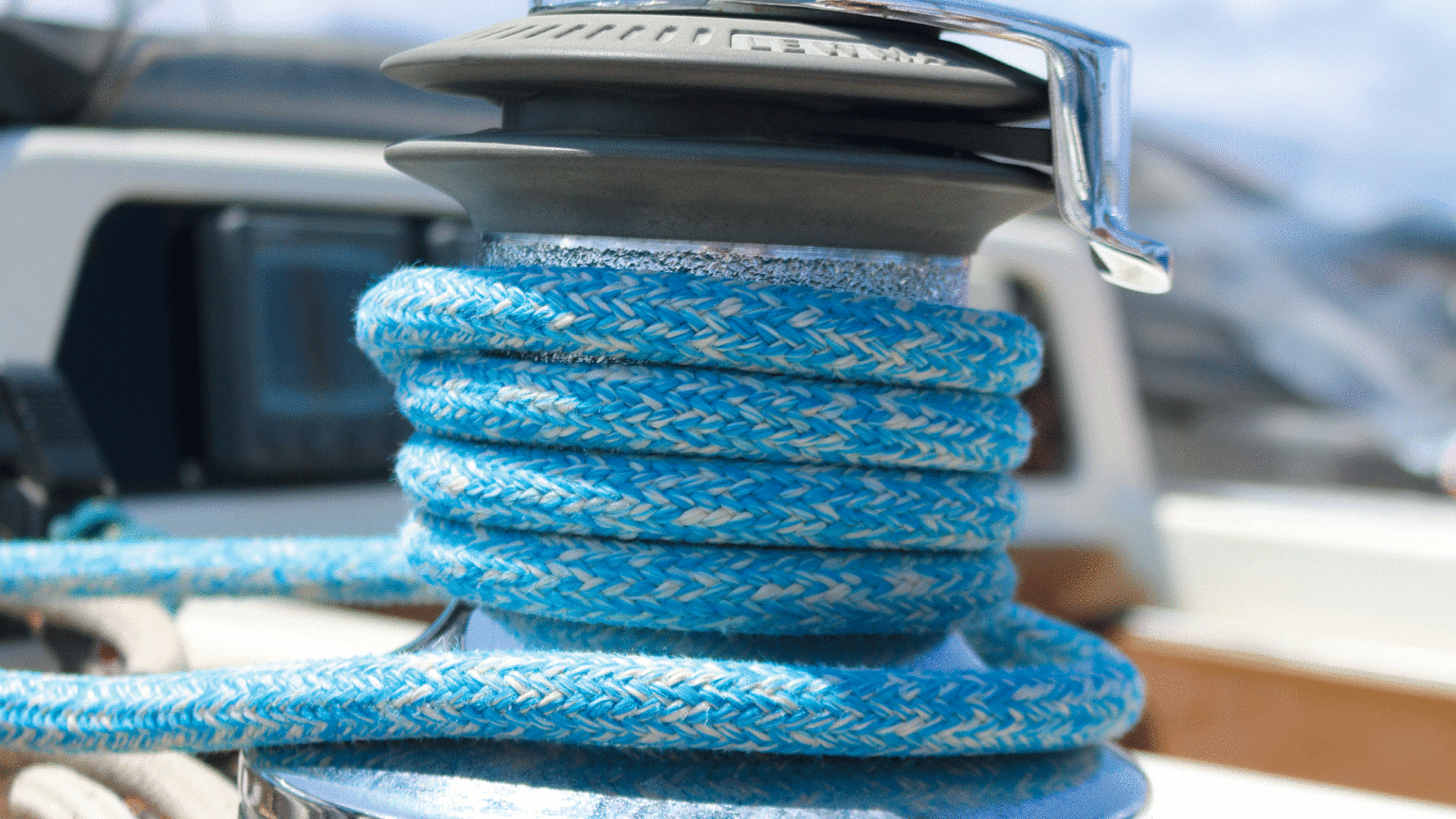
Running-rigging logistics on any charter vessel demand a mix of pre-stretched polyester halyards, low-stretch HMPE sheets, and resilient nylon docklines to match loads, UV exposure and wet conditions onboard.
Core fibre types and operational characteristics
Understanding the mechanical and environmental behaviour of common fibres helps skippers, captains and fleet managers select the right rope for each application.
Polyamide (Nylon)
Nylon is a high-strength, elastic synthetic introduced commercially in the 1930s. Its principal characteristics are high energy absorption and elongation under load, which make it excellent for shock-absorbing roles. Nylon will stiffen with age and requires UV protection; it also loses a modest percentage of strength when wet, so its performance should be checked after prolonged exposure.
📚 You may also like
Polyester (PES/PET)
Polyester fibres are low-stretch, retain strength when wet, and are highly abrasion resistant. Pre-stretched polyester halyards and sheets are standard for cruising yachts where dimensional stability is needed for sail shape control.
Polypropylene and Polyethylene
Polypropylene floats and is economical, often used for towlines, water-ski ropes and brightly coloured lifelines. Polyethylene encompasses modern HMPE (High Modulus Polyethylene) lines such as Dyneema™: extremely light, very low-stretch and size-for-size comparable to steel wire rope, but sensitive to abrasion and bending over small-diameter pins.
Advanced high-modulus fibres (PBO/Zylon™)
Fabrics such as PBO (Zylon™) exhibit exceptionally high tensile strength and can be considered for standing rigging in performance applications. Their sensitivity to knots means terminations via swages or mechanical fittings are preferred to preserve integrity.
Rope construction: stranded, braided and plaited
Construction governs handling, splicing complexity and suitability for different tasks. Below is a concise reference to common constructions encountered on sailing craft.
| Construction | Properties | Typical Uses |
|---|---|---|
| 3-strand (stranded) | Simple, easy to splice; softer or harder depending on lay tension | Mooring lines, general-purpose lines |
| 8- or 12-plait (multiplait) | Good balance of flexibility and surface grip; can be right/left laid marking critical | Sheets, control lines |
| Hollow-braid | Minimal jacket, easy to splice internally; flexible and round | Spliced halyards, halyard cores |
| Braid-on-braid | Low stretch when pre-stretched, high strength-to-diameter ratio | Running rigging, primary sheets |
| Diamond-braid with core (double braid) | Stable core-jacket system; good handling and splicing | Sheets, halyards, high-load control lines |
Laid directions and identification
Stranded ropes are described as S-laid (left-hand) or Z-laid (right-hand). Multiplait constructions may combine right- and left-laid pairs; manufacturers often use marked strands to indicate lay direction, which matters during splicing and when pairing lines for twin tasks.
Practical ropework: splicing, knots and terminations
Knots, splices and mechanical terminations each have a predictable effect on breaking strength. Knots typically reduce breaking load more than a properly executed splice or a swage. For high-modulus lines, avoid knots where possible; use soft eyes, splices, or metal terminations.
- Splices preserve more strength than knots and are preferred for permanent terminations on sheets and halyards.
- Heat-sealing or whipping synthetic fiber ends prevents unravelling; take care with HMPE’s low melting point and withshore heating methods.
- Chafe protection is essential on low-stretch lines; use sleeves, leather patches or protective tubing where lines pass over fairleads or spreaders.
Inspection and maintenance
Routine inspection focuses on UV degradation, abrasion, core slippage, and loss of flexibility. Replace any line showing core exposure, hard glazing, or inconsistent stretch. Regular washing in fresh water and avoidance of prolonged sunlight extend service life.
Checklist for on-board rope inventory and stocking
Efficient fleet logistics are driven by knowing which lengths and diameters to carry. A practical inventory includes:
- Pre-stretched polyester halyards in essential lengths
- Low-stretch HMPE sheets for primary controls
- Nylon docklines in multiple diameters for mooring
- Floatable polypropylene for tenders and water operations
- Splicing kit, whipping twine, and chafe protection materials
How material choice affects charter operations
Selecting the correct rope material reduces maintenance downtime and improves guest experience on charters. Low-stretch lines maintain sail shape for better performance and lower fuel consumption under power-assisted maneuvers; shock-absorbing docklines protect both vessel and marina infrastructure during sudden surges.
Local history and interesting facts
The evolution from natural-fibre lay ropes to modern high-modulus fibres transformed both commercial shipping and recreational yachting. Many older marinas still use braided nylon storm warps, while performance racing classes increasingly rely on Dyneema™-type cores to shave weight and stretch. Traditional rope-making methods inform modern splicing techniques, which remain a core seamanship skill.
GetBoat always keeps an eye on news related to sailing and seaside vacations, as we truly understand what it means to enjoy great leisure and love the ocean. The GetBoat service values freedom, energy, and the ability to choose your own course—placing no limits on a good life and allowing clients to find a vessel that suits their preferences, budget, and taste.
Planning and caution for renters and fleet managers
When preparing a charter or a private cruise, match line type to anticipated conditions: use nylon for heavy-weather mooring, polyester for everyday sheets and halyards, and HMPE where abrasion is controlled. Ensure all crew understand splice points and have a rope maintenance plan to minimize unexpected failures.
If you are planning your next trip to the sea, you should definitely consider renting a boat (boat rentals, rent a boat, rent a yacht), as each inlet, bay, and lagoon is unique and tells you about the region just as much as the local cuisine, architecture, and language and also the unique aspects of the service. GetBoat.com
Call to action — plan your next seaside adventure
Provide a short forecast on how this news could impact the global tourism and travel map. If it's insignificant globally, please mention that. However, it's still important to us since GetBoat aims to stay updated with all developments and keep pace with the changing world. Start planning your next seaside adventure and make sure to book the best boat and yacht rentals with GetBoat before the opportunity sails away!
Summary: Choosing the appropriate yacht or boat lines—be they for charter, mooring, or sail control—depends on fibre properties, construction and correct terminations. Proper inventory, routine inspection and correct splicing preserve strength and reliability for beach landings, lake cruising, gulf passages or open-sea passages. GetBoat.com supports these choices with transparent listings so you can compare make, model, ratings and select a vessel for sale, rent or charter with confidence. Set sail with confidence.


