Wind-harvesting 60m catamarans enter the energy mix
Alexandra
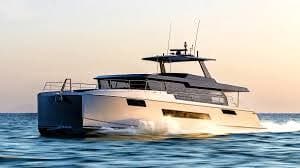
A 60m catamaran platform integrating rigid wing sails and hull-mounted underwater turbines changes onboard logistics: routing must prioritize constant trade-wind corridors, hydrogen production requires secure electrolysis and storage systems, spare-turbine parts and servicing kits need staged provisioning, and port calls will demand berths with safe transfer protocols for green hydrogen and maintenance crews.
Design and operational specifics of the wind power generation ship
The Wind Power Generation Ship Programme combines a 60m catamaran hull form with rigid sail wings for primary propulsion and multiple underwater turbines attached to the hull for energy harvesting. Cape Horn Engineering supplied advanced CFD (Computational Fluid Dynamics) modelling to optimise both hydrodynamic resistance and aerodynamic efficiency of the rig. The vessel’s systems include an onboard electrolyser driven by the generated electricity to produce and store green hydrogen while at sea.
Key performance and design elements
| Element | Specification / Purpose |
|---|---|
| Hull type | 60m twin-hull catamaran — reduced resistance, stable turbine mounting |
| Wind propulsion | Rigid wing sails (single and multi-wing configurations tested) |
| Energy harvesting | Hull-mounted underwater turbines — convert flow and vessel speed to electricity |
| Energy storage | Electrolyser + hydrogen storage tanks for onboard consumption |
| Navigation | AI-guided routing to remain in optimal wind windows |
| Simulations | Over 500 CFD runs for hydrodynamics and aerodynamics |
Engineering workflow and CFD-led decisions
More than 500 CFD simulations were executed, beginning with bare-hull hydrodynamics to quantify resistance across operating trims and sea states. Parallel studies assessed difference turbine geometries and performance maps, then focused on rig aerodynamics, comparing single-wing to multi-wing solutions and defining control-angle envelopes. These data-driven iterations shaped hull appendage placement, turbine casings, and wing profiles to maximise extracted energy while keeping operational stability for sustained hydrogen production.
📚 You may also like
Maintenance, supply chain, and safety considerations
- Spare parts logistics: turbine blades, bearings, and actuator spares must be staged for high-seas replacement or scheduled port exchange.
- Hydrogen safety: hydrogen storage on board requires certified tanks, ventilation protocols, and emergency response plans consistent with maritime hydrogen codes.
- Port compatibility: berths and marinas will need updated protocols for bunkering or offloading hydrogen, waste handling, and technical inspections.
- AI routing dependencies: reliable connectivity and weather-data feeds are essential to keep the vessel in prime wind energy corridors.
Implications for sailing, charter operations and marinas
Although designed as an energy-harvesting research and demonstration platform, the hybrid concept intersects with recreational and commercial yachting ecosystems. Marinas and service yards will eventually adapt to new safety and bunkering requirements driven by hydrogen production at sea. Charter operators and superyacht support services will take note: greener propulsion and onboard energy independence could influence future yacht designs, refit specifications, and even the value proposition for eco-conscious charter clients.
How this innovation touches boat rental and leisure boating
Smaller-scale translations of the concept—efficient wing sails, better hydrodynamic hulls, and integrated renewable on-board systems—can migrate into the charter market. Owners seeking lower fuel bills and charter companies aiming for strong sustainability credentials may adopt similar technologies in scaled formats, affecting vessel availability and rental options for customers who search for yacht or boat charters with reduced environmental footprints.
Regulatory and commercial pathways
Deploying hydrogen-generation ships at scale will require alignment across maritime regulators, classification societies, and port authorities. Certification for onboard electrolysers, hydrogen storage, and turbine installations must be harmonised to allow safe international voyages. Commercially, the model hinges on demonstrating competitive lifecycle costs, predictable yields under trade-wind routing, and reliable maintenance cycles — all of which determine whether shipowners, investors, and charter operators will adopt related innovations.
Benefits and challenges — concise view
- Benefits: continuous renewable power generation, reduced fossil fuel dependence, potential to produce green hydrogen offshore.
- Challenges: supply-chain readiness for turbine and electrolysis spares, hydrogen safety regulation, port infrastructure upgrades, and capital costs.
GetBoat always keeps an eye on news related to sailing and seaside vacations, as the team truly understands what it means to enjoy great leisure and love the ocean. The service values freedom, energy, and the ability to choose your own course, placing no limits on a good life and enabling clients to find a vessel that suits their preferences, budget, and taste. Users can preview make, model, ratings, and comprehensive details before booking to ensure transparency and confidence in every charter or rental decision.
Key highlights of this development include the fusion of rigid wing sails with underwater turbines, AI-driven routing to remain in prime wind corridors, and the onboard conversion of generated electricity into green hydrogen. While this project is primarily an innovation in marine engineering rather than a direct revolution in tourism, its secondary effects could reshape offerings in yachting and marinas over time. Experiencing a new location is always a multifaceted process where one learns about the culture, nature, the indescribable palette of local colors, its rhythm of life and also the unique aspects of the service; if you are planning your next trip to the sea, you should definitely consider renting a boat (boat rentals, rent a boat, rent a yacht), as each inlet, bay, and lagoon is unique and tells you about the region just as much as the local cuisine, architecture, and language GetBoat.com
Forecast: the direct global tourism impact of a single energy-harvesting research vessel is limited, but the technological trajectory is meaningful for the broader maritime and charter markets. As concepts mature, expect incremental influence on yacht design, marina services, and charter offers: greener vessels and onboard energy autonomy can become selling points rather than niche features. Start planning your next seaside adventure and make sure to book the best boat and yacht rentals with GetBoat before the opportunity sails away!
Summary: Cape Horn Engineering’s CFD-led optimisation and Drift Energy’s Wind Power Generation Ship Programme demonstrate a practical pathway for harvesting wind energy at sea by combining rigid wing sails, hull-mounted turbines, AI routing, and onboard electrolysis. Operational logistics — from spare parts provisioning to hydrogen safety and port compatibility — will determine the speed of adoption and the technology’s influence on the yachting and charter sectors. For sailors, captains, and charter guests, this trajectory suggests cleaner options for propulsion and power, new activities around sustainable boating, and evolving infrastructure at marinas and clearwater destinations. Whether you charter a yacht, buy a boat, or simply rent for a day at the beach or on a lake, the future of boating looks toward integrated renewable solutions across sea and gulf alike — Fair winds.


