November 1913: The White Hurricane and its Toll
Alexandra
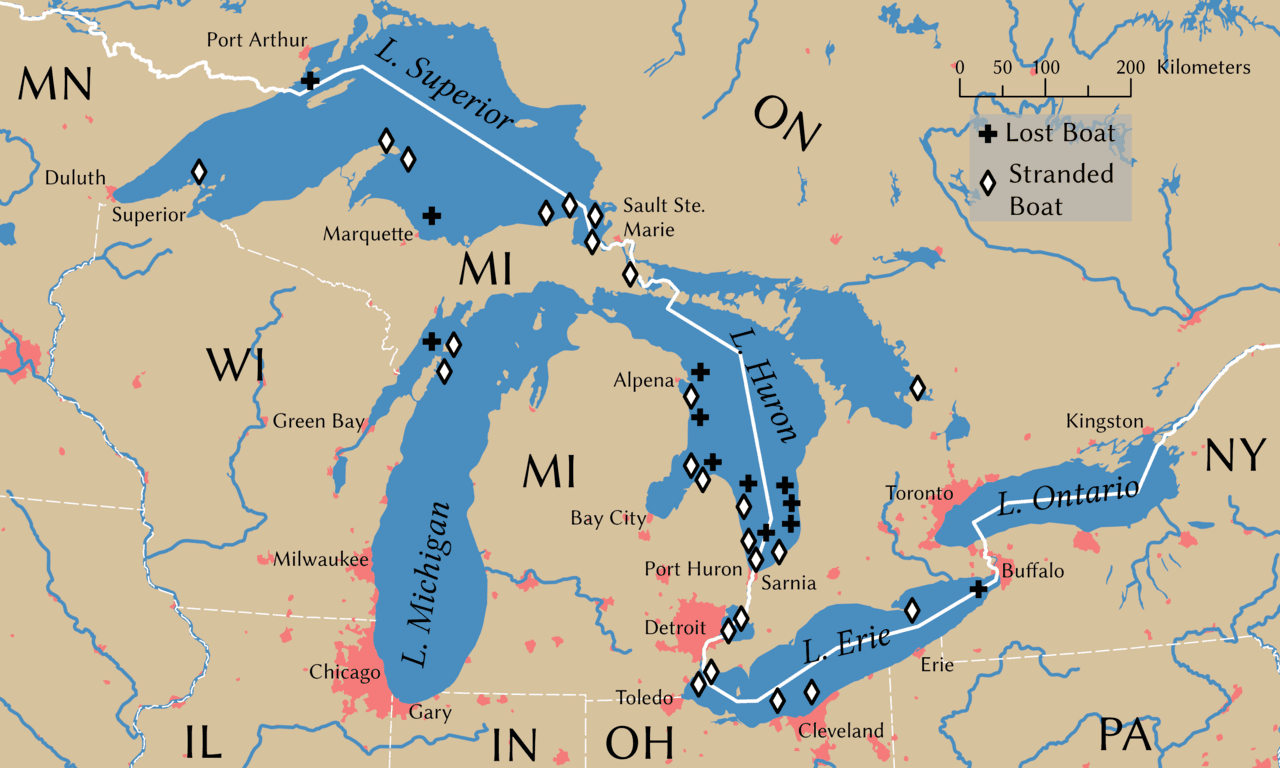
The White Hurricane of November 7–10, 1913 sank at least 12 freighters, stranded about 20 vessels, and caused more than 250 fatalities, creating an immediate logistics collapse across Great Lakes ports and interrupting the movement of bulk cargoes like wheat, iron ore, coal and rails for days.
Storm mechanics and immediate maritime impact
Two major low-pressure systems merged over the Midwest and, fueled by relatively warmer Great Lakes waters, produced a persistent storm that battered four of the five lakes. Sustained gale-force winds with gusts up to 90 mph (145 km/h) drove waves estimated at 35 feet (11 m), while blizzard whiteout conditions isolated major port cities—Duluth, Chicago, Port Huron, Sarnia, Cleveland and Buffalo—disrupting road and rail connections as telegraph and telephone lines collapsed.
Key losses and wreck profiles
Several large steel bulk carriers—many over 400 feet—either capsized or foundered. The combination of poor weather forecasting, limited communications, and operational decisions to remain underway or attempt to reach shelter resulted in catastrophic losses of both vessels and crews.
📚 You may also like
| Vessel | Length | Fate | Location |
|---|---|---|---|
| James Carruthers | 550 ft (168 m) | Sank, all 22 lost | Lake Huron, off Harbor Beach, MI |
| Charles S. Price | 504 ft (154 m) | Capsized, 28 lost | Between Port Huron and Lexington, MI |
| L.C. Waldo | 472 ft (144 m) | Grounded, crew rescued, later repaired | Gull Rock, near Keweenaw Peninsula |
| Isaac M. Scott | 524 ft (160 m) | Found capsized, 28 lost | Thunder Bay area, Lake Huron |
| Wexford | 250 ft (76 m) | Lost, 20 lost | Lake Huron, near Grand Bend, ON |
Notable rescue and survival operations
At the western end of Lake Superior the grounded L.C. Waldo became a case study in improvised survival and inter-station coordination. With the ship encased in ice and the deckhouse ripped apart by rogue waves, survivors burned salvaged wood in a makeshift fireplace and kept watch in shifts. Two life-saving stations coordinated an 80-mile (129 km) relief route with tug-assisted towing of larger lifeboats; crews eventually reached and evacuated all 24 people on board, who were later towed back to safety.
- Improvised survival: burning wood, rotation watches, and emergency rope-ladder evacuations.
- Inter-station coordination: towing lifeboats along lee shores, cutting through heavy ice to perform rescues.
- Recognition: lifesaving crews received medals for bravery after the operation.
How logistics and decision-making failed
Several operational factors compounded the fatal outcomes: an inability of the Weather Bureau at the time to predict wind shifts and storm severity; masters proceeding at speed into deteriorating conditions; and cargoes—iron ore, coal, wheat, rails—loaded to heavy drafts that reduced reserve buoyancy and made capsizing more likely when extreme waves struck.
Long-term legacy: forecasting, buoys, and maritime safety
The disaster directly influenced regional maritime safety improvements. The loss of the Edmund Fitzgerald in 1975—also during a November gale—helped accelerate the deployment of the first network of data buoys in the Great Lakes in 1979. Since then, sensor and communications technology has advanced to provide real-time measurements of wind, wave height, pressure, and water temperature, plus live commercial vessel tracking. These steps transformed operational logistics for bulk shipping and reduced the likelihood of repeat mass losses.
Operational lessons for modern mariners and charter operators
The White Hurricane underlines several enduring lessons for anyone involved in commercial or recreational maritime activity:
- Respect for weather windows: late-season gales can develop rapidly over inland seas; conservative routing is prudent.
- Cargo and vessel stability: correct loading and securing are essential to avoid shifting cargo and capsizing.
- Value of real-time data: buoys and AIS tracking materially improve decision-making.
- Preparedness: life-saving equipment, drills, and clear emergency plans are lifesaving assets.
Implications for sailing, charters and boat rentals
Although the White Hurricane mainly impacted heavy commercial freighters, the same principles apply to recreational sailing and yacht charter logistics. Early-November conditions can produce sudden gales even on inland waters; renters, captains and charter operators must verify weather intelligence, check vessel stability and safety gear, and ensure the chosen marina or beach offers safe refuge. The GetBoat service always keeps an eye on news related to sailing and seaside vacations, understanding what it means to enjoy leisure and love the ocean while valuing freedom and choice.
Checklist for safe boat rental and charter planning
- Confirm vessel condition, make, model, and rating before booking.
- Review captain credentials if hiring crewed charters.
- Monitor local weather bulletins and buoy data for your planned lake or gulf.
- Choose harbors and marinas with dependable shelter and towing options.
If you are planning your next trip to the sea, you should definitely consider renting a boat (boat rentals, rent a boat, rent a yacht), as each inlet, bay, and lagoon is unique and tells you about the region just as much as the local cuisine, architecture, and language and also the unique aspects of the service. GetBoat.com
Start planning your next seaside adventure with a practical forecast in mind: while the White Hurricane remains a historically significant and localized event in the Great Lakes, its lessons influence safety and routing worldwide. It is still important to us since GetBoat aims to stay updated with developments and keep pace with the changing world. Start planning your next seaside adventure and make sure to book the best boat and yacht rentals with GetBoat before the opportunity sails away!
Highlights: the White Hurricane demonstrates how meteorology, communications, and operational decisions interact to shape maritime outcomes; it shows the importance of lifesaving coordination and the value of post-disaster reforms that led to modern buoy networks and better forecasting. Experiencing a new coastal or lake destination is always multifaceted—one learns about culture, nature, the indescribable palette of local colors, its rhythm of life and the unique aspects of service. If you are planning your next trip to the sea, you should definitely consider renting a boat (boat rentals, rent a boat, rent a yacht), as each inlet, bay, and lagoon is unique and tells you about the region just as much as the local cuisine, architecture, and language and also the unique aspects of the service. GetBoat.com
Summary: The White Hurricane of 1913 remains the benchmark for Great Lakes maritime disaster—over 12 lost ships, hundreds of lives taken, and a sweeping wake-up call that drove improvements in forecasting, buoy telemetry and maritime communications. For sailors, charterers and those looking to rent or buy boats, the episode is a reminder to prioritize weather intelligence, vessel stability and emergency planning. Platforms that provide transparency—listing make, model, ratings and clear booking details—help modern skippers and vacationers choose the right yacht or boat for their beach, lake or ocean itinerary. Whether you seek a quiet sail along a gulf inlet, fishing off clearwater marinas, a family charter, or a superyacht experience, sound preparation keeps boating enjoyable and safe—so plan, check the data, hire a competent captain if needed, and set your course with confidence. Enjoy the freedom of the sea.


