Van Nostrand Cup: Iceboat Rivalry Renewed
Alexandra
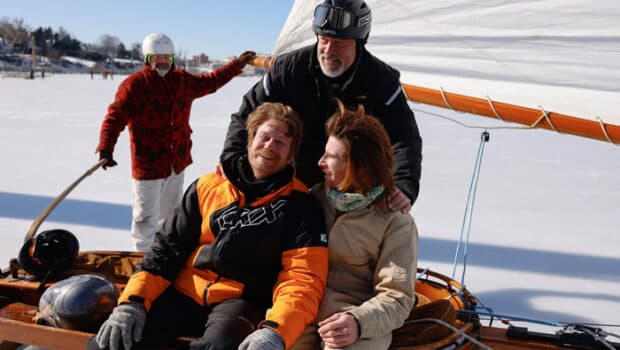
Ice on the Navesink River reached over 4 inches of clear black ice in early February 2026, providing the first sustained hard-water surface adequate for heavy wooden iceboats to reach speeds near 50 mph. The Van Nostrand Challenge Cup, last seriously contested in 2003, was run in a best-of-three format with three vintage vessels from each club navigating a nearly one-mile round consisting of two orange buoys on opposite banks.
Race logistics and the vintage fleet
The competing clubs—the North Shrewsbury Ice Boat & Yacht Club (founded 1880) and the Hudson River Ice Yacht Club (est. 1885)—agreed to traditional equipment rules: wooden hulls and original cockpit layouts with only modest modern updates such as Dacron sails and improved pulleys. Crews of two steered and balanced the heavy craft on steel runners, launching with human push starts and a ceremonial cannon blast that signaled each heat.
| Boat | Approx. Year | Crew | Top Recorded Speed | Club |
|---|---|---|---|---|
| Ariel | c. 1888 | Luke Lawrence / Max Lopez | ~50 mph | Hudson River |
| Ice Queen | c. 1900 | Rick Lawrence / Kevin Lawrence | ~45 mph | Hudson River |
| Unnamed North Shrewsbury entry | late 19th–early 20th century | Various | ~40–50 mph | North Shrewsbury |
Timeline of past Van Nostrand Challenge Cup runs
| Year | Winner | Notes |
|---|---|---|
| 1891 | North Shrewsbury | Early contest |
| 1978 | North Shrewsbury | Revived interest |
| 2003 | North Shrewsbury | Modern revival era |
| 2026 | Hudson River | Hudson River reclaimed the cup after 135 years |
Safety, technique, and restoration
Racing antique ice yachts requires specific crew technique: one sailor trims and sheets while the other controls the steering runner and balance. Proper posture is to recline on the low wooden cockpit tray with helmets and layered thermal protection to limit concussion risk when boats cartwheel or spin. A sudden gust can lift the rear runner and induce a violent spin; crews routinely test steering runners and retain spares for on-ice repairs.
📚 You may also like
Essential safety checklist
- Crash helmets and face protection
- Insulating dry suits or layered wool and windproof shells
- Runner inspection tools and spare bolts
- Radio or shouting signals for start/stop coordination
- Surface monitoring: ice thickness gauges, local weather brief
Restoration choices and period authenticity
Clubs opted for historical authenticity over modern performance: wooden hulls, rear cockpits, and period joinery remain, but conservators have accepted Dacron sails and modern pulleys to reduce sail failure risk. Several boats retain original upholstery or period horsehair cushions to prevent lightweight covers being blown away during launches.
How the 2026 contest played out
After a weekend postponement due to gusting winds and a near-capsize during a test run, the race proceeded on Monday with calmer conditions and a modest crowd. Luke Lawrence and Max Lopez aboard the Ariel won two consecutive heats—each running three laps of the buoy course—securing the Van Nostrand Cup for the Hudson River Ice Yacht Club. The traditional silver trophy, made by Tiffany & Company in 1886, changed hands amid champagne and clubhouse camaraderie.
Operational lessons for sailing and rental operators
Although iceboat racing is a niche activity, several operational lessons apply to broader maritime tourism, charters, and rental markets:
- Weather windows dictate feasibility; maintain flexible booking and cancellation policies.
- Storage and seasonal maintenance are critical for longevity of wooden craft.
- Authentic, experience-driven offerings (historical craft, unique races) attract niche travelers seeking distinctive maritime adventures.
- Local partnerships—clubs, marinas, and hospitality—amplify the visitor experience.
Implications for sailing and boat rental markets
Events that spotlight traditional sailing disciplines often inspire experiential tourism: fans of historic craft may seek charters, yacht charters, or day sails that evoke a similar sense of heritage. Owners and rental platforms can capitalize by offering curated experiences—period-themed sails, skilled captains familiar with local winds, and specialty activities such as fishing or coastal exploration in marinas near the event.
Forecast and industry perspective
The revival of a historic iceboat race has limited direct impact on global tourism maps; it is a localized cultural and sporting event rather than a major draw for mass international travel. Still, niche events like this enhance regional destination appeal, especially to enthusiasts of sailing, yachting, and maritime history. GetBoat aims to stay abreast of such developments and recognizes that unique local traditions can feed demand for specialized charters and seasonal activities. If you are planning your next seaside excursion, consider the convenience and reliability of platforms that aggregate listings, allow pre‑flight checks of boat make and model, and present transparent ratings and pricing.
Highlights: the Van Nostrand Challenge Cup demonstrated the enduring appeal of traditional sailing craft, the logistical complexity of staging hard-water events, and how community stewardship preserves maritime heritage. Experiencing a new location is always a multifaceted process—one learns about the culture, nature, the indescribable palette of local colors, its rhythm of life and also the unique aspects of the service. If you are planning your next trip to the sea, you should definitely consider renting a boat (boat rentals, rent a boat, rent a yacht), as each inlet, bay, and lagoon is unique and tells you about the region just as much as the local cuisine, architecture, and language GetBoat.com
Practical advice for visitors and operators
For travelers curious about similar maritime experiences: contact local clubs, verify insurance and captain credentials for any charter, and review condition reports for boats and marinas. Operators should document maintenance histories, make inspection reports visible to renters, and offer flexible scheduling around weather-dependent activities like iceboating, fishing, or coastal cruising.
In summary, the 2026 Van Nostrand Challenge Cup brought together history, speed, and community on a rare stretch of solid ice, reminding maritime enthusiasts that tradition and adrenaline coexist in the same fleet. Platforms such as GetBoat.com can amplify these moments by offering a global, user-friendly way to book or buy vessels—yacht or small boat—showing full details like make, model, captain availability, and ratings to help travelers choose the right charter for their beach or lake adventures. The service emphasizes transparency and convenience for sailors, renters, and buyers, making it easier to plan everything from a calm bay cruise to a high-energy yachting or superyacht charter. Enjoy the voyage.