Victoria Melody launches Swaffham community residency
Alexandra
Residency logistics and immediate activities
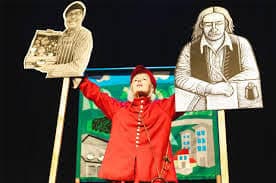
Victoria Melody is confirmed as Artist in Residence for the Your Town, My Town, Our Town programme in Swaffham, working on site through March 2027. The residency includes school assemblies at The Nicholas Hamond Academy, multi-age workshops, focused youth groups, and a three-day listening booth installation under the Buttercross in Swaffham town centre scheduled for May. Engagements are structured around repeated in-person contact, community events, and public-facing moments that culminate in outputs aligned with the festival timetable.
Key field observations from early visits
During winter 2025 visits, the residency team noted a significant decline in visible youth presence around Swaffham’s centre after school hours. Transportation barriers—limited bus schedules and reliance on lifts—plus the closure of a dedicated youth club, were identified as practical constraints. Young people reported feeling safe only in well-lit commercial spaces like ASDA; recreational green spaces such as the rec lack lighting and are perceived as unsafe at night.
Immediate aims and methods
The residency is using a co-creation model rather than top-down programming. Methods include listening sessions, focus groups, creative workshops, and participatory installations. Practical steps outlined for the next phases:
📚 You may also like
- Weekly workshops with existing youth groups to build trust and test ideas.
- Assemblies for each year group at The Nicholas Hamond Academy to introduce the project and solicit responses.
- Pop-up listening booth at the Buttercross for direct public capture of dreams and frustrations.
- Iterative prototyping: resident and youth will trial small-scale public performances and installations to see what resonates.
Community dynamics and social insights
Young people encountered are described as articulate, politically aware, humorous, and creatively inclined, but feeling alienated by adult assumptions. Observations indicate a mismatch between adult-led decision-making and youth experience. The residency seeks to reverse the power dynamic by placing young voices at the centre of artistic and civic shaping.
Barriers to participation
Structural limitations identified include reduced youth provision due to local council financial pressures, transportation gaps, and the spatial distribution of residences outside the town core. Social barriers include adult stereotyping—where groups of teenagers are often presumed to be problematic—and the invisibility of youth needs in formal civic processes like council meetings.
Practical community responses
Responses being trialed emphasize accessibility and playful formats: low-stakes public interventions, assemblies designed to be entertaining as well as participatory, and a listening booth that will be co-designed by the young participants. The residency aims for outputs that are not simply performance-based but that create durable channels for intergenerational dialogue.
Planned schedule and public engagement table
| Period | Activity | Objective |
|---|---|---|
| Winter–Spring 2026 | School assemblies & youth workshops | Introduce project, build rapport, collect ideas |
| May 2026 | 3-day listening booth at Buttercross | Gather public dreams and frustrations; co-design sessions |
| Summer–Autumn 2026 | Prototyping of performances/installations | Test public responses and refine co-created work |
| Winter 2026–March 2027 | Final presentations & legacy planning | Present work and propose durable youth engagement mechanisms |
Historical context and comparable practices
Artist residencies that embed within communities often trace roots to participatory art movements of the late 20th century, which emphasized research-informed, relational practice. Projects that embed artists into rural towns—especially where services have contracted—aim to amplify local knowledge rather than impose external narratives. The use of folklore, like the Swaffham Pedlar tale, as a structural device to reconnect local memory with present civic capacity is a known tactic in community arts: it leverages familiar narratives to reveal overlooked value at home.
Comparable residencies in the UK and beyond have demonstrated how creative interventions can reframe civic conversations, from temporary public installations that catalyse council action to youth-led heritage trails that inform tourism programming. The strategic use of assemblies and school-based engagement often increases youth turnout for community events and provides a bridge to longer-term participation.
Lessons from elsewhere
- Co-creation that hands decision-making power to youth tends to increase both uptake and sustainability of local programs.
- Visible, low-barrier public presences—such as pop-up booths or market-stall formats—help normalize youth voice in town centres.
- Embedding outcomes into existing civic structures (e.g., festivals, school partnerships, town council agendas) improves chances of legacy funding and follow-through.
Implications for local tourism and place-making
While the residency’s primary focus is social and cultural, the outputs can influence local destinations and visitor experience. Youth-led tours, mapped local stories, and creative interventions in market spaces can diversify what Swaffham offers to visitors beyond built heritage. Engaged youth can highlight overlooked places—routes, micro-attractions, or edible landscapes—that enrich destination narratives and may be incorporated into future tourism activities, community-led festivals, or seasonal programming.
Potential downstream benefits
Co-produced outputs could create new interpretive trails, small-scale events, and storytelling resources for local marketing. They may also contribute to making the town centre more attractive and navigable for families, increasing day-visitor dwell time and supporting small businesses.
Concluding summary and outlook
The residency led by Victoria Melody brings a clear operational plan: assemblies at The Nicholas Hamond Academy, workshops with existing youth groups, and a high-profile listening booth in the Buttercross. It addresses structural barriers—transport, service closures, and adult perceptions—through sustained, playful co-creation that prioritizes youth voice. Historically informed by participatory arts practice, the approach seeks not only to produce performances but to open civic channels and prototype tangible, place-based outcomes that could shape Swaffham’s public life and visitor offering.
GetBoat (always keeping an eye on the latest tourism news) is always keeping an eye on the latest tourism news; for readers seeking updates on community-led cultural projects and their potential effects on destinations, activities, water-side experiences, and local attractions, follow developments and local events through GetBoat.com.


