Vanemar Gateway 2: Quick-Install Vessel Monitoring
Alexandra
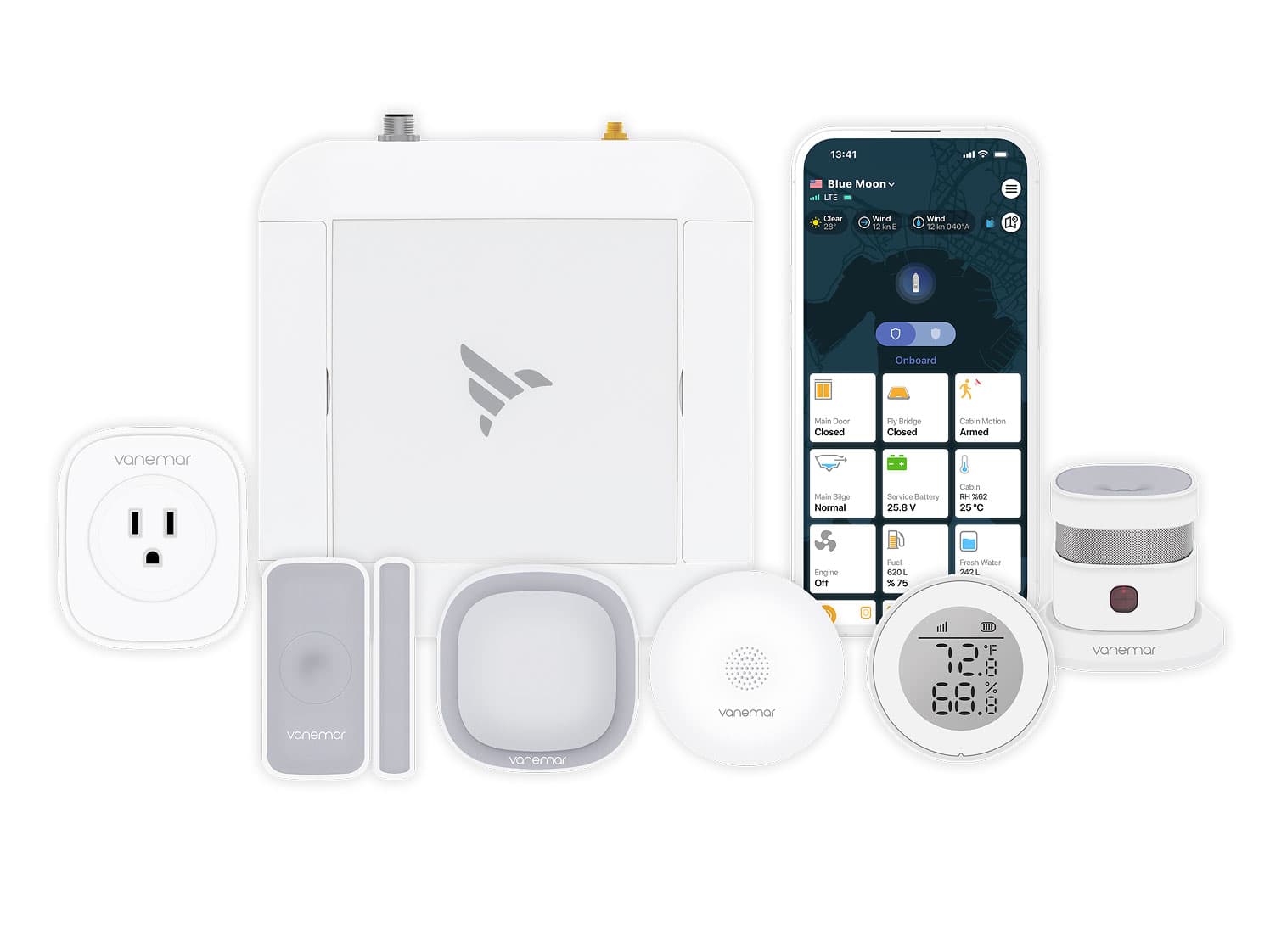
Remote vessel-monitoring systems reduce routine marina inspection trips and streamline fleet asset management by delivering live GPS location, engine diagnostics, and alerting via cellular or Starlink fallback — making on-demand oversight of multiple boats logistically feasible for charter operators and marinas.
Overview of the Vanemar system
The Vanemar Gateway 2 hub integrates GPS, cellular/Wi‑Fi connectivity and NMEA interfacing to provide continuous remote monitoring. The hub pairs to sensors over local wireless links and reports status to a mobile app. Core functions include geofencing, battery and bilge monitoring, hatch/motion detection, smoke alerts, and engine parameter reporting when an NMEA 2000 backbone is present. A Starlink fallback option helps maintain connectivity when shore networks are unavailable.
Why this matters for sailing and rentals
For yacht and boat rental businesses, consistent remote telemetry reduces idle-time checks, improves asset security in marinas and anchorages, and accelerates incident response. Guests and captains receive peace of mind from real-time bilge and fire alerts, while operators can monitor engine hours and fuel state to manage maintenance cycles and charter billing.
📚 You may also like
What's included and pricing
The Vanemar package centers on the Vanemar Gateway 2 hub with GPS antenna and power cabling. Sensors are sold separately and connect wirelessly to the hub. Prices supplied by the manufacturer:
| Item | Function | Price (USD) |
|---|---|---|
| Vanemar Gateway 2 | Hub with GPS, cellular/Wi‑Fi, Starlink fallback | $549 |
| Hatch entry sensor (magnetic) | Door/hatch open detection | $89 |
| Motion sensor | Interior movement detection | $89 |
| Smoke detector | Fire detection and alerting | $109 |
| Bilge water detector + alarm | High-water and leak alerts | $99 |
| Battery sensor | Battery voltage and state monitoring | $139 |
| Smart plug | Power-control and monitoring for devices | $109 |
Installation workflow
Installation is designed to be accomplished with basic marine electrical know-how and minimal tools. Typical installation sequence:
- Choose a central hub location with good sky view for the GPS antenna and run the provided power cable to the starter battery.
- Mount the hub using stainless screws or 3M adhesive hook-and-loop pads after surface cleaning with acetone.
- Place GPS antenna inside a hatch or locker facing the sky (weatherproof units can be concealed for security).
- Power on the hub and pair it to a smartphone via Bluetooth using the Vanemar app.
- Power individual sensors (hatch, bilge, motion, smoke, battery, smart plug) and let the app detect and rename each device.
- If available, connect the supplied NMEA 2000 hub to the vessel’s backbone to read engine diagnostics such as RPM, voltage, water pressure and fuel level.
- Configure geofence, alert thresholds, and monitoring subscription inside the app.
Practical tips for marinas and charter fleets
Mount the hub where crew access is limited but maintenance remains simple. Hide GPS and motion sensors to avoid tampering; use the app’s rename function to match physical labels on board. For charter operations, maintain a standardized sensor layout across all boats so monitoring dashboards are consistent and training is simplified.
NMEA 2000 integration and diagnostics
The optional NMEA 2000 hub reads engine CAN data and broadcasts it to the Vanemar cloud. This capability is valuable for captains and fleet managers because it delivers:
- Live engine RPM and operating state
- Battery voltage and charging events
- Fuel level and consumption trends
- Fault codes and early-warning performance indicators
Immediate access to these parameters supports preventive maintenance and helps rental operators verify engine condition after charters or prior to sale.
Sensor range, limits and redundancy
Up to 20 sensors can be connected per hub, allowing comprehensive coverage of critical points: multiple hatch locations, bilges, engine room, cockpit and guest cabins. When cellular or Wi‑Fi connectivity is out of range, the hub is capable of connecting to Starlink, improving uptime in remote anchorages and wide coastal zones. Still, redundancy planning (secondary power monitoring, periodic in-person checks) is recommended for high-value vessels and superyachts.
Suggested sensor layout for a 40–50 ft yacht
| Location | Recommended sensor(s) |
|---|---|
| Forepeak | Bilge water detector, hatch sensor |
| Engine compartment | Smoke detector, NMEA 2000 hub for engine data |
| Companionway/cockpit | Motion sensor, hatch sensor |
| Salon | Smoke detector, smart plug for AC monitoring |
Operational benefits and constraints
Benefits include rapid setup, clear device naming in the app, geofencing alerts and deep engine telemetry via NMEA. Constraints to consider: subscription costs for monitoring services, dependency on the local cellular footprint (mitigated by Starlink), and the need to protect sensors from tampering in high-traffic marinas.
Use cases tied to rentals and charters
- Pre- and post-charter condition verification using engine hours and fuel reports.
- Rapid notification of bilge or smoke events to owners, captains and base staff.
- Geo-fence alerts for unauthorized movement in harbor or at anchor.
- Data-driven maintenance scheduling to reduce downtime between charters.
GetBoat always keeps an eye on news related to sailing and seaside vacations, as we truly understand what it means to enjoy great leisure and love the ocean. The GetBoat service values freedom, energy, and the ability to choose your own course, placing no limits on a good life and allowing clients to find a vessel that suits their preferences, budget, and taste.
Highlights: Vanemar’s plug-and-play approach makes remote monitoring accessible to private owners, charter operators and marinas alike. The immediate appearance of powered sensors in the app, support for up to 20 devices, and the addition of NMEA 2000 engine diagnostics streamline both security and maintenance workflows. Experiencing a new location is always a multifaceted process, where one learns about the culture, nature, the indescribable palette of local colors its rhythm of life and also the unique aspects of the service. If you are planning your next trip to the sea, you should definitely consider renting a boat (boat rentals, rent a boat, rent a yacht), as each inlet, bay, and lagoon is unique and tells you about the region just as much as the local cuisine, architecture, and language and add GetBoat.com
Forecast and action: This development is modest in terms of global tourism disruption but meaningful for operators and owners who rely on remote oversight. It nudges the tourism and travel map toward safer, data-driven boating experiences without radically altering demand patterns. Start planning your next seaside adventure and make sure to book the best boat and yacht rentals with GetBoat before the opportunity sails away!
In summary, the Vanemar Gateway 2 and its sensor ecosystem provide an accessible, rapid-deploy solution for remote vessel security and diagnostics. For charter firms, marinas and private yacht owners, the system supports improved maintenance planning and guest safety while reducing unnecessary checks. Whether managing a single boat or a fleet across marinas and gulf anchorages, the integration of GPS, NMEA 2000 engine telemetry and Starlink‑backed connectivity makes real-time oversight practical. From yacht and superyacht operations to small boat charters, Vanemar’s offering complements modern boating lifestyles — enhancing monitoring for sailing, fishing, boating activities and seaside destinations while making it easier to rent, charter or buy with confidence. Enjoy the voyage.


