Uru Reed Sailboat: Heritage, Craft, Sustainability
Alexandra
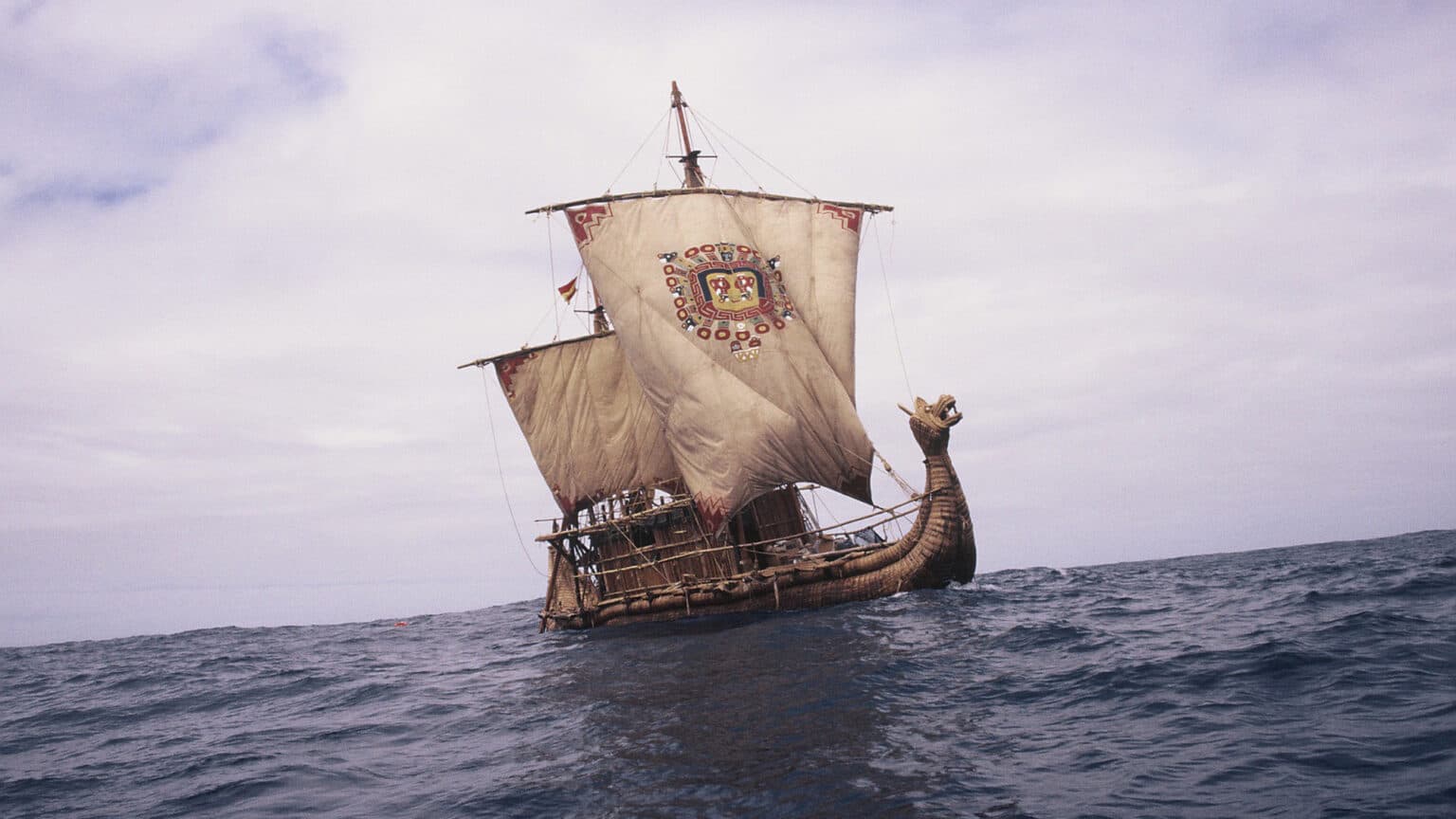
The Uru required 3,500 totora bundles, a 43‑day assembly in a temporary shipyard south of Lima, and a 54‑day crossing of 5,491 nautical miles from Callao to the Marquesas—an exacting logistical profile that highlights both material supply challenges and the labor coordination needed for low‑impact vessel construction.
Reeds as maritime infrastructure: historical and practical context
Reed rafts are among the oldest documented seafaring systems, and the Uru draws directly on the construction logic of Lake Titicaca’s Uros and Aymara communities. The long tradition of totora use—woven islands, boats (balsas) and household structures—demonstrates an integrated local supply chain: harvest, drying, bundling, and seasonal replacement form a circular material economy centered on the wetland margins.
For marine planners and charter operators the Uru story underlines how regional resources and community knowledge can substitute for industrial supply lines, particularly where access to GRP, aluminium or imported timber is limited or environmentally contested.
📚 You may also like
Totora reed: the material, its lifecycle and threats
Totora is a reed-like papyrus that grows in shallow marshes. Harvesting requires local knowledge of growth cycles; scythe‑cut stalks are dried, tied into curved bundles and prepared for assembly. Traditionally bound with prairie‑grass ropes, many builders now incorporate nylon or other modern cordage—another logistical choice that changes maintenance and end‑of‑life profiles.
Environmental pressure—falling lake levels and pollution—reduces available totora, creating supply uncertainty. That scarcity has direct implications for any maritime model relying on local biomass: availability drives construction schedules, maintenance intervals and, ultimately, the feasibility of reed craft as a scalable alternative to synthetic materials.
Building the Uru: design, workforce and shipyard dynamics
Commissioned for cultural and experimental purposes, the Uru project was initiated by explorer Kitin Munoz and led by master builder Paulino Esteban. Esteban and a core team of eight Aymara craftsmen established a temporary shipyard, mounted on eucalyptus scaffolding provided by local carpenters and the Peruvian Navy’s Industrial Services department. The build drew spontaneous collaborators, swelling to around 30 people during peak activity.
| Specification | Uru Details |
|---|---|
| Length | 20 m |
| Beam | 4 m |
| Totora bundles | 3,500 |
| Assembly time | 43 days |
| Voyage | 5,491 nautical miles, 54 days |
| Key builders & contributors | Paulino Esteban, Jose Salazar, Kitin Munoz, Thor Heyerdahl (inspiration) |
Techniques and components
The Uru’s hull combined two lateral reed sections tightened around a central bundle called the chuyma (heart). Antakos reed sleeves and hemp cord—chala—sealed the structure. A pine bipod mast and wooden tiller supplemented reedwork, while bamboo platforms and totora figureheads (crafted by Jose Salazar) provided functional and cultural finishes. Final hardening relied on wetting and drying cycles for the chala to shrink and lock the knots.
The voyage and operational realities at sea
Launching from Callao, the reed vessel arrived at Nuku‑Hiva in the Marquesas on August 22, 1988. The crossing proved reed craft can operate offshore, but it also exposed maintenance realities: reeds absorb water and increase vessel weight, altering draught and handling. Observers of reed expeditions—including disciples of Thor Heyerdahl and later builders like Phil Buck—reported a saturation plateau after which performance stabilised, but the inevitable decay of organic materials limits long‑term seaworthiness.
Comparing biodegradables and synthetics
Where GRP and alloy hulls demand end‑of‑life solutions and can persist in the marine environment, reed vessels offer a contrasting model: biodegradable materials, local procurement, and a low‑trace shipyard that can be dismantled and returned to owners. However, their short service life and periodic reharvesting needs make them a different kind of logistical and economic investment.
Lessons for modern builders, charter operators and sailors
- Local supply chains: sourcing materials locally reduces transport emissions and supports community economies, but requires ecological stewardship to remain viable.
- Lifecycle planning: biodegradable boats change maintenance schedules and asset depreciation models for owners and charter managers.
- Community-based skills: collective building processes create resilience; involving local craftsmen preserves knowledge and adds cultural value attractive to tourists.
- Material hybridity: combining traditional biomass with selective modern components (cordage, rigging) can extend operational windows without losing sustainability gains.
Sustainability implications for charter and rental markets
For the charter sector, the Uru is a reminder that sustainability can be a market differentiator. Eco-conscious guests increasingly value authentic, low‑impact experiences—whether on a lagoon, gulf or open ocean. Operators and marinas can incorporate lessons from reed craft into better waste management, local sourcing and educational storytelling that enriches a charter’s itinerary.
GetBoat always keeps an eye on news related to sailing and seaside vacations, as we truly understand what it means to enjoy great leisure and love the ocean. The service values freedom, energy, and the ability to choose your own course, placing no limits on a good life and helping clients find a vessel that suits their preferences, budget, and taste.
Highlights: the Uru story combines heritage craft, collective shipyard logistics, and biodegradable materials, showing how local ecosystems and social knowledge shape maritime design. Experiencing a new coastal destination remains a multifaceted process—learning about culture, nature, the indescribable palette of local colors, its rhythm of life and the unique aspects of service. If you are planning your next trip to the sea, you should definitely consider renting a boat (boat rentals, rent a boat, rent a yacht), as each inlet, bay, and lagoon is unique and tells you about the region just as much as the local cuisine, architecture, and language GetBoat.com
Forecast and planning: the Uru’s voyage is unlikely to reshape the global tourism map on its own, but its principles are highly relevant—especially for niche eco‑tourism, marinas promoting sustainable yachting, and destinations seeking low‑impact boating options. Start planning your next seaside adventure now and book thoughtfully so the best opportunities don’t sail away.
In summary, the Uru is a working case study in alternative shipbuilding: it demonstrates how totora, hemp, bamboo, and communal labour can assemble seaworthy craft with minimal footprint, while also exposing limits in lifespan and scalability. For sailors, charter operators and buyers—whether considering a yacht, charter, or small boat rental—this tale emphasizes choices about materials, lifecycle and local engagement. From marinas to superyacht operators, the practical and cultural lessons of reed craft matter: they influence decisions about yacht maintenance, charter offerings, beach and marina activities, fishing excursions, and the broader ethos of yachting and boating on the sea and ocean. Set your course.


