Ujjain Prepares Infrastructure for Simhastha 2028
Alexandra
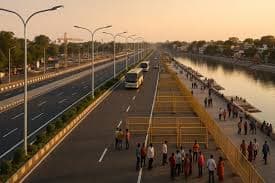
The Hariyakhedi Water Augmentation Project, budgeted at Rs 1,133.67 crore, is planned to secure potable water supplies for Ujjain’s households and the wave of pilgrims expected at Simhastha 2028, while the Mahakal Lok Corridor—a pedestrian spine exceeding 900 meters—now physically links Mahakaleshwar temple with the refurbished Rudrasagar lake.
Major infrastructure components and timelines
Development work in Ujjain has been paced to handle mass pilgrimage logistics, emergency access and long-term urban utility. Key deliverables include water augmentation, pedestrian circulation, road upgrades and targeted health and educational facilities.
Project summary table
| Project | Estimated Cost | Main Objective | Current Status |
|---|---|---|---|
| Hariyakhedi Water Augmentation Project | Rs 1,133.67 crore | Reliable drinking water supply for residents and pilgrims | Groundbreaking performed; construction initiated |
| Mahakal Lok Corridor | — | 900m+ pedestrian linkage between Mahakaleshwar and Rudrasagar | Functional/Refurbished |
| Small & Large Bridges near Ramghat | — | Enhanced riverbank bathing access along Kshipra River | Under construction |
| Ujjain-Indore Four-Lane Road | — | Regional connectivity upgrade for vehicular flow | Groundbreaking to be held soon |
| 11 Local Development Works | Approx. Rs 47.23 crore | Urban amenities, beautification and services | Inauguration and groundworks initiated |
Operational readiness: water, crowd flow and health
The focus on potable water is a logistics masterstroke: large-scale festivals choke supply networks unless redundancy is built in. The Hariyakhedi project is designed to provide sustained per-capita supply during peak demand and to extend service to every household afterwards. Paired with bridges at Ramghat and riverbank works along the Kshipra River, the city is improving both sanitary access and controlled bathing zones for the projected five crore devotees.
📚 You may also like
Public health and welfare measures
- Project Sanvardhan for strengthening maternal and child health services in Ujjain district.
- Ban on liquor in religious towns and precincts to reduce public-order incidents and medical cases during the mela.
- New Dhanvantari Institute of Ayurveda announced to boost medical tourism and traditional-care capacity.
Transport, access and metropolitan ambitions
Moving millions requires road capacity, pedestrian channels and staging areas. The upcoming four-lane Ujjain-Indore corridor and upgraded local roads are intended to decongest approaches and provide smoother freight and passenger flows—crucial for staging supplies, sanitation crews and emergency services.
What this means for logistics planners
- Pre-positioning: staging yards near Indore and Ujjain will be key for timely delivery of food, fuel and medical supplies.
- Multimodal transfer points: pedestrian corridors dovetail with vehicle drop-off zones to limit cross-flow conflicts.
- Contingency routing: bridgeworks and temporary pontoon arrangements will have to account for seasonal river levels.
Local development items and visitor services
Eleven municipal works worth about Rs 47.23 crore cover lighting, signage, toilets, and small plazas—basic but high-impact items on the event-day experience. The municipal push signals an intention to convert temporary festival capacity improvements into permanent urban gains.
Implications for sailing, lake and boating activities
Though Ujjain is not a maritime port, improvements to Rudrasagar lake and riverfront infrastructure create opportunities for yachting-style leisure on inland waters, lake-based activities, and charter operations for sightseeing. For GetBoat.com readers who run or rent watercraft, calmer, better-kept water bodies and regulated bathing zones mean safer boating, clearer water for small craft and potential demand spikes for chartered launches during festival windows.
- Rudrasagar refurbishment may support small-scale boat rentals and guided lake tours.
- Designated docking points and crowd-managed banks reduce risk for operators and captains.
- Health and safety upgrades make it easier to obtain temporary permits for charter activity near festival areas.
Quick operational checklist for boat operators
- Confirm local docking permissions and crowd-control windows
- Coordinate with municipal disaster management teams
- Plan for fresh-water resupply and crew rotations
On a personal note, I’ve seen inland festivals where a neat little charter fleet turned chaos into calm—small launches acting as shuttle boats or photo platforms can be both a service and a revenue line if coordinated with city planners. Smooth sailing, in other words, is often a matter of a good plan and local permissions.
In summary, Ujjain’s package of water augmentation, pedestrian corridor enhancement, bridge construction, road upgrades and health and education investments represents a coordinated push toward handling mass pilgrimage logistics and leaving a lasting urban legacy. These measures will shape not just the flow of devotees to Simhastha 2028 but also ancillary tourism and recreational activities: from lake cruising and small-boat charters to Ayurveda-driven medical visitors. The combined effect touches yacht-like leisure offerings on lakes, charter and boat rentals, beach-style riverfront experiences, lake and sailing opportunities, and supports local captains and operators—strengthening destinations for superyacht-aspirational services, yachting activities, sea-to-inland boating synergies, marinas-equivalent docking, clearwater efforts and fishing-friendly zones—ultimately creating more reasons to rent, sail and explore the water and sun-soaked heritage of the region.