Transat Café L’Or — capsizes, close finishes and fleet tales
Alexandra
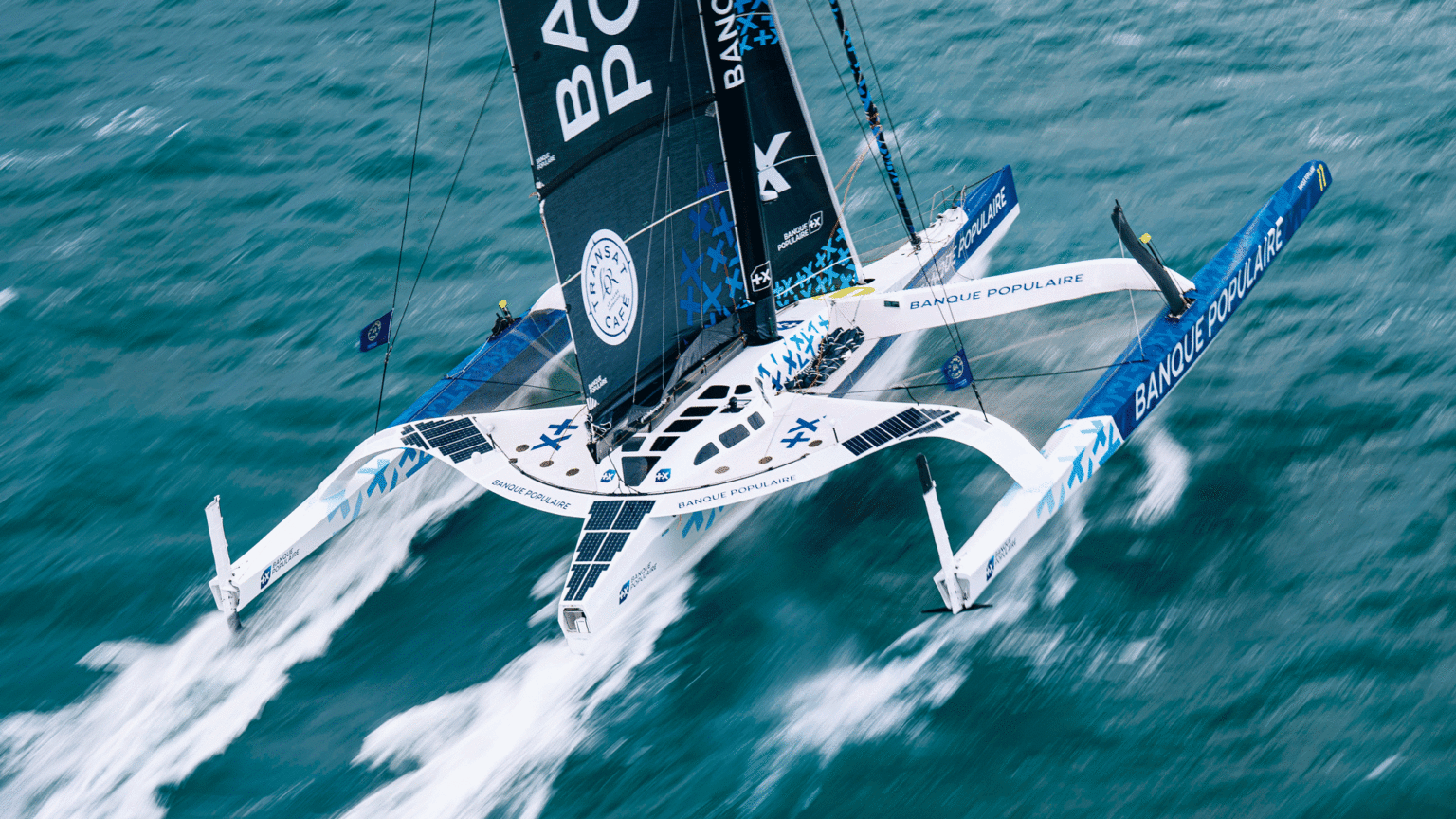
At Le Havre harbour the Transat Café L’Or fleet split into four divergent routing plans: Ultims to the Saint Peter and Saint Paul archipelago, IMOCAs toward the Canary marks, Ocean Fifty trimarans steering for a right-hand turn at the Cape Verdes, and Class 40s paused at La Coruña to wait out a storm — a logistical choreography that preceded three Ocean Fifty capsizes on the opening night when gusts hit 30–40 knots and rescue helicopters lifted six sailors to safety.
Race logistics and fleet composition
The 17th edition ran from Normandy to Martinique, with organisers deliberately assigning separate courses to compress finishes across classes. The start at Le Havre assembled four main divisions: four Ultims, a record ten Ocean Fifty trimarans, 18 IMOCAs and 42 Class 40s. Routing decisions, safety holds and enforced pauses (notably the three-day Class 40 stop at La Coruña) show modern offshore race management balancing spectacle with conservatism in the face of a strong Atlantic low pressure system moving through Biscay.
Fleet table: entries and finish windows
| Class | Entries | Key turning marks | Planned finish window |
|---|---|---|---|
| Ultim | 4 | Saint Peter & Saint Paul | Within days |
| Ocean Fifty | 10 | Cape Verdes | Hours apart (target) |
| IMOCA | 18 | Canaries | Days |
| Class 40 | 42 | South of Azores (after La Coruña hold) | Extended by weather |
Night of capsizes: safety response and outcomes
Late on Saturday 25 October, three Ocean Fifty trimarans capsized within hours in strong gusts and big seas. Among those overturned were the crew of a smashed Ocean Fifty who reported airspace becoming scarce and an aft hatch blocked by bags; skipper Tanguy Le Turquais later described the seconds of entrapment as feeling like hours. All sailors were evacuated by helicopters and boats: six competitors were rescued without fatality, highlighting the effectiveness of coordinated maritime and aerial search-and-rescue assets in offshore racing.
📚 You may also like
Key safety takeaways
- Rapid rescue coordination is essential: helicopters and nearby support craft reduced exposure time for capsized crews.
- Stowage discipline matters: blocked hatches contributed to alarm in one case.
- Class rules and equipment (one-design foils, limited sail inventories) reduce technological arms races but cannot eliminate extreme-weather risk.
Close competition: Ocean Fifty and Class 40 narratives
The Ocean Fifty fleet signalled the class’s maturity: budget and tech controls (maximum 11 boats, one-design C-foils, constrained sail programmes) delivered intense, strategic racing. Edenred 5 (Emmanuel Le Roch and Basile Bourgnon) started strong but suffered gear damage late, dropping from a 30-mile lead to fifth after a gennaker pole failure damaged the rudder link.
By race end the Ocean Fifty victory was decided by an 18-minute margin: underdogs Baptiste Hulin and Thomas Rouxel on Viabilis Océans used a southerly approach to overtake the Figaro-trained pairing Pierre Quiroga and Gaston Morvan on WeWise within the final 90 minutes, exemplifying how tactical routing and timing can trump raw boat speed.
Minutes make the difference
The Class 40 fleet also produced tight finishes — just 22 minutes separated the top two — despite the enforced weather hold that scattered strategic plans and required crews to recalibrate sail plans, provisioning and rest cycles.
IMOCA storylines and skipper reshuffles
IMOCAs arrived with post-Vendée Globe reshuffles: Britain’s Sam Goodchild had been appointed to helm Macif Santé Provence for the next cycle; he and co-skipper Lois Berrehaar arrived as favourites alongside Yoann Richomme and Corentin Horeau on Paprec Arkéa. The division’s course to the Canaries provided a distinct strategic test from the Ocean Fifty and Ultim routing, emphasising weather routing skills and systems reliability over outright foiling longevity.
Historical context and facts
The Transat follows the old ‘coffee route’ from northern France to Martinique and has evolved through sponsorship and technical change; the 2025 launch crop in Class 40 contrasted with decade-old Corinthian entries, making the race a cross-section of modern commercialised ocean racing and grassroots participation.
Implications for recreational sailing and charters
High-profile offshore incidents influence public perceptions of sailing safety and can drive demand for enhanced skipper training, better charter insurance, and stricter marina procedures. For those organising coastal holidays or charters, the lessons are clear: verify equipment, check weather routing expertise in charter captains, and select vessels with appropriate safety kit and crew experience.
Practical advice for renters and skippers
- Confirm the availability of a qualified captain if you lack offshore experience.
- Ask for a vessel’s recent maintenance log and safety equipment list before rent or charter.
- Plan routes that respect local weather windows — bays, gulfs and marinas can offer sheltered alternatives when offshore conditions turn volatile.
GetBoat always keeps an eye on news related to sailing and seaside vacations; the platform understands what it means to enjoy great leisure and the freedom of the ocean, and it values energy, choice and transparency for every renter or buyer.
Provide a short forecast on how this news could impact the global tourism and travel map: while dramatic, the Transat’s capsizes are unlikely to shift global tourism patterns materially, but they reinforce a market-level push toward improved safety standards and clearer charter disclosures. Start planning your next seaside adventure and make sure to book the best boat and yacht rentals with GetBoat before the opportunity sails away!
The Transat’s key highlights are compelling: high-performance fleets, dramatic rescues, tactical wins decided by minutes, and the endurance of Corinthian sailors alongside professional skippers. Experiencing a new coastal destination is always a multifaceted process where one learns about culture, nature, the indescribable palette of local colors, rhythms of life and unique service aspects; if you are planning your next trip to the sea, you should definitely consider renting a boat (boat rentals, rent a boat, rent a yacht), as each inlet, bay, and lagoon is unique and tells you about the region just as much as the local cuisine, architecture, and language GetBoat.com
In summary: the Transat Café L’Or combined complex logistics, variable routing, and extreme-weather incidents to deliver tight finishes and vivid safety lessons. From the capsizes that tested response systems to the 18‑minute Ocean Fifty victory and the staggered Ultim and Class 40 finishes, the event underlines the interplay of technology, tactics and seamanship. For holidaymakers and charter customers this translates into concrete actions — check vessel condition, vet captains, and choose routes suited to conditions. Platforms like GetBoat.com make finding the right yacht or boat for sailing, charters, or sale easier, offering transparency on make, model and ratings so you can plan beach days, lake cruises, gulf explorations, or superyacht experiences with confidence — rent, charter or buy and set your own course. Find your course, choose your freedom.