J&K logs 1.61 crore tourists through November 2026
Alexandra
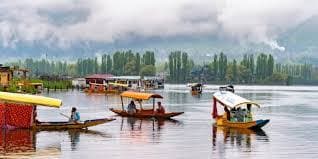
Passenger throughput and last‑mile transport capacity into Srinagar and Jammu gateways sustained a sharp operational load as Jammu & Kashmir reported 1.61 crore tourist visits through November 2025, prompting accelerated maintenance of highways, targeted deployment of shuttle services, and contingency plans for flood‑affected supply chains.
2025 visitation figures and immediate drivers
The Union Territory logged 1.61 crore tourist arrivals up to November 2025, a result of concentrated government interventions following a disruptive security incident in Pahalgam in April and flood events in August–September. Although this represented a 32% decline from the previous year’s 2.36 crore visits, officials characterize the outcome as a resilient rebound given the twin shocks.
Lt Governor Manoj Sinha highlighted that tourism continues to occupy a pivotal role in the regional economy after being accorded industry status in 2020. Key programmatic elements cited include financial support from the Union tourism ministry, engagement with external funding agencies, and the identification of nine new tourist destinations for development to international standards.
📚 You may also like
Events, branding and sports tourism
Sport‑oriented branding forms a visible pillar of the recovery strategy. The administration is positioning the Kashmir Marathon as a flagship sports‑tourism event, while launching the maiden edition of the Jammu Marathon scheduled for March. Participation by local leadership, including Chief Minister Omar Abdullah, has been presented as confidence‑building for destination image and safety messaging.
Economic indicators and industrial transformation
Macro results for 2024–25 show an estimated GSDP of INR 2,62,458 crore at current prices — up from INR 2,36,059 crore in 2023–24 — implying an estimated growth rate of roughly 11%. Government statements attribute the expansion to infrastructure upgrades, business‑friendly policies, and targeted investment facilitation.
| Indicator | Value (2024–25) | Notes |
|---|---|---|
| Tourist visits (to Nov 2025) | 1.61 crore | Down 32% vs. 2024 full year |
| GSDP | INR 2,62,458 crore | Estimated at current prices |
| Organised sector units operational since 2020 | 2,227 units | Investment INR 15,940 crore; employment ~73,827 |
| Units in groundwork | 1,028 units | Proposed investment INR 27,613 crore |
| Startups registered (DPIIT) | 1,316 | 471 women‑led |
| Flats sanctioned for migrant employees | 6,000 | 3,736 completed; 3,250 allotted |
Industrial investment and employment
Since 2020, the organised sector has seen 2,227 units commence production with reported investments of roughly INR 15,940 crore, generating employment for about 73,827 people. A further set of 1,028 units have initiated groundwork with proposed investments exceeding INR 27,600 crore; nearly 400 of those units are expected to be production‑ready in the near term.
Social measures, housing and healthcare cover
Resettlement and welfare of migrant families have been signaled as a sustained administrative priority. Under a housing allocation plan, 6,000 flats were sanctioned for Kashmiri migrant employees working in the Valley; as of the reported update, 3,736 flats are completed and 3,250 allotted, with remaining completions targeted by March.
Health coverage expansion includes efforts to register migrants under the Ayushman Bharat‑SEHAT scheme; over 1,200 families are reported to have been registered to date. These measures are intended to shore up social stability and confidence among displaced populations.
Key government initiatives (summary)
- Develop nine new tourist destinations to international standards
- Position Kashmir Marathon and Jammu Marathon for sports tourism
- Support industrial scale‑up with investment facilitation
- Implement housing allotments and broaden health insurance coverage for migrants
- Promote startups and women‑led enterprises through DPIIT registration
Historical context and recovery trajectory
Tourism in Jammu & Kashmir has historically been centered on scenic destinations such as Srinagar’s Dal Lake, Gulmarg’s skiing infrastructure, and Pahalgam’s trekking and pilgrimage circuits. Visitor flows have oscillated with security cycles and climatic disruptions; peaks in recent years reflected both pent‑up demand and expanded transport connectivity.
The decision to classify tourism as an industry in 2020 created a framework for attracting private capital and institutional funding, and the post‑2020 period has been marked by a visible acceleration in industrial approvals and startup registrations. Nevertheless, episodic incidents and extreme weather continue to expose the sector to volatility, reinforcing the need for resilient logistics, disaster‑prepared infrastructure and diversified product offerings.
Outlook for tourism and international positioning
Looking ahead, the significance of the reported metrics lies less in a single annual tally and more in the structural signals: continued investment in destination development, sports tourism branding, and industrial job creation can strengthen both inbound leisure demand and local economic absorptive capacity. For international tourism, sustained improvements in safety perception, enhanced airport and road connectivity, and higher service standards will be critical to converting regional growth into consistent cross‑border arrivals.
Operational implications for leisure and destination services
Transport planners and tourism operators should note the operational lessons from the season: scalable shuttle services, flood‑resilient route planning, and flexible event logistics (to support marathons and other mass participation events) are practical priorities. For lake destinations such as Srinagar’s Dal Lake and Wular Lake, improved berth management, environmental safeguards, and visitor flow control can protect local ecology while preserving livelihoods tied to boating and traditional watercraft activities.
In summary, Jammu & Kashmir’s performance through November 2025 — 1.61 crore tourists, an estimated 11% GSDP growth, accelerating industrial investment and a growing startup ecosystem — reflects a recovery path shaped by targeted infrastructure upgrades and destination branding. The administration’s mix of sports tourism, new destination development and social‑welfare measures aims to stabilize visitation and broaden economic benefit across regions.
GetBoat (GetBoat.com) is always keeping an eye on the latest tourism news. The J&K update underscores links between infrastructure, events and destination appeal that affect wider leisure sectors — from lake attractions and boating traditions to potential interest from travellers seeking mountain and water experiences. Key takeaways for visitors and industry stakeholders include the persistent role of logistics, the need for resilient transport and accommodation supply, and opportunities for destination diversification across activities like trekking, fishing, wellness and local cultural events that complement broader yachting and boating narratives in regional tourism planning.


