Valentine’s Toliva Shoal Race — 2026 Southern Sound
Alexandra
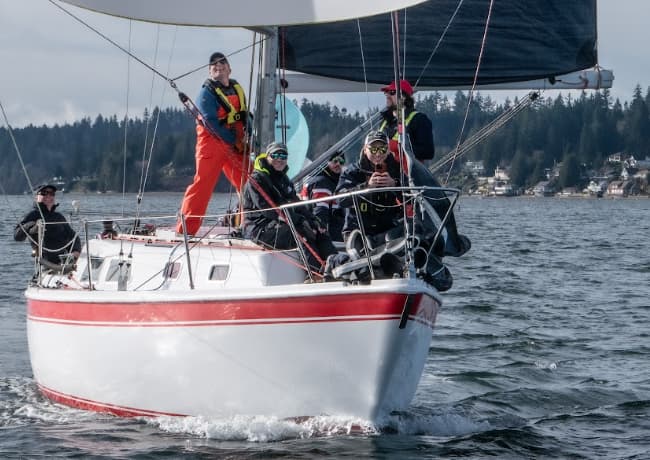
The 55th Toliva Shoal Race on February 14, 2026, followed a precise 38-mile routing out of Budd Inlet, through Dana Passage, around Johnson Point with a turn at the Toliva Shoal buoy and a north-of-Anderson-Island return leg, and the Race Committee later announced a shortened finish at Toliva Shoal buoy.
Pre-race logistics and shore support
Race planning relied on a coordinated shore-side and on-water team: Olympia Yacht Club and South Sound Sailing Society co-sponsored the event, with SSSS Commodore Robert Hargreaves and Race Chair Marvin Young leading the organization and Bill and Vickie Shelton acting as Principal Race Officers on the water. Breakfast and a Friday dinner helped reduce delivery pressure for visiting crews, many of whom traveled significant distances from Tacoma, Des Moines, and Seattle to reach Olympia.
Crew movement and boat deliveries
- Home ports as far as Tacoma and Seattle required planning for winter southerlies; some skippers prioritized overnight stays ashore.
- Delivery decisions influenced crew availability for post-race recovery and motor back to Olympia.
- Shortened course announcement at Toliva Shoal buoy shifted tactics and reduced exposure to the ebb tide on the return.
Fleet composition and notable entries
The fleet included performance and cruising boats across PHRF and ORC classes. The cruising and Commodore classes received a 30-minute head start, with spinnakers flying on boats like Cal 40 White Squall and C&C 37 Xocomil. Racing classes featured smaller keelboats such as Ranger 33 Aurora and Cal 33 Cherokee, and faster designs like Flying Tiger 10 Tigger and J/35 Grace E.
📚 You may also like
Crew snapshot — Aurora (Ranger 33)
Aurora sailed with six crew: seasoned sailors including Dave Branch (78, long Finn and Star class experience), longtime Star crew Jonathan Turvey teaching his son Jackson, Tacoma PHRF sailor Mike, and a newer racer, Luke, noted for knot-tying and quick learning in the Olympia Star class. The crew mix illustrates a common charter-boat dynamic: blending veterans and newcomers to cover navigation, sail trim, and boat handling.
Race conditions and tactical shifts
The forecast called for light, variable air around 5 knots, but winds of 7–10 knots were observed at the start. Early gains came off the line, with Aurora and Cherokee matching speeds until Cherokee slipped through in the narrow Dana Passage. Convergence zones near Johnson Point created a de facto restart for much of the fleet; boats that escaped the lull early, like Antrim 27 Anarchy, earned position advantages.
Key tactical choices
- Shore versus middle-of-channel lines through Dana Passage and north of Ketron Island.
- Using Ketron Island as a current blocker during the flood; some boats gambled by hugging the east side to mitigate flood effects.
- Splitting from the pack off northern Ketron to chase a fresher northerly breeze and the lay line, enabling Aurora to tack across Cherokee and secure the class win.
Turning marks and the shortened finish
The Nisqually Delta rounding and the reach toward Lyle Point tested fleet speed across shifting tide fields. When the Race Committee shortened the course at Toliva Shoal Buoy, it altered the risk calculus: crews no longer faced the prospect of a long slog back against the ebb, and boats that had conserved for the finish could sprint to the shortened line.
| Prize | Boat | Notes |
|---|---|---|
| Governor’s Trophy / ORC / First Overall PHRF | Flying Tiger 10 Tigger | Fastest to the shortened finish |
| Class 3 | J/35 Grace E | Strong upwind and fleet management |
| Class 7 | Aurora (Ranger 33) | Tactical split and tack across Cherokee |
| Other class winners | Anarchy; Aerodyne 38 Kahuna; Beneteau 35s5 Les Chevaux Blancs | Cruising and Commodore’s class boats also performed well |
Post-race movements and community
Many boats from Seattle and other northern ports headed home immediately after the finish; Cherokee motored back to Olympia with several crew joining Aurora for the delivery. The dinner-before-and-breakfast-after routine reinforced the social logistics that make Southern Sound events attractive: it’s part race, part weekend cruise, and part reunion.
Implications for charter operators and marinas
For charter companies and marinas, Toliva Shoal highlights seasonal demand spikes for local rentals, skipper services, and mooring space. Events like this can drive short-term charter bookings, captain hires, and interest in yachting activities across marinas from Olympia to Tacoma.
The Toliva Shoal Race delivered classic South Sound tactics: reading tides, choosing sides of the Sound, and committing to riskier splits when the breeze shows itself. Results honored speed and strategy — with Flying Tiger 10 Tigger taking major honors and Aurora prevailing in a tight Class 7 duel with Cherokee. For sailors, charter operators, and anyone who rents a boat for a weekend blast, the race is a reminder that timing, crew experience, and local knowledge matter. In short: plan your route, choose your crew, and when the wind shifts, go with it — you’ll be glad you did.


