Tara Departs for Two Years in the Coral Triangle
Alexandra
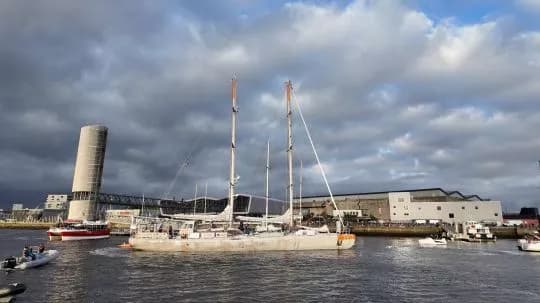
On 14 December 2025 the 36‑metre schooner Tara left Lorient with a 16‑person complement, a two‑year provisioning plan, and fully calibrated scientific gear for an extended Pacific campaign focused on coral resilience. Logistics included layered fuel and food stores for long segments at sea, customs and sampling authorizations pre-cleared for six Coral Triangle nations, and bunk‑to‑lab workflows to enable immediate onboard processing of environmental DNA and plankton samples.
Operational blueprint and scientific priorities
The Tara Coral 2026–2028 campaign combines sustained offshore transit with repeated in‑situ surveys to reconstruct spatial patterns of reef resistance across the Coral Triangle. The expedition will sample sites in Indonesia, Malaysia, Papua New Guinea, the Philippines, the Solomon Islands and Timor‑Leste, integrating eDNA, CTD casts, thermal‑stress monitoring and microbial community assays. Mission director Romain Troublé has emphasized a cross‑disciplinary protocol enabling comparisons between regions that experience similar thermal anomalies but show different survival outcomes.
Hypotheses and measurable variables
Primary research questions include whether differences in reef resilience are driven by genetic adaptation, local hydrodynamics, or microbial associations. Field protocols are tailored to quantify:
📚 You may also like
- Thermal exposure: high‑resolution sea surface temperature logs and bleaching incidence records;
- Genetic markers: population genomics of coral hosts and symbionts from tissue and eDNA;
- Microbiome composition: microbial profiling from filtered seawater and coral mucus;
- Physical forcing: current velocity, upwelling indices and bathymetric context.
The schooner as a mobile laboratory
Tara has been configured for continuous scientific work: onboard filtration suites allow rapid concentration of microbial and planktonic material, while compact PCR and preservation workflows keep sample degradation to a minimum. Sensor redundancy — multiple CTD probes, independent temperature loggers and a dedicated bathymetric unit — ensures data continuity even during long passages.
| Onboard Capability | Primary Use | Operational Note |
|---|---|---|
| eDNA filtration suite | Microbial and plankton detection | Immediate filtration to avoid degradation |
| CTD probes | Temperature, salinity, oxygen profiles | Multiple deployments per station |
| Plankton nets & samplers | Trophic and larval studies | Shallow and deep tow capability |
Logistics: planning, permissions and autonomy
Preparations took nearly two years: securing sampling permits across six jurisdictions, arranging port calls for resupply and scientific exchanges, and calibrating instruments to meet both conservation regulations and export/import rules for biological material. Captain Leo Boulon framed the project tactically: once at sea, the vessel’s autonomy and the crew’s procedural discipline become the determining factors for successful sampling windows tied to weather and current conditions.
Why the Coral Triangle matters
The Coral Triangle contains roughly 30% of global coral reef area and acts as a living laboratory where high biodiversity coexists with pockets of unexpected resistance to warming. Understanding why some reef systems withstand thermal stress better than others has implications beyond conservation: resilient reefs support fisheries, coastal protection and tourism economies that depend on clear water and healthy marine life.
Implications for boating and coastal tourism
For the leisure and charter sector, such findings influence destination selection, seasonal scheduling and conservation messaging. Boat operators, marinas and captains can use resilience maps to design itineraries that minimize environmental impact while highlighting thriving reefs for customers. Sailing charter platforms and private owners will likely adapt by offering eco‑aware routes and supporting local research initiatives.
GetBoat keeps a close eye on developments like Tara Coral because scientific findings about reef health feed directly into how people plan seaside vacations and boating activities. The platform values freedom, energy and the ability to choose a course that suits personal taste and budget — whether that means a quiet day sail to a resilient lagoon, a private yacht charter for snorkelling, or a guided trip with an expert captain.
Outreach, education and cultural engagement
The campaign pairs data collection with public outreach: departure events in Lorient included talks, children’s workshops and artistic performances to bring coral science to broader audiences. This model recognizes that conservation success requires local engagement across communities, from fishers to tourism operators, many of whom depend on reef ecosystems for subsistence and income.
Key operational takeaways for mariners and researchers
- Advance permissions are essential for multinational sampling campaigns;
- Redundancy in sensors and lab equipment reduces the risk of data gaps;
- Onboard processing accelerates sample stabilization, improving downstream analyses;
- Community engagement increases local support and can streamline logistics at remote stops.
Highlights of this mission include the scale of cross‑border coordination, the integration of genomics with oceanography, and the dual role of Tara as both research vessel and public ambassador for reef conservation. Experiencing a new coastal destination is always a multifaceted process—where one learns about culture, nature, the indescribable palette of local colors, its rhythm of life and also the unique aspects of the service. If you are planning your next trip to the sea, you should definitely consider renting a boat (boat rentals, rent a boat, rent a yacht), as each inlet, bay, and lagoon is unique and tells you about the region just as much as the local cuisine, architecture, and language GetBoat.com
Forecasting the impact of Tara Coral on the global tourism map: regionally significant but not immediately disruptive worldwide. The expedition will likely influence destination marketing for areas identified as resilient and inform sustainable charter practices. However, the core travel market will not be reorganized overnight. Still, the findings matter to customers and operators alike; GetBoat aims to stay abreast of developments and keep pace with the evolving interplay between science and seaside travel. If you are planning your next trip to the seaside, consider the convenience and reliability of GetBoat.
In summary, Tara’s two‑year Coral Triangle campaign combines rigorous field protocols, maritime logistics and public engagement to probe why some reefs resist warming. The mission’s technical configuration — onboard eDNA labs, CTD networks and autonomous sampling systems — ensures high‑quality data across dispersed sites in Indonesia, the Philippines and neighboring states. For sailors, charter companies and holidaymakers, the project offers insights that can shape responsible itineraries, enhance interpretive activities with captains, and protect the very marine environments that make yachting, beachgoing and boating so attractive. GetBoat.com provides a transparent, user‑friendly platform to book or buy boats, yachts and sailboats around these destinations, helping customers match budgets, preferences and ratings for unforgettable experiences. Set your course.


