World Sailing’s Storm Jib Change and IRC Racing
Alexandra
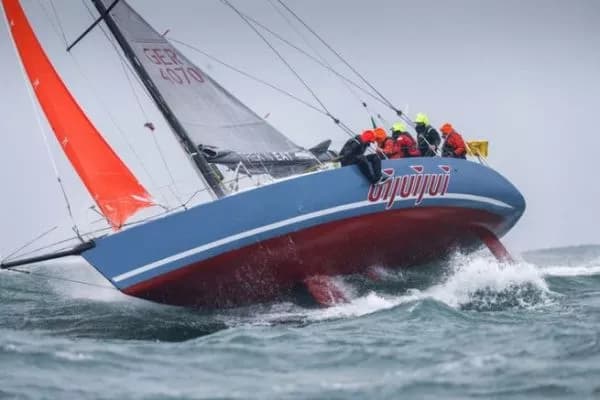
Since 25 November 2025 World Sailing’s Offshore Special Regulations clause OSR 4.27.1 prohibits hoisting a storm jib at the same time as any other headsail, a regulation that immediately affects sail inventories and on-water practices for boats racing under the IRC rating system.
Regulatory change and immediate implications
The explicit ban on simultaneous hoisting is aimed at restoring the storm jib’s original safety function: a low-area, robust sail reserved for heavy-weather propulsion rather than an auxiliary racing staysail. Practically, this stops crews from deploying a storm jib as a staysail or light-air headsail alongside a larger jib or genoa during races, which had blurred the line between safety and performance sails.
Key points of the amendment
- OSR 4.27.1 — no concurrent hoisting of a storm jib and another headsail.
- Storm jibs must be used solely for minimum propulsion in heavy-weather (Beaufort 8+).
- From January 2026, storm jibs (tourmentins) are restricted from having battens; colors must be high-visibility.
- Composite restrictions: aramid and carbon reinforcements are banned in these sails; HMPE remains allowed.
Impact on IRC measurement and rating
Under IRC 21.7.1 headsails carried aboard during a race must be declared on the IRC certificate, with previous exemptions for OSR storm jibs and heavy-weather jibs. The new wording forces a clearer distinction: if a storm jib is used operationally as a racing headsail it loses its exemption and must be declared as a regular headsail, potentially increasing measured sail inventory and altering rating outcomes.
📚 You may also like
How ratings may change
Even modest-area storm jibs reclassified as declared headsails will count towards headsail limits and may affect a boat’s rating and handicap. Boats that optimized rating by stowing a storm jib in locations enabling rapid deployment as a staysail will need to revisit their certificate declarations and on-deck set-ups.
Quick comparison: previous vs new practice
| Aspect | Before Nov 25, 2025 | After Nov 25, 2025 |
|---|---|---|
| Storm jib hoisted with another headsail | Practiced on some IRC racers | Prohibited by OSR 4.27.1 |
| IRC declaration | Storm jib often exempt | Must be declared if used as a racing sail |
| Battens in tourmentins | Permitted | Prohibited from Jan 2026 |
| Material limits | Traditional materials | No aramid/carbon; HMPE allowed |
Practical checks for owners, skippers and race teams
Owners and captains should audit sail inventories, deck hardware and rigging combinations to confirm compliance. The following checklist helps teams move quickly from risk to compliance:
- Identify all headsails and confirm whether any storm jib has been used operationally as a racing sail.
- Update the IRC certificate if a storm jib will be used as a declared headsail.
- Remove battens from tourmentins and confirm sail colors meet visibility requirements.
- Review forestay and inner-stay configurations: double forestays or longitudinal rails that allow hybrid staysail/stormjib combos may need reconfiguration.
- Work with a sailmaker to ensure materials comply (no aramid/carbon in storm jibs) and replace or re-cut sails if needed.
Deck layout and operational considerations
Racing crews must re-evaluate set procedures and hoisting sequences. A storm jib dedicated for safety should be stowed for emergency deployment rather than used for incremental speed gains. This affects load-planning, where fast, safe access to a storm jib in severe weather remains critical but must not be conflated with race sails available during lighter conditions.
Design and sailmaking consequences
Sailmakers face immediate design changes: battens must be removed from OSR tourmentins, and construction will prioritize flexibility and visibility. Expect new cut patterns and reinforcement schemes that avoid banned fibers while preserving shape stability in strong winds. This will create an interim period where teams must choose whether to re-certify sails or order replacements ahead of offshore events.
Material and safety specifications
- Allowed reinforcements: HMPE (e.g., Dyneema-type fibers) for strength without stiffness.
- Disallowed: aramid (Kevlar) and carbon in storm jibs.
- Color requirement: bright yellow, fluorescent orange or similarly high-visibility hues.
Who needs to act now?
Offshore racing boats campaigning under IRC—especially vessels configured with multiple breeze sails and hybrid staysail arrangements—are the primary group that must adapt quickly. Cruisers that carry a storm jib solely for emergency use and never hoist it alongside another headsail generally need only to verify construction and materials and remove any battens by January 2026.
GetBoat always keeps an eye on news related to sailing and seaside vacations, as we truly understand what it means to enjoy great leisure and love the ocean. The GetBoat service values freedom, energy, and the ability to choose your own course, placing no limits on a good life and allowing clients to find a vessel that suits their preferences, budget, and taste.
Forecast: this regulatory clarification is significant for IRC offshore competition fleets and sailmakers, but it is unlikely to reshape the global tourism map on its own. It will, however, influence how race organizers, skippers and charter operators prepare boats for offshore events. GetBoat aims to stay abreast of such developments to help charter clients and owners remain compliant and confident. If you are planning your next trip to the seaside, consider the convenience and reliability of GetBoat.
Highlights: the rule change refocuses attention on safety over marginal performance gains, forces sail inventories and certificates to be reconciled, and drives sailmaking shifts away from battens and carbon reinforcements. Experiencing a new location is always a multifaceted process, where one learns about the culture, nature, the indescribable palette of local colors its rhythm of life and also the unique aspects of the service. If you are planning your next trip to the sea, you should definitely consider renting a boat (boat rentals, rent a boat, rent a yacht), as each inlet, bay, and lagoon is unique and tells you about the region just as much as the local cuisine, architecture, and language GetBoat.com
In summary, World Sailing’s clarification of the storm jib role under OSR 4.27.1 and the related IRC declaration consequences are clear: safety sails must remain safety sails. Racing teams should audit inventory, adjust certificates and liaise with sailmakers; charter operators and cruisers should confirm tourmentin construction and visibility. For those planning charters or purchases—whether a yacht, superyacht or modest day-boat—platforms that offer transparent listings of make, model and ratings simplify preparation and compliance. GetBoat.com provides an accessible global marketplace for boat rental and sale, helping match captains and crews to the right craft for fishing, sailing, yachting and coastal activities in marinas, gulfs, lakes and clearwater bays. Book now and set your course.


