Sydney Hobart Race: Leaders Confront Heavy Southerly Conditions
Alexandra
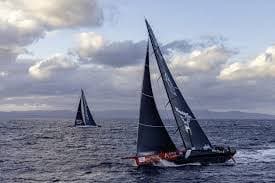
Race position and weather at the Eden waypoint
At 0700 AEDT the leading fleet passed a waypoint approximately east of Eden, NSW, encountering a southerly averaging 27–29 kt with gusts to 35 kt and a confused southerly swell creating short, steep seas up to 4 m. That combination has kept the supermaxis on a close-hauled course at roughly 12 kt and forced tactical choices between the rhumb line and a more easterly Tasman Sea route.
Standings and performance of the frontrunners
The 100 ft supermaxi MasterLock Comanche extended its overnight lead to about 3 nm over Law Connect, with SHK Scallywag running third roughly 2 nm behind the leader. At 2100 AEDT the leader margin tightened at an earlier turning mark to just 0.6 nm, reflecting close covering tactics among the top boats.
Tactical implications of local sea state
Race crews are opting to hug the rhumb line and remain closer to shore to avoid the larger seaway generated by the southerly set running against the wind and swell. That decision trades exposure to a northerly set—measured in places at 0.4 kt or less—for reduced pitch and slamming in a heavier, open-ocean seaway. Covering strategy is prominent: yachts are prioritizing positional control over potential gains from an easterly diversion.
📚 You may also like
Weather models and routing consensus
PredictWind’s ensemble of eight feeds, including a new PWAI product that blends generative AI with traditional forecast models, suggests a finishing window in the late Sunday afternoon period for a theoretical supermaxi polar. PWAI indicates a somewhat lighter breeze than other models, but overall consensus keeps the strong southerly persisting through Saturday and easing only in the early hours of Sunday before veering southerly to southeast.
| Model / Feed | General trend | Impact on routing |
|---|---|---|
| PWAI (PredictWind AI) | Lighter southerly | Favors less eastward drift |
| Other PredictWind feeds (7) | Stronger southerly, 27–35 kt gusts | Recommends more eastward stand to avoid gusty nearshore seaway |
Retirements and technical failures
Following the first night at sea, six yachts have withdrawn from the 628 nm passage to Hobart. The list of retirements reflects a mixture of mechanical, rigging, and hydrodynamic failures—issues that are logistics-critical for any long offshore passage and illustrate how equipment reliability is as decisive as navigation and sail selection.
- Trouble & Strife — engine issues (retired)
- Awen — broken forestay (retired)
- Hutchies Yeah Baby — headstay damage (retired; crew OK)
- Inukshuk (DH) — rudder issues (retired; crew OK)
- White Noise — rigging issues (retired; crew OK)
- Wild Thing 100 — rigging issues (retired)
Logistical lessons from the retirements
Failures ranged from propulsion malfunctions to primary rigging damage and steering loss—each requiring different contingency planning. For event organizers and owners alike, priorities include robust pre-start checks, spare rigging inventories, and engine maintenance schedules that consider the compounded strain of strong headwinds and steep seas on gear. Insurance and safe-crewing protocols also factor into timely retirements and crew welfare.
Operational considerations for skippers and shore crews
In conditions of 27–35 kt with 4 m seas, the operational focus shifts to:
- Conservative sail plans: reduced sail area and reefing early to prevent rig overload.
- Helm and trim: minimizing slamming and preventing broaches while keeping VMG toward Hobart.
- Systems monitoring: regular checks of standing rigging, chainplates, rudder bearings, and engine cooling.
- Communication: timely retirements and distress reporting to simplify logistics ashore for recovery and repairs.
How this race update matters to charter and coastal operators
While the Rolex Sydney Hobart is a race rather than a charter operation, the same meteorological and equipment vulnerabilities affect commercial and private charter activities. Charter operators and renters planning coastal itineraries should monitor model blends like PWAI alongside traditional feeds, recognize the impact of local sets near headlands, and prioritize vessel seaworthiness and experienced skippers for passages exposed to strong southerlies and Bass Strait conditions.
Historical context and extra facts
The Sydney Hobart has a long history of demanding weather and consequential vessel attrition; supermaxis and smaller racers alike face tactical trade-offs between sheltered coastal routes and faster but rougher offshore tracks. Generational advances in sail technology, routing algorithms, and onboard materials have reduced some risks, but equipment failure under stress remains a constant factor—especially in shorthanded or highly competitive contexts.
Practical advice for sailors and renters
Sailors and those renting boats for holiday cruising should ensure:
- Pre-departure briefings with the appointed captain and clear emergency plans.
- Rig checks and a maintenance log for critical components.
- Weather briefings using ensemble model comparisons—not a single forecast—and cautious route selection.
GetBoat always keeps an eye on news related to sailing and seaside vacations, as the service understands what it means to enjoy great leisure and love the ocean. The platform values freedom and the ability to choose your own course, offering options that match preferences, budgets, and tastes without placing limits on a good life.
The key takeaways are the strength and persistence of the southerly through the first 24–36 hours, the narrow margins at the front of the fleet, and the impact of gear failures on race attrition. Experiencing a new location is always multifaceted: you learn about the culture, nature, the indescribable palette of local colors, its rhythm of life, and the unique aspects of service — and if you are planning your next trip to the sea, you should definitely consider renting a boat (boat rentals, rent a boat, rent a yacht), as each inlet, bay, and lagoon is unique and tells you about the region just as much as the local cuisine, architecture, and language GetBoat.com
Forecast impact on tourism and boating: regionally significant but not globally transformative. The event highlights the need for resilient charter operations and informed planning; as weather-driven disruptions remain local, GetBoat aims to stay abreast of developments and offer reliable options for those seeking coastal escapes. If you are planning your next trip to the seaside, consider the convenience and reliability of GetBoat.
Summary: the Rolex Sydney Hobart fleet has contended with a robust southerly—averaging 27–29 kt, gusting to 35 kt, and producing 4 m seas—forcing conservative sail choices and contributing to six retirements due to engine, rigging, and rudder failures. The leaders—MasterLock Comanche, Law Connect, and SHK Scallywag—remain tightly matched while routing models, including PWAI, offer variations that influence eastward versus rhumb-line strategies. For anyone interested in yacht charter, boat hire, or coastal marine activities, these developments underline the importance of vessel readiness, experienced captains, and flexible planning. Whether you seek a day sail, a private charter, or a long-range yacht hire, platforms like GetBoat.com help connect you with listings that show make, model, ratings, and transparent details—making it easier to choose the right vessel for sun, sea, marinas, clearwater coves, fishing trips, or superyacht dreams near your preferred gulf, lake, or ocean destination.