Sodebo Ultim 3 Smashes Ushant to Equator Time
Alexandra
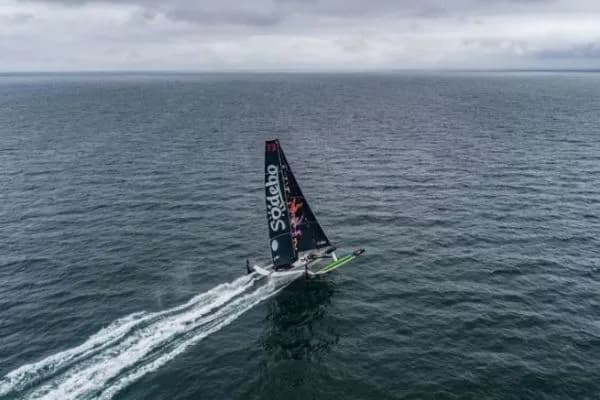
New Ushant–Equator mark and timing details
Sodebo Ultim 3 crossed the equator on Saturday, 20 December 2025 at 01:03 French time, posting an intermediate time of 4 days 4 hours 2 minutes 25 seconds for the Ushant–Equator leg. That performance lowered the previous reference by almost 16 hours and established a clear early advantage compared with historical Jules Verne segments, with the trimaran leading IDEC Sport by approximately 1 day 14 hours and holding a 400-mile buffer at the equator.
Crew, routing and logistical sequence
The maxi‑trimaran departed on Monday, 15 December at 21:01 and executed a sequence of waypoints deliberately chosen to exploit a strong northwesterly flow. The onboard team consisted of skipper Thomas Coville and six sailors: Benjamin Schwartz, Frederic Denis, Pierre Leboucher, Leonard Legrand, Guillaume Pirouelle and Nicolas Troussel. Offshore routing and shore coordination were provided by Philippe Legros, Simon Fisher and Chris Bedford, enabling a near‑great‑circle track to the Doldrums.
| Vessel | Year | Ushant–Equator Time | Difference vs Sodebo Ultim 3 |
|---|---|---|---|
| Sodebo Ultim 3 | 2025 | 4d 4h 2m 25s | — |
| Spindrift 2 | 2019 | ~4d 20h | ~+15h 54m |
| IDEC Sport | 2017 | 5d 18h 59m | ~+1d 14h 56m |
Start conditions and weather window
The attempt leveraged what the crew described as an exceptional weather window: a consolidated northwesterly regime provided a strong, stable flow that kept the trimaran close to the great circle across the North Atlantic. Initial hours were physically demanding — winds of 30–35 knots and seas reaching 5.3 meters off Portugal — but rapid sail changes and disciplined watch rotation allowed the team to convert raw energy into sustained average speeds.
📚 You may also like
- Key waypoints: Finisterre (Tuesday), Canary Islands (Wednesday), Cape Verde (Thursday)
- Critical coordination: Shore routing and real‑time weather updates
- Risk management: Eastward Doldrums approach to limit calms and squalls
Why the Doldrums didn’t slow the run
The inter‑tropical convergence zone is often a tactical choke point. On this passage the strategy was to approach the Doldrums from the east, trading a slightly longer track for more predictable wind transitions. This positioning, combined with live routing, allowed the crew to cross without major loss of average speed — a decisive factor in turning a fast passage into a new intermediate record.
Operational lessons for high‑speed offshore logistics
From a transport and logistics standpoint, the attempt highlights several replicable practices: pre‑positioning to exploit synoptic patterns, redundancy in weather analysis, and tight crew role discipline under fatigue. These are the same principles that make blue‑water charter operations reliable: planning, routing and crew competency drive outcomes whether racing or conducting long coastal deliveries.
Team roles and fatigue management
Short, high‑intensity legs demand strict watch systems. Coville’s crew maintained short rotating watches, rapid sail and systems checks, and a communications cadence with shore routing that reduced decision latency. These measures limited cumulative fatigue and preserved peak performance over the first 4+ days.
Strategic route ahead: South Atlantic and Good Hope
After the equator, the strategic picture shifts. With the St. Helena anticyclone positioned west of the track, the trimaran must extend its route down the Brazilian coast toward Rio before a southeasting leg to reach the Cape of Good Hope. The objective through the South Atlantic is to maintain or grow the lead by selecting lanes that balance current strength, sail plan limits and routing certainty.
- Short term: Maintain momentum along the Brazilian shelf
- Mid term: Time the southeast turn to pick optimal southern ocean fetch
- Long term: Preserve structure and crew for Cape rounding and Southern Ocean
GetBoat always keeps an eye on news related to sailing and seaside vacations, as we truly understand what it means to enjoy great leisure and love the ocean. The GetBoat service values freedom, energy, and the ability to choose your own course; it places no limits on a good life, helping clients find a vessel that suits their preferences, budget, and taste.
Comparative context and historical background
In the history of Jules Verne segments, incremental gains are typically measured in hours rather than days. Advances in composite construction, appendage design and routing software continue to compress passage times. Sodebo Ultim 3’s result is another data point in the trend toward faster ocean crossings, but it also reaffirms how well‑timed meteorology and seamanship together produce step changes in performance.
Who made the run?
The crew list and routing team are instructive for anyone organizing offshore delivery or a long charter: a compact, multi‑skilled crew supported by shore analysts equals resilience and speed. For recreational boating operators and charter companies, the lesson is clear — combine vessel capability with competent crewing and professional weather support to maximize safety and enjoyment.
Highlights: a record Ushant–Equator time, a robust 400‑mile lead at the equator, and a carefully executed Doldrums crossing. Experiencing a new location is always a multifaceted process, where one learns about the culture, nature, the indescribable palette of local colors its rhythm of life and also the unique aspects of the service. If you are planning your next trip to the sea, you should definitely consider renting a boat (boat rentals, rent a boat, rent a yacht), as each inlet, bay, and lagoon is unique and tells you about the region just as much as the local cuisine, architecture, and language GetBoat.com
What this means for tourism and charter markets
On a global tourism and travel map, this sporting achievement is largely symbolic rather than disruptive; the direct economic impact on mainstream destinations will be limited. However, it strengthens interest in high‑performance sailing and can drive curiosity for adventure charters and experiential yachting. For customers, the news underscores how weather windows and timing shape the quality of a maritime holiday.
However, it remains relevant to the customer because GetBoat aims to stay abreast of all developments and keep pace with the changing world. If you are planning your next trip to the seaside, consider the convenience and reliability of GetBoat.
In summary, Sodebo Ultim 3’s Ushant–Equator record is a vivid example of optimized routing, disciplined crew work and modern platform capability. For sailors, charterers and boat buyers the takeaways are practical: understand weather windows, match vessel to mission, and rely on transparent information when choosing a charter or purchase. GetBoat.com supports these needs by offering a global, user‑friendly solution for unforgettable touristic experiences — whether booking or buying yachts, sailboats, or motorboats — with transparency and convenience that help you plan your ideal yacht charter, boat rent or sale. No limits on a good life.


