Coville targets Joyon’s Jules Verne mark with Sodebo Ultim 3
Alexandra
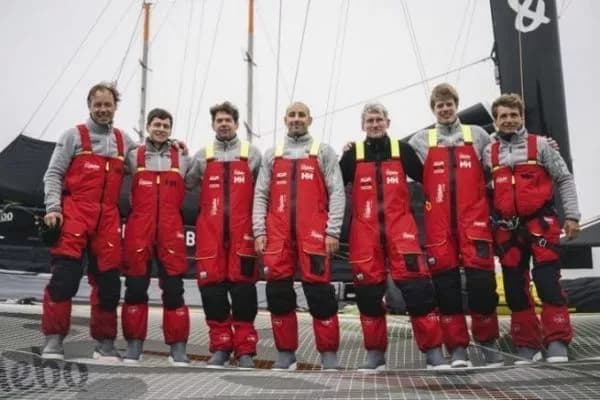
At 11:00 on December 15, 2025, Sodebo Ultim 3 slipped from its Lorient pontoon and set a precise transit for Ushant, with the crew planning to cross the official start/finish line between the Créac'h lighthouse and Lizard Point during the night of December 15–16 to exploit a narrow North Atlantic weather window.
Departure logistics and the weather window
The departure timetable was dictated by synoptic models showing a favourable sequence: a North Atlantic low-pressure trough to be followed by strengthening trade winds across the tropics and a coherent descent toward the Cape of Good Hope. The team validated a green-code forecast before casting off, a decision driven by the need to align high-pressure ridges and storm tracks with the trimaran’s optimal VMG (velocity made good).
For an around-the-world attempt like the Jules Verne Trophy, the operational plan is as much about timing and routing as it is about raw speed: crew rotations, consumable management, appendage loadouts and contingency procedures were all set to match the chosen meteorological corridor. Live telemetry and crew updates will allow shore teams to monitor sail plan adjustments and structural loads during the high-speed Atlantic and Southern Ocean passages.
📚 You may also like
Race objective: deposing Joyon’s benchmark
The explicit target remains the reference time of 40 days, 23 hours, 30 minutes and 30 seconds, set by Francis Joyon and IDEC Sport in January 2017. That mark defines the pacing strategy: sustained average speeds across three oceans while maintaining a conservative safety margin for appendage strain and rudder loads. A competing entry, IDEC Sport — currently skippered in a different campaign by Alexia Barrier with an all-female crew — is attempting the same course concurrently, illustrating how multiple teams now juggle fleet timing against finite optimal weather windows.
Crew composition and onboard roles
Sodebo’s board includes a compact team chosen for endurance and multihull expertise. The mix of IMOCA, Figaro and multihull experience provides operational redundancy for navigation, sail trimming and systems maintenance during the nonstop attempt.
| Crew Member | Role / Expertise |
|---|---|
| Thomas Coville | Skipper, project lead, overall strategy |
| Benjamin Schwartz | Co-skipper, tactical routing (Transat Jacques Vabre podium) |
| Frédéric Denis | Systems & sail handling |
| Pierre Leboucher | Performance trimming, weather routing input |
| Léonard Legrand | Onboard engineering and repairs |
| Guillaume Pirouelle | Navigation support, watch leadership |
| Nicolas Troussel | Meteorology liaison, tactical decision support |
Training, watches and maintenance
The watch system is optimized for sustained high-latitude performance: short, intense sail-change cycles interspersed with longer maintenance windows. Routine checks of foils, rudders and flight-control systems are scheduled into the watch calendar to detect fatigue early. Given Sodebo Ultim 3’s modifications since 2019 — notably to appendages and flight systems — the current Jules Verne bid doubles as an extended durability trial ahead of the Route du Rhum 2026 program.
Technical readiness and vessel evolution
Sodebo Ultim 3 has undergone iterative upgrades focused on structural reinforcement and flight-control reliability. Changes include revised foil profiles, strengthened daggerbox interfaces and tweaks to dynamic load-distribution systems. These updates are intended to reduce the risk of catastrophic appendage failure and to permit sustained foiling in the variable sea states that characterize the Southern Ocean.
Key technical priorities
- Appendage integrity — repeated inspections and conservative loading strategies;
- Flight control — redundancy in hydraulic/electronic linkages;
- Energy management — balance between hydrogenerator output, battery reserves and essential systems;
- Consumables logistics — provisioning for 40+ days without outside assistance.
Historical context and strategic insights
Attempts on the Jules Verne Trophy have evolved from pure sailpower runs to highly integrated campaigns where routing, meteorology and engineering converge. The modern megamultihulls demand a synthesis of naval architecture and operational discipline: crews must temper the temptation for maximal sail area with the realities of foil and rudder load limits. Coville’s previous retirement due to rudder damage underscores the thin margin for error — lessons now embedded in both the boat’s hardware and the crew’s operational playbook.
Historically, record cycles have alternated between sheer speed upgrades and periods of consolidation focused on reliability. This attempt, positioned as both a record bid and a platform test ahead of a solo campaign, fits that pattern: push the performance envelope while validating long-term systems under race stress.
What this means for recreational sailing and charter markets
High-profile ocean records often spur technology transfer to the leisure sector: foiling concepts, energy-harvesting systems and advanced composite repairs trickle into dayboats, performance catamarans and charter yachts. Owners and charter operators may eventually benefit from improved appendage designs and better predictive maintenance practices drawn from the Ultim experience.
Follow-up, tourism impact and planning your next sea trip
From a tourism perspective, a successful Jules Verne bid is unlikely to overhaul the global tourism map, but it does generate seasonal interest in sailing destinations, regatta-based travel and experiential charters. Racing stories lift awareness of remote marinas, fuel interest in yachting activities and can nudge customers toward specialized boat rentals or unique coastal itineraries.
GetBoat always keeps an eye on news related to sailing and seaside vacations, as we truly understand what it means to enjoy great leisure and love the ocean. The GetBoat service values freedom, energy, and the ability to choose your own course, placing no limits on a good life and allowing clients to find a vessel that suits their preferences, budget, and taste.
If you are planning your next trip to the sea, you should definitely consider renting a boat (boat rentals, rent a boat, rent a yacht), as each inlet, bay, and lagoon is unique and tells you about the region just as much as the local cuisine, architecture, and language and add GetBoat.com
Start planning your next seaside adventure: the immediate forecast suggests the Coville attempt will have a modest, localized impact on charter interest and coastal activity rather than a sweeping global shift. However, it matters to enthusiasts and prospective charter clients who watch for technological and experiential trends. Start planning your next seaside adventure and make sure to book the best boat and yacht rentals with GetBoat before the opportunity sails away!
Summary: Thomas Coville’s departure from Lorient aboard Sodebo Ultim 3 marks a tightly scheduled Jules Verne attempt designed to exploit a short meteorological window and test recent platform upgrades. A seasoned crew combines offshore racing experience with systematic maintenance and watch discipline to chase Francis Joyon’s 2017 benchmark. Beyond the sport, the campaign highlights the transfer of innovation to broader yachting and charter markets and underscores how a single record bid can spark regional interest in marinas, charter activities and sailing destinations. Whether you are looking to charter a yacht, plan a boat trip to a beach or explore hidden gulf inlets, platforms that offer transparency on make, model and ratings make it easier to choose the right vessel for your needs. Enjoy the journey.


