Shipwrecks and Safe Passage around Fathom Five
Alexandra
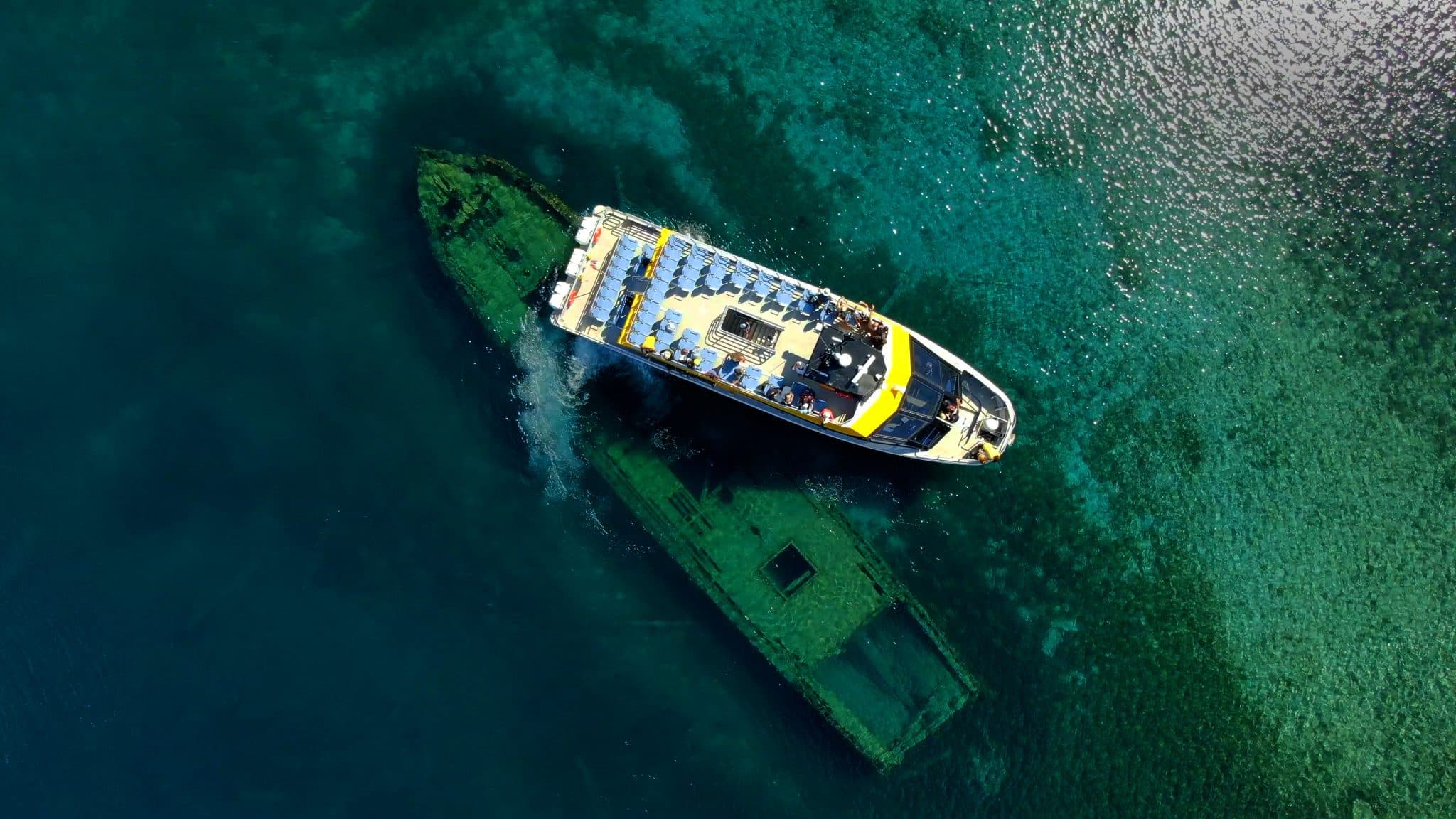
Within a 43-square-mile zone of Fathom Five National Marine Park, navigational hazards and submerged dolomite reefs force concentrated routing for tour operators, dive charters, and recreational skippers, creating a dense cluster of wrecks that demands precise charts, seasonal scheduling, and experienced captains for safe access.
Geology, currents and why ships foundered here
The 60-mile Bruce Peninsula, part of the Niagara Escarpment, is composed mainly of dolomite that produces sheer cliffs, caves, and shallow reefs that sit just below the surface. Where the escarpment dips or shoals occur, the combination of erratic currents, sudden storms off Lake Huron and the constricted approach to harbours such as Tobermory created natural traps for 19th- and early 20th-century wooden and iron-hulled vessels.
Historically, captains seeking refuge from gales would attempt to enter narrow bays or anchor close to shore; many struck reefs like those off Cove Island, Big Tub Harbour, Russel Island, and Hope Island. The result is a remarkably high concentration of wrecks—including freighters, schooners, steamers, and pleasure yachts—within a relatively compact marine reserve.
📚 You may also like
Navigation and park logistics
Today the Canadian Hydrographic Service marks offshore hazards with buoys and modern charts, and Parks Canada regulates access within the national marine park. For commercial operators, routing plans, certified safety equipment, and crew briefings are standard; recreational boaters should plan for limited anchorages, narrow harbour approaches, and variable weather windows for snorkeling or diving operations.
Notable wrecks and visitor access
The park contains around 20 recorded wrecks with varying degrees of preservation. Some are shallow and visible from the surface, others lie in deeper water requiring scuba access. These sites form attractions for glass-bottom boats, snorkel tours, and certified dive charters, and they also present conservation considerations due to sensitive ecosystems and cultural heritage protection rules.
| Wreck | Year lost | Depth (approx.) | Type |
|---|---|---|---|
| Sweepstakes | 1885 | 20 ft (6 m) | Two-masted schooner (intact) |
| City of Grand Rapids | 1907 | 15 ft (5 m) | Passenger steamer |
| W.L. Wetmore | 1901 | 24 ft (7 m) | Wooden bulk freighter |
| Avalon Voyageur II | 1980 | 25 ft (8 m) | Converted minesweeper / restaurant hull |
Short histories of selected losses
The wooden schooner Cascaden (1871) lies in shallow water and is fragmented by wave action, whereas the Sweepstakes remains largely intact and is easily observable in Big Tub Harbour. The passenger steamer City of Grand Rapids burned and was towed before sinking near Big Tub, while the freighter W.L. Wetmore and the barge James C. King epitomize the multiple-vessel casualties that storms could inflict.
Other dramatic stories include the foundering of the SS Manasoo (1928) with livestock aboard, recently located at over 200 ft depth, and the catastrophic loss of the passenger steamship Asia in 1882 with heavy loss of life after lifeboat instability in massive waves.
Conservation, access and tourism balance
Fathom Five is a federally protected marine park designed to preserve both ecosystems and historical artifacts. This requires balancing dive and tour access with protection measures: no artifact removal, controlled anchoring, and designated routes for glass‑bottom boats and licensed dive operators. For tour operators and boat rentals, these regulations shape vessel choice, passenger briefings, and seasonal availability.
Practical advice for sailors and renters
- Use up-to-date electronic and paper charts for Georgian Bay and the North Channel.
- Plan arrivals and departures to avoid late-afternoon gales common in fall.
- Charter or rent with an experienced captain for wreck viewing or diving excursions.
- Confirm park rules, mooring restrictions, and permitted activities before departure.
How this affects sailing and boat rentals
Operators offering charters, snorkeling trips or dive packages around Tobermory must factor in the density of wreck sites when setting routes and pricing. Rental customers seeking a unique seaside experience can choose vessels tailored to wreck viewing—glass-bottom boats for families, sportboats for snorkeling, or fully-crewed dive tenders for certified divers—while respecting conservation measures and safety protocols.
GetBoat always keeps an eye on news related to sailing and seaside vacations, because we understand what it means to enjoy great leisure and love the ocean. The platform values freedom, energy, and the ability to choose your own course, offering options to fit preferences, budget, and taste so clients can find a vessel that suits their plans for wreck tours, clearwater snorkeling, or relaxed cruising.
Plan ahead: booking and safety
When arranging a wreck-focused outing, confirm vessel credentials, safety gear, insurance coverage, and the status of onboard lifejackets—remembering tragedies like the sinking of the True North II in 2000 where lack of lifejackets contributed to loss of life. For scuba divers, verify site depths and required certifications; for snorkelers, choose sheltered, shallow wrecks like the Sweepstakes.
Provide a short forecast on how this news could impact the global tourism and travel map. If it's insignificant globally, please mention that. However, it's still important to us since GetBoat aims to stay updated with all developments and keep pace with the changing world. Start planning your next seaside adventure and make sure to book the best boat and yacht rentals with GetBoat before the opportunity sails away!
The concentration of wrecks here highlights important elements: geology-driven hazards, historic seasonal gales, and a mosaic of preserved sites now accessible for charters, snorkeling, diving, and interpretive tours. Experiencing a new location is always a multifaceted process where one learns about the culture, nature, the indescribable palette of local colors, its rhythm of life and also the unique aspects of the service. If you are planning your next trip to the sea, you should definitely consider renting a boat (boat rentals, rent a boat, rent a yacht), as each inlet, bay, and lagoon is unique and tells you about the region just as much as the local cuisine, architecture, and language GetBoat.com
In summary, Fathom Five’s shipwrecks are both a logistical challenge and a tourism asset: the park’s 20-plus wrecks—from the Sweepstakes and W.L. Wetmore to the SS Manasoo—require careful routing, safety planning, and conservation-minded operators. For boaters, divers and charter clients, the area offers unforgettable experiences across yacht and boat charters, beach and bay explorations, fishing for history, and clearwater sightseeing. Platforms that emphasize transparency and choice make it easier to book the right vessel—be it a small boat for snorkeling, a captain-led charter, or a superyacht for a luxury cruise—so you can enjoy the sea, marinas, gulf inlets and lake shores with confidence. GetBoat.com provides a global, user-friendly solution for unforgettable touristic experiences by enabling transparent listings, clear vessel details and flexible options for sale or rent, aligning with the needs of sailors, captains, and shorebound explorers.


