Saqqara — Inside Unas’ Pyramid and the Pyramid Texts
Alexandra
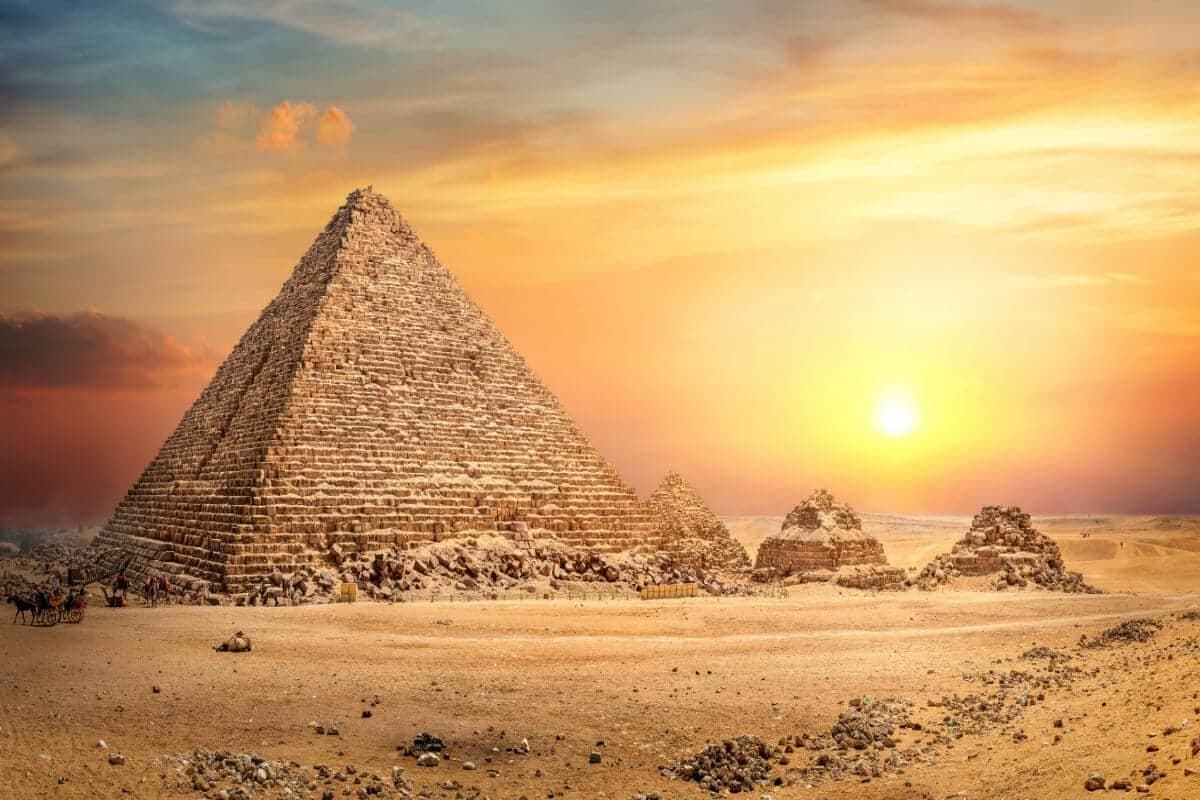
Saqqara is located approximately 30 km south of central Cairo, and access to the burial chamber of the Pyramid of Unas requires a separate ticket in addition to general admission; gates typically open at 8:00 AM and the interior spaces are best seen during the cooler hours of October–March. Visitors should expect narrow passages and occasional crouching in tombs, with the interior of Unas often allowed only in small groups to limit humidity and preserve pigments.
Quick logistics for visiting Unas and Saqqara
Best time to visit | October through March — cooler temperatures inside tombs |
Time needed | 2–3 hours at Saqqara; full day if combined with Giza and Memphis |
Difficulty | Moderate — low tunnels, uneven stone, brief crouches |
Must-bring | Small LED flashlight, water, sturdy shoes with grip |
What visitors actually find inside Unas
The walls of Unas’ pyramid are covered with the earliest known corpus of religious inscriptions in human history: the Pyramid Texts. Carved during the late Old Kingdom (circa 2350 BCE), these utterances functioned as ritual instructions and spells intended to protect the king and secure his transformation in the afterlife. Inside Unas, the glyphs often retain traces of blue‑green pigment on a pale plaster ground — a visual effect that survives despite millennia underground.
The most discussed passages: Utterances and the “Cannibal Hymn”
The Pyramid Texts consist of hundreds of utterances distributed across several tombs. Examples frequently cited by scholars include Utterance 217 (imagery of the king ascending a ladder to the sky) and Utterances 273–274, commonly nicknamed the Cannibal Hymn. The Cannibal Hymn uses violent consumption imagery — lines translated along the lines of “the king eats their magic and swallows their spirits” — as a powerful metaphor for royal absorption of divine potency rather than a literal dining ritual. Such language expresses authority and cosmic domination in stark terms, reflecting a worldview where power and divinity intermix.
Best times and practical tips
Time | Crowd level | Tip |
Early morning (8:00–9:30 AM) | Low | Arrive at opening and go straight to Unas to enter with minimal queues |
Midday (11:00 AM–2:00 PM) | High | Avoid — tour buses bring crowds; interior passages become stuffy |
Late afternoon (4:00–6:00 PM) | Medium | Better light for exterior photography; many groups have left by then |
Packing and conduct checklist
- Small LED flashlight: angled light reveals pigment details that overhead bulbs wash out.
- Water and sun protection: desert heat between sites can be intense even when interiors are cool.
- Comfortable shoes: stone surfaces and uneven causeways require grip.
- Respectful behavior: interior spaces are fragile — no touching reliefs or leaning on carved surfaces.
Historical context: how the Pyramid Texts were discovered and why they matter
The first published discovery of the Pyramid Texts dates to the late 19th century, when archaeologists such as Gaston Maspero recorded the inscriptions inside Unas’ pyramid (1881). The practice of inscribing funerary utterances began in the 5th Dynasty and represents a fundamental shift in funerary ritual: a move toward textualizing power. The Step Pyramid of Djoser at Saqqara predates these texts but establishes the necropolis’ significance as a cemetery and ritual landscape. By the time of Unas, written spells were used as permanent instruments intended to operate across time — carved, read by the spirit (ka), and thus acting as a mechanism of regeneration.
Language, theology and materiality
Egyptian belief attributed efficacy to correct speech and correct writing. Carving an utterance in stone was not mere commemoration; it was an act designed to enact transformation. Passages that instruct the pharaoh to take his place among the Imperishable Ones (the circumpolar stars) or to sit on the throne of Osiris use declarative language that is performative: the text does what it says for eternity. This close link between script and power remains a major insight for modern Egyptology.
Suggested route for a full Saqqara morning
- 08:00 — Enter Saqqara, visit the Step Pyramid of Djoser.
- 09:00 — Walk toward the smaller pyramids and head to Unas (approximately 10–15 minutes on foot along the causeway).
- 09:30–10:30 — Descend into Unas’ burial chamber to see the Pyramid Texts (separate ticket required).
- 11:00 — Drive to Memphis (20 minutes) to view the Ramesses II statue and alabaster sphinx, then proceed north to Giza if planned.
Practical note on preservation and photography
Photography inside Unas is often restricted to protect pigments and prevent microclimatic changes caused by flash and crowds. Even when photography is technically disallowed, many visitors report that the direct experience — angled light revealing brush strokes and pigment stratigraphy — outperforms any image. Conservation protocols may change, so confirmations with site staff or your guide are recommended before attempting photography.
Significance for travellers and cultural tourism
Saqqara shifts a visitor’s focus from monumental scale to intellectual depth. While Giza demonstrates the engineering feats that dominate the public imagination, the inscribed pyramids at Saqqara reveal the ritual and textual scaffolding that underpinned royal ideology. For travelers seeking more than panoramas, spending a morning at Saqqara offers encounters with language that ancient Egyptians used to imagine immortality.
For practical planning: general admission at Saqqara is modest (around 200 EGP) with an additional ticket for Unas’ interior (approximately 100 EGP); private guided excursions that combine Saqqara with Giza and Memphis are widely available and recommended for context and smoother access.
GetBoat.com is always keeping an eye on the latest tourism news; for readers tracking heritage sites, travel logistics, and regional updates the site periodically highlights practical travel advice and itinerary ideas. In summary, Saqqara’s Unas pyramid presents the oldest monumental religious texts — the Pyramid Texts — preserved within painted reliefs; visiting requires modest additional ticketing and early arrival for the best experience; the texts themselves (including the controversial Cannibal Hymn) illuminate Old Kingdom theology and the performative power of carved language. Practical preparation — light source, good footwear, a patient guide — converts a routine visit into a direct encounter with four millennia of belief and artistry.


