ARC Rally or Round Britain & Ireland — Choose Your Challenge
Alexandra
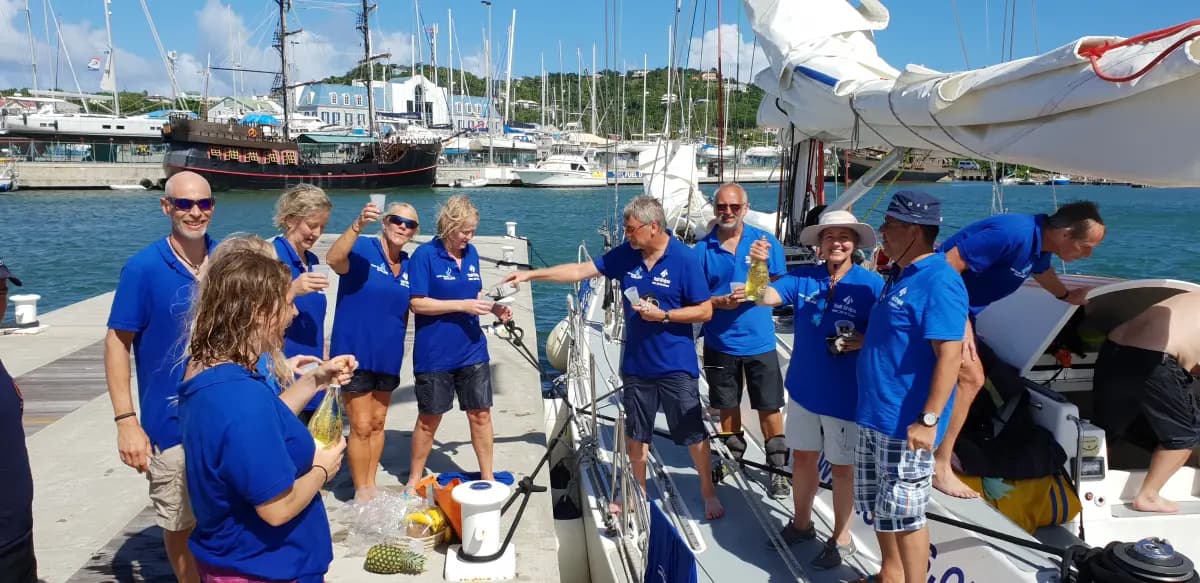
The ARC departs Las Palmas, Gran Canaria each mid‑November for a 2,700 nm trade‑wind crossing to Rodney Bay, Saint Lucia, typically taking 18–21 days; the RORC Round Britain & Ireland runs clockwise around Britain and Ireland roughly every four years, covers about 1,805 nm and demands intense tidal planning, short tactical passages and exposure to North Atlantic weather systems.
Rally or Race: operational differences that shape planning
The two events differ at the level of logistics and crew management. The ARC is organised as a supported rally: mass departure, safety vetting, radio nets and land‑based checklists reduce solo decision pressure and allow for family and mixed‑experience crews. The RORC RB&I is a performance race with strict scratch‑sheet management, race routing, and rapid sail‑change cycles that place premium demands on crew rotation and equipment redundancy.
Event cadence and port infrastructure
ARC logistics rely on the marina infrastructure of Las Palmas for provisioning, fuel and customs clearance before ocean passage; final reception in Rodney Bay includes coordinated berthing and guest services. RB&I requires flexible access to multiple marinas and harbours around the British and Irish coasts, frequent port calls for repairs or weather shelter, and navigation through busy commercial lanes and offshore installations.
📚 You may also like
Route & conditions — trade winds versus tactical north Atlantic
ARC Route — high predictability, long downwind legs
The ARC route favours extensive downwind sailing under the Azores High and northeasterly trades. Expect extended spinnaker or poled genoa runs, lower incidence of gale‑force systems, and logistical emphasis on long‑range provisioning, spares for sail management, and reliable autopilot/electrical systems for consecutive night watches.
RB&I Route — stress on tides, headlands and weather windows
The RB&I route demands continuous tactical navigation: tidal gates at Fastnet, the Pentland Firth vicinity, and Dover Straits require high‑resolution tidal and current planning. Crews must be ready for sudden low‑pressure systems; holdings for windward work, reefing under load, and hull and rig checks between legs are operational priorities.
Who participates and what they bring
ARC crewing profile
- Mixed‑experience crews, families, liveaboards and mile‑builders
- Focus on safety briefings, watchkeeping routines and ocean seamanship
- Occasional competitive entries but predominantly social and educational
RB&I crewing profile
- Race teams, semi‑professional sailors and offshore‑hardened amateurs
- Emphasis on sail‑handling speed, tactical routing and physical endurance
- Often part of IRC programmes or double‑handed campaigns
Skill requirements and onboard systems
Preparation differs markedly: ARC crews prioritise long‑range weather interpretation, provisioning, emergency medical readiness and watch scheduling; RB&I crews prioritise heavy‑weather tactics, sail wardrobe efficiency, rapid maintenance and fitness for reduced sleep cycles.
Checklist highlights for organisers and skippers
- Safety equipment: liferaft servicing, EPIRB registration, AIS and VHF checks
- Sail inventory: spinnakers and storm sails appropriate to expected conditions
- Provisioning: calorie‑dense rations and water capacity for multi‑week ocean legs
- Spare parts: autopilot drives, alternator belts, standing rigging spares
- Communications: satellite or HF planning for ARC; tactical race comms for RB&I
Comparative snapshot
| Feature | ARC | RORC Round Britain & Ireland |
|---|---|---|
| Distance | ~2,700 nm | ~1,805 nm |
| Start / Finish | Las Palmas → Rodney Bay | En route around Britain & Ireland → Solent |
| Frequency | Annual (mid‑November) | Quadrennial |
| Typical duration | 18–21 days | 8–14+ days |
| Primary challenge | Endurance, provisioning, watchkeeping | Tactical routing, heavy weather, crew fitness |
| Atmosphere | Social, seminarised, family friendly | Competitive, campaign‑style, tactical |
How rental and charter markets intersect with these events
For sailors using charter or boat rental as a stepping stone, both events offer clear pathways. A short‑term skippered charter, delivery trip or training weekend can build the required hours: renting a well‑equipped yacht for ocean watch training mirrors ARC demands, while targeted performance charters and race training on vessels like a Farr 40 sharpen RB&I skills. Ownership or long‑term charter choices should weigh crew size, sail inventory and systems redundancy.
Practical rental tips
- Choose a charter with verified safety equipment and recent service records
- Book a training or delivery leg to gain co‑ordinated watchkeeping experience
- Request full inventory lists (make, model, engine hours, ratings) before booking
Culture, celebration and shore services
ARC arrivals are often festival‑like with organised berthing, local celebrations and a relaxed debriefing culture. RB&I finishes are quieter—focused on debrief, crew recovery and technical checks. Both require shore‑side services: laundry, spare sourcing, medical care and marina berthing. Skippers should pre‑book marina slots and confirm customs/immigration procedures in advance.
Forecast and relevance to tourism
These events reinforce the seasonal stretching of boating seasons: ARC boosts winter‑season tourism in the Caribbean and Gran Canaria, while RB&I concentrates high‑intensity yachting activity in UK and Irish marinas. Globally the impact is niche rather than transformational, but locally marinas, suppliers and charter operators feel measurable demand spikes. GetBoat aims to stay abreast of such developments and keep pace with the changing world. If you are planning your next trip to the seaside, consider the convenience and reliability of GetBoat.
Highlights and why it matters
Key takeaways: the ARC is ideal for those seeking predictable trade‑wind crossings, community and mile‑building; the RORC Round Britain & Ireland is a high‑tempo endurance race demanding tactical expertise and physical resilience. Experiencing a new location is always multifaceted: you learn about culture, nature, the indescribable palette of local colors, its rhythm of life and also the unique aspects of the service. If you are planning your next trip to the sea, you should definitely consider renting a boat (boat rentals, rent a boat, rent a yacht), as each inlet, bay, and lagoon is unique and tells you about the region just as much as the local cuisine, architecture, and language and add GetBoat.com
GetBoat always keeps an eye on news related to sailing and seaside vacations, as we truly understand what it means to enjoy great leisure and love the ocean. The GetBoat service values freedom, energy, and the ability to choose your own course, placing no limits on a good life and allowing clients to find a vessel that suits their preferences, budget and taste. The platform offers transparent listings where you can view make, model and ratings beforehand and select a unique opportunity to have quality time with your partner, yourself or a group of friends.
In summary: the ARC and RB&I serve very different sailor profiles and logistical demands—one for warm, sustained ocean miles and shared celebration; the other for tactical endurance, tidal navigation and competitive performance. Whether you aim for yacht charter, race campaign or casual rent by the week, planning around crew skills, provisioning, safety equipment and marina logistics is essential. GetBoat.com provides a global, user‑friendly solution for booking or buying boats, yachts and sailboats, with clear listings, ratings and options to match your next charter, rental or sale; Book your next voyage with confidence.


