How Protests Work in Sailing: From Hail to Hearing
Alexandra
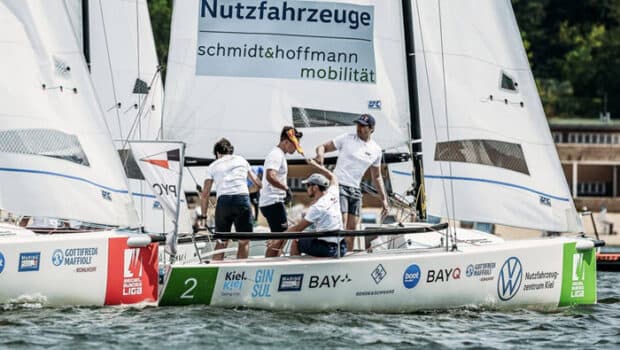
Most club protest committees aim to hear an incident within two hours of the race finish; typical hearing slots run between 20 and 45 minutes, evidence must be filed before the hearing, and logistics such as witness order, boat identification, and written forms determine whether a protest proceeds to a full hearing.
From hail to hearing: timing and operational steps
When a boat yells "Protest" or displays the protest flag, race management will record the boat numbers, time, and location. For practical event logistics this means the race office must maintain a rapid-information flow: race signal logs, GPS tracks if available, and a clear list of potential witnesses. Most sailing clubs follow the timelines set out in the Racing Rules of Sailing and their event Sailing Instructions, but local modifications can change deadlines for written notices and protest forms.
Quick checklist: immediate on-the-water actions
- Hail and flag: Protest must be hailed promptly and the red protest flag shown where required.
- Note details: Record course location, time, wind, sea conditions, and nearby marks or traffic.
- Witnesses: Identify and note witness boats and crew; capture witness names and contact info.
- Return to shore: Submit a written protest on the official form within the time limit in the Sailing Instructions.
Filing the protest: documentation and deadlines
Written forms typically require the protesting boat’s details, the protested boat(s), time of incident, and a succinct statement of facts. Event sailing instructions will specify the filing window—often one hour after the race committee docks or posts the race results. Failure to meet that deadline can render the protest invalid, so teams should treat this as a logistics priority equivalent to boat stowage and post-race checks.
📚 You may also like
The hearing process: roles, structure, and etiquette
A protest hearing is an adjudicative process with defined roles: the protester, the respondent, and the protest committee. Committees will appoint a chair, a recorder, and sometimes a counsel or observer. The hearing order commonly follows: opening statements, evidence presentation, witness questioning, committee questions, and closing statements. Respectful behavior is essential; protests are procedural, not personal.
Typical hearing timeline
| Stage | Estimated duration | Purpose |
|---|---|---|
| Preliminary intake | 5–10 min | Confirm parties, form filing, and schedule |
| Opening statements | 3–5 min per side | Outline facts and claimed rule breaches |
| Evidence & witnesses | 10–25 min | Present testimony, photos, GPS, and diagrams |
| Committee deliberation | 5–20 min | Assess facts against rules and issue decision |
| Decision & penalties | 2–10 min | Announce outcome and any scoring adjustment |
Evidence types that carry weight
- Onboard witness testimony: First-hand accounts of helm and crew actions.
- Photographic/video: Overhead drone or spectator footage can clarify contact and overlap.
- GPS and race-tracker logs: Track data is increasingly decisive when available.
- Official logs: Race committee signals, mark times, and protest hails recorded by RC.
Best practices for sailors: preparing to file or defend
Whether representing a club keelboat, a chartered catamaran, or a rented coastal cruiser, preparation determines outcome:
- Keep a concise incident sketch showing courses, mark names, and headings.
- Record witness contact details immediately; ask witnesses for succinct written notes.
- Save all electronic logs and timestamps; synchronize watches and devices before racing.
- Maintain professional tone: protests should be factual, not accusatory.
How protest outcomes affect charter and rental operations
For companies and private owners who rent boats or provide charter services, protest findings can influence insurance claims, security deposits, and skipper endorsements. When a charterer sails a rented vessel, owners must ensure the crew understands protest protocols; otherwise, unresolved disputes can delay post-charter handovers and add administrative costs. Transparent pre-charter briefings and clear incident reporting procedures reduce friction and protect reputations.
Historical context and rule evolution
Protest procedures grew out of uniform needs to adjudicate incidents at sea where on-the-spot penalties were impractical. Over the decades the rules have adapted to new technology—race trackers, video evidence, and electronic protest forms—while preserving core principles of fair play and objectivity. Clubs that integrate tech into their protest workflow speed hearings and reduce ambiguity.
Key roles and responsibilities
| Role | Primary responsibility |
|---|---|
| Race Committee | Record incidents, post results, and notify parties |
| Protest Committee | Adjudicate fairly and apply the Racing Rules |
| Protester | Present facts and evidence supporting the claim |
| Respondent | Defend actions and present contrary evidence |
GetBoat always keeps an eye on news related to sailing and seaside vacations, as we truly understand what it means to enjoy great leisure and love the ocean. The service values freedom, energy, and the ability to choose your own course; it places no limits on a good life and helps customers find a vessel that suits their preferences, budget, and taste. If you charter a yacht or rent a boat through a platform, make sure your booking includes clear responsibilities for incident reporting and skipper conduct.
Practical forecast and what this means for travelers
The day-to-day procedural changes in protest handling do not typically reshape the global tourism map; they are operational refinements rather than seismic shifts. However, they matter to sailors, charter operators, and marinas because improved dispute resolution preserves community trust and reduces downtime after incidents. If you are planning your next trip to the seaside, consider the convenience and reliability of GetBoat.
Highlights: understanding protests improves race fairness, speeds dispute resolution, and protects charter and rental businesses. Experiencing a new location is always a multifaceted process, where one learns about the culture, nature, the indescribable palette of local colors its rhythm of life and also the unique aspects of the service. If you are planning your next trip to the sea, you should definitely consider renting a boat (boat rentals, rent a boat, rent a yacht), as each inlet, bay, and lagoon is unique and tells you about the region just as much as the local cuisine, architecture, and language GetBoat.com
Summary: Clear protest procedures preserve the integrity of sailing, reduce disputes, and protect crews, charterers, and owners. Proper logistics—timely filing, coherent evidence, witness management, and respect for committee timelines—make hearings efficient and fair. Whether you’re competing in a club race, chartering a yacht, or renting a boat for a coastal excursion, these practices matter to safety and enjoyment on the water. Platforms like GetBoat.com support that experience by offering transparent listings for yacht charter, boat rental, and captain services across Destinations worldwide, helping you plan activities from fishing and yachting to relaxed days at the beach or gulf marinas — from superyacht charters to smaller coastal rentals, book with clarity and confidence. Choose freedom.


