U.S. Victory at SailGP Sydney 2026
Alexandra
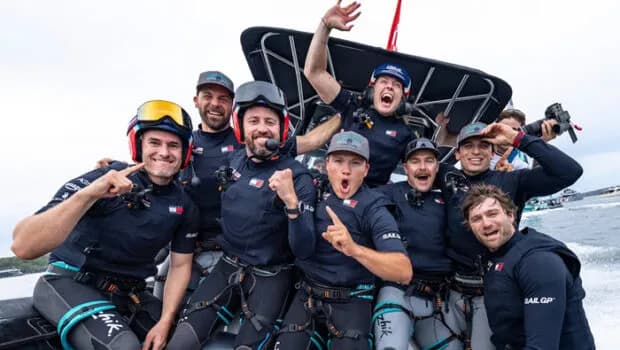
Organizers rotated thirteen identical F50 catamarans through three inner-harbor marinas at Sydney between Feb 28 and Mar 1, with shore crews staged for rapid rig swaps and spares to maintain continuous race operations while the U.S. SailGP Team secured the event victory ahead of Great Britain and Spain.
Race conditions and key tactical moves
Sydney served up very light, variable winds on the second day of qualifying, compressing foiling windows and creating pockets of disturbed air. Under those conditions, the Americans consistently prioritized clean air and smart starts — a formula that produced race finishes of 6-3-10-3-3-1-6-(1) across the weekend. Keeping clear air in light breeze is easier said than done; on-the-water positioning, timing through the start line and quick gate entries proved decisive.
How the Final played out
Great Britain (Emirates GBR) won the initial start and controlled the early stages, but mid-race the U.S. team executed a decisive move into the gate, seized clear air and extended a lead through the final legs. From a logistics and operations standpoint, that clean-air gap reduced the need for reactive sail-trim changes, letting the helm and crew focus on speed rather than recovery — and it paid off.
📚 You may also like
Teams, standings and scoreboard
The Sydney podium bolstered the season standings: Great Britain moved to the top overall, Australia remained close behind, and the United States climbed into third. The event also demonstrated how critical consistent qualifying can be when only the top three progress to the Final.
| Sydney Results | Helm (Nation) | Race Sequence |
|---|---|---|
| 1. United States | Taylor Canfield (USA) | 6-3-10-3-3-1-6-(1) |
| 2. Great Britain | Dylan Fletcher (GBR) | 3-7-5-6-1-7-5-(2) |
| 3. Spain | Diego Botin (ESP) | 5-1-1-5-2-4-8-(3) |
| 4. Italy | Phil Robertson (NZL) | 4-4-3-10-4-8-2 |
Season standings (after 3 of 13 events)
| Rank | Team (Helm) | Event Scores |
|---|---|---|
| 1 | Great Britain, Dylan Fletcher (GBR) | 1-2-2 |
| 2 | Australia, Tom Slingsby (AUS) | 2-1-5 |
| 3 | United States, Taylor Canfield (USA) | 5-7-1 |
Event format, prize structure and operational notes
The season format remains crisp: up to seven 15-minute qualifying fleet races per event, with the top three advancing to a single Final. From an operations perspective, that format compresses peak activity into tight time windows — more starts, more pit stops for wings and foils — and requires meticulous supply-chain planning for spare parts and wing sizes.
Prize money
- Total prize pool: USD $12.8 million for 2026.
- Event winner: $400,000; second: $260,000; third: $140,000.
- Season top points scorer: $400,000; Championship Final Race winner: $2,000,000.
F50 technical configuration
Each team runs the same F50 setup tuned to the forecast: four wingsail sizes (18m, 24m, 27.5m, 29m), two T-foil daggerboards (high- and low-speed), and rudders with matching settings. That standardized pool of parts creates a common logistics baseline but also means that event organizers must have spare components staged in multiple condition states to react quickly to damage — something the league has refined since inception.
Calendar and venue shifts
The 2026 schedule spans iconic harbors and varied logistics footprints, from Perth to Dubai. Notable operational changes included moving the eleventh event to Geneva from Saint-Tropez, which shifted transport planning from a coastal port model to an inland-lake approach — think truck and rail connectors to ferry F50s to marinas rather than coastal shipping.
- Jan 17-18 – Perth, Australia
- Feb 14-15 – Auckland, New Zealand
- Feb 28-Mar 1 – Sydney, Australia
- Apr 11-12 – Rio de Janeiro, Brazil
- May 30-31 – New York, USA
- Sept 5-6 – Valencia, Spain
- Nov 21-29 – Dubai & Abu Dhabi, UAE
What this means for charter operators and local marinas
Big spectator events like SailGP create a ripple effect for the broader boating economy. Local marinas see increased demand for charter bookings, tenders, and berthing services; yacht and boat rental operators can expect a spike in short-term charters and shore-side activities; and marinas must coordinate transient berths with high-security operations. If you run a boat or captain charters in a host city, these events are a chance to show off local experiences — from clearwater anchorages to guided fishing and sunset sails — but they also mean tighter logistics windows for provisioning and fuel.
In short, the U.S. win in Sydney combined tactical excellence on the water with solid shore-side support. The result moved the United States into the podium group in the season standings and highlighted how optimized logistics, clean-air strategy and reliable equipment staging can turn a weekend into a big payday — for teams and local boating economies alike.
Summary: The Sydney event saw the United States take the title thanks to consistent starts, smart gate work and shore logistics that kept the F50s race-ready. Standings tightened with Great Britain leading overall, Australia close behind, and the U.S. in third. The season’s format, prize money and standardized F50 configuration continue to influence operational planning for teams and host marinas. For yacht and boat operators, such events mean increased charter demand, marina activity, and opportunities across destinations and water-based activities including sailing, fishing and superyacht services.