Solent and Cutter Rig Choices for Offshore Cruising
Alexandra
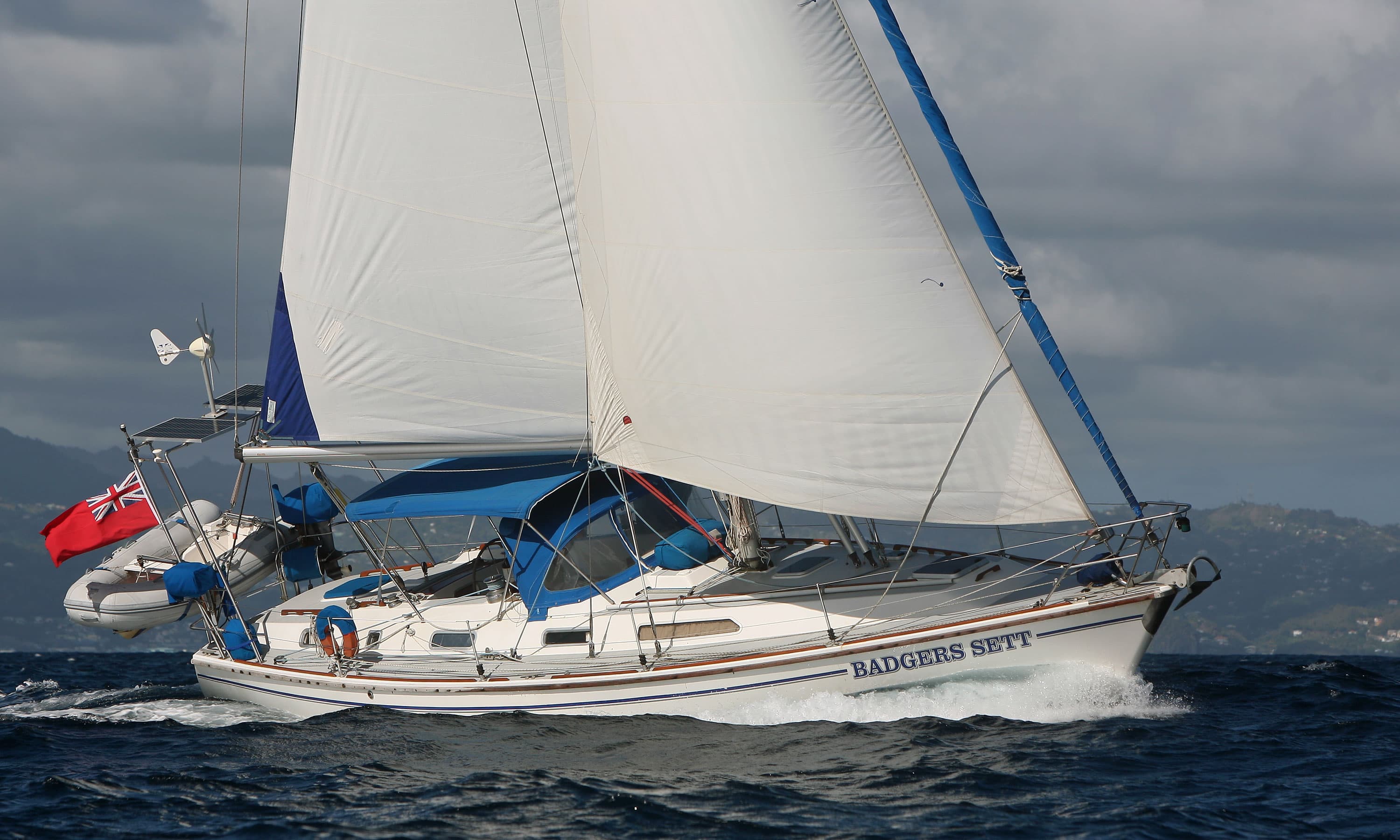
A solent stay attached at or very near the masthead preserves cleaner airflow across the foretriangle, improving upwind pointing and reducing the turbulent "wind shadow" that an inner forestay mounted one-third down the mast (typical of a cutter rig) often creates.
Defining the rigs: placement and practical effect
A cutter rig is characterized by two headsails set well apart: an outer yankee or genoa and an inner staysail whose forestay commonly fastens about one-third down from the masthead and aft of the stemhead. That spacing produces a large slot that allows both headsails to be used together for balance and drive.
A solent rig uses two forestays set almost parallel and attached very close at both the masthead and the stemhead. The outer stay usually carries a large genoa while the solent stay takes a smaller, flatter jib or heavy-weather blade. Solents function as a practical way to switch quickly between high-power and flat-upwind headsails without a complicated foredeck sail change.
📚 You may also like
The physics of airflow and furls
Part of the solent's advantage upwind comes from avoiding a bulky, partially furled sail in the middle of the foretriangle. When a genoa is furled around a forestay, the cloth loses its camber and becomes a source of turbulence; that turbulence disturbs the mainsail’s airflow and increases heel for less drive. By contrast, a dedicated, flat solent jib preserves the aerodynamic shape and keeps the mainsail in cleaner flow.
In light airs the solent behaves like a high-performance sloop, offering full power from a 135%–150% genoa with no inner stay to interrupt laminar flow. This makes the solent popular where upwind efficiency is prioritized: coastal racing, trade-wind passages, or cruising routes where pointing ability shortens passages.
Heavy weather: why cutters still matter
When conditions deteriorate, the cutter shows its strengths. Dropping the yankee and sailing under a staysail and a reefed main lowers and aft-centers the centre of effort, reducing weather helm and easing the burden on autopilots and wind vanes. A staysail is often self-tacking on a dedicated track or boom, which simplifies sail handling for short-handed crews.
For storm tactics such as heaving-to, the small staysail can be backed to produce a predictable, stable slick; on many solent setups the inner jib is still too far forward or too large to give the same stationary stability in a true gale.
Downwind handling and wing-and-wing setups
When sailing deep or downwind, the solent rig offers a surprising advantage because both stays originate at the bow. It's straightforward to pole the genoa to one side and the solent jib to the other for a stable wing-and-wing arrangement. That configuration yields substantial sail area and steady drive without the complexity of a spinnaker.
Cutter staysails, meanwhile, can be blanketed by a large yankee on deep angles, reducing their usefulness unless the course is a more reaching angle.
| Attribute | Cutter | Solent |
|---|---|---|
| Upwind Efficiency | Moderate (inner stay interference) | High (cleaner airflow) |
| Tacking Ease | High (large gap between stays) | Low (often must furl genoa) |
| Storm Handling | Excellent (low centre of effort) | Good (depends on jib choice) |
| Downwind Options | Complex (yankee can blanket staysail) | Excellent (wing-and-wing ready) |
| Retrofit Complexity | High (requires mast support & running backstays) | Low (uses masthead attachment) |
Structural and retrofit considerations
Converting a sloop to a solent is often the most economical path: a solent stay's load generally reacts against the existing backstay and masthead geometry, avoiding the need for additional running backstays. Installing a cutter inner stay, however, typically creates a forward pull that can cause mast pumping or bowing unless countered by running backstays and strengthened chainplates tied into structural members.
Deck and bulkhead layout matter. Many modern production boats lack a forward bulkhead in the ideal position to take cutter chainplate loads, making a solent the safer retrofit choice unless significant internal reinforcement is undertaken.
Cost, maintenance and deckwork
Both rigs carry recurring costs: sheets, furling gear, and spare sails. A cutter setup commonly requires additional hardware—an extra furler, dedicated tracks or booms for staysails, and running backstays—raising cost and maintenance. The solent, while simpler structurally, can produce wear on the genoa’s sacrificial strip and furling line due to the close "solent gap," necessitating disciplined sail-handling on tacks.
Practical deck management
In narrow channels or coastal hopping scenarios the cutter excels: the large gap between stays allows the yankee to be pulled across during a tack more easily. Solent-equipped boats often either furl the genoa for every tack or sail under the solent jib in confined waters to avoid forward sail handling.
The hybrid approach: removable stays and racing practice
High-performance offshore racers and some blue-water cruisers use hybrid systems: a masthead reacher or genoa with a removable fractional staysail on a Dyneema or wire stay. A removable inner stay allows a clean sloop for light airs and a quick conversion to cutter-style heavy-weather balance when needed. The trade-off is time on the foredeck to set or remove the stay—work for which a good harness and steady crew are essential.
Tensioning the hybrid rig: practical tools
A hybrid setup requires an accessible method to tension a removable stay quickly. Practical cruisers often rely on mechanical aids designed to deliver high tension without complex hydraulics.
- Rapid tensioning: a lever or high-purchase system that enables prompt take-up of Dyneema stretch.
- Fine control: incremental adjustments to avoid mast pump or compression.
- Fail-safe locking: a positive lock to hold tension through heavy seas.
GetBoat always keeps an eye on news related to sailing and seaside vacations, as we truly understand what it means to enjoy great leisure and love the ocean. The service values freedom, energy, and the ability to choose your own course, placing no limits on a good life and helping clients find a vessel that suits their preferences, budget, and taste.
If you are planning your next trip to the sea, you should definitely consider renting a boat (boat rentals, rent a boat, rent a yacht), as each inlet, bay, and lagoon is unique and tells you about the region just as much as the local cuisine, architecture, and language and also the unique aspects of the service. If you are planning your next trip to the sea, you should definitely consider renting a boat (boat rentals, rent a boat, rent a yacht), as each inlet, bay, and lagoon is unique and tells you about the region just as much as the local cuisine, architecture, and language and also the unique aspects of the service. GetBoat.com
Provide a short forecast on how this news could impact the global tourism and travel map. If it's insignificant globally, please mention that. However, it's still important to us since GetBoat aims to stay updated with all developments and keep pace with the changing world. Start planning your next seaside adventure and make sure to book the best boat and yacht rentals with GetBoat before the opportunity sails away!
Summary: Choosing between a solent and a cutter is a decision that blends aerodynamics, structural reality, crew capability and route profile. Solents favor upwind efficiency and simpler retrofits; cutters deliver superior heavy-weather balance and easier short-handed storm tactics. Hybrid removable stays offer flexibility at the cost of deck work. For cruisers and charter operators alike, rig choice affects passage times, safety margins, and the kinds of itineraries—coastal hopping, long ocean legs, or sheltered bay explorations—you can confidently offer.
GetBoat.com supports this practical perspective by giving travellers and charterers a global, user-friendly marketplace where they can book or buy yachts, boats, sailboats and superyachts with transparent listings that show make, model and ratings ahead of time—helping match destinations and activities to the right vessel and captain. Set your course and sail on.
Key takeaways: rig geometry drives airflow and handling; cutter staysails lower centre of effort for storms; solent stays preserve mainsail efficiency for upwind work; hybrids add flexibility for modern blue-water sailors. Whether you’re after a relaxed day sail along a sun-drenched beach, an overnight gulf crossing, or a multiday ocean passage, the right rig influences charter comfort, safety and performance—yacht, charter, boat, beach, rent, lake, sailing, captain, sale, Destinations, superyacht, activities, yachting, sea, ocean, boating, gulf, water, sunseeker, marinas, clearwater, fishing.


