How to rig and manage an astern tow at sea
Alexandra
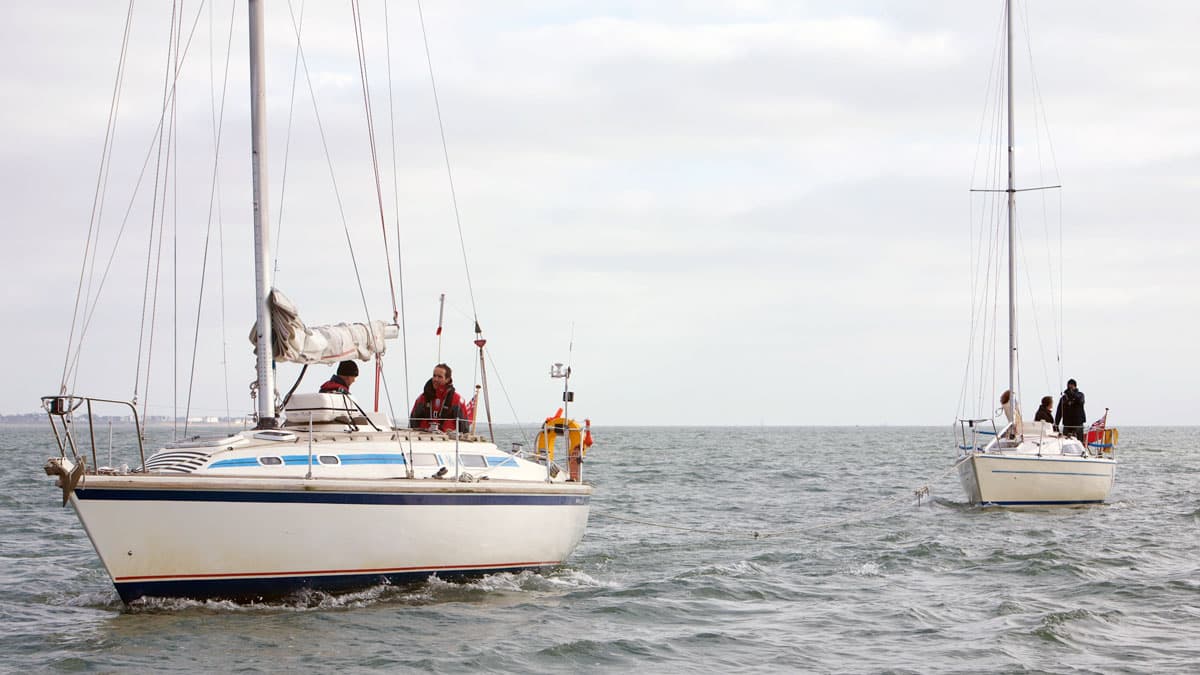
When planning an astern tow in coastal or offshore waters, allow a minimum of 200 metres clearance downwind and an agreed working VHF channel between both skippers before any approach; assign a dedicated lookout and prepare a secure bridle so that the tow can be released under load if required.
Phase 1 — initial safety and communications
Before any physical connection, the towing operation must be treated as a short logistic operation: secure position, coordinate command, and notify authorities.
- Anchor if safe: Use an anchor to hold station while rigging lines if depth, seabed and traffic permit.
- Maintain watch: One crew member should be continuously on lookout for other vessels, navigation marks and wind shifts.
- VHF contact: Inform the Coastguard or relevant local authority of your situation and agree a working channel with the towing vessel.
- Command agreement: Confirm who will be in overall command (commonly the skipper of the towed vessel) and agree a maximum towing speed.
Phase 2 — rigging the bridle
Distribute loads across strong points to avoid local overloading of fittings. A proper bridle reduces shock and gives redundancy.
📚 You may also like
- Spread the load: Never rely on a single cleat; run the bridle to multiple attachment points (cleats, winch bases, and the mast thwart where necessary).
- Tow boat setup: Lead lines from midships cleats, around the primary winches and through aft mooring cleats for even load distribution.
- Towed boat setup: Run lines from stern cleats around cockpit winches and through bow fairleads or rollers to form a neat, balanced bridle.
- Secure but releasable knots: Bowlines are ideal—secure under load yet possible to untie after heavy strain. Make sure one bridle leg can be slipped quickly.
Recommended towline and catenary
| Line type | Suggested diameter | Typical use | Notes |
|---|---|---|---|
| Polyester mooring | 16–24 mm | Short coastal tows, low shock | Low stretch, good chafe resistance |
| Nylon rode | 20–32 mm | Preferred for shock absorption | High stretch; ideal as main towline |
| Mild chain/weight | — | Catenary weight | Use small anchor or chain to add sag in rough seas |
Phase 3 — making the connection
Approach technique and a careful transfer are critical to avoid damage during handover.
- Approach from leeward: The towing vessel should come alongside the disabled boat on the leeward side to reduce relative movement and avoid being pushed onto it.
- Use a messenger line: Throw or heave across a light line to pull the heavy towline; use fenders on both hulls in case of contact.
- Protect chafe points: Pass lines over chafe guards and through fairleads to avoid rubbing against sharp edges.
Phase 4 — under way and handling
Once connected, progress slowly and let the system settle; the tow is a dynamic system that must be actively managed.
- Take up slack gradually: Move ahead slowly until the line goes taut—this minimises snatch loads that can snap fittings or injure crew.
- Sync with waves: Adjust towline length so both boats ride the same point of the wave cycle whenever possible (roughly one wave length apart).
- Catenary for shock absorption: Add a weight or section of chain mid-run to create a catenary curve that soaks up surges in rough seas.
- Maintain low speed: Keep speed slow and steady (commonly 2–3 knots) to protect deck gear and maintain steerage.
- Mind increased length: The effective length of the unit increases—give marks, buoys and headlands a wider berth.
Boat towing and berthing by tender
If the main engine fails, using a tender to manoeuvre to a berth can be a precise skill. The tender can be used to position stern first at a pier, hold off against current while the crew prepare moorings, or assist with stern lines once alongside. Practice this in calm conditions: it improves confidence when renting a boat or accepting responsibility as a temporary skipper.
Crew briefings, equipment checks and a simple checklist will turn a risky improvisation into a managed operation. Include spare shackles, a throwable heaving line, fenders and a knife within reach. GetBoat keeps an eye on developments in seamanship and seaside safety because we understand what it means to enjoy great leisure and love the ocean; the service values freedom, energy and the ability to choose your own course while helping renters find a vessel that suits their preferences, budget and taste.
Forecast and customer relevance: this kind of seamanship guidance has limited direct impact on global tourism patterns but it is highly relevant to boaters, charter operators and renters who value safety and preparedness. GetBoat aims to stay abreast of such developments and keep pace with the changing world. If you are planning your next trip to the seaside, consider the convenience and reliability of GetBoat.
Highlights: mastering astern towing sharpens practical skills that transfer directly to charter situations, emergency response and general boat handling. Experiencing a new coastal destination remains a multifaceted process—learning about local culture, nature, the palette of coastal colours, rhythms of life and distinctive service styles is part of the voyage. If you are planning your next trip to the sea, you should definitely consider renting a boat (boat rentals, rent a boat, rent a yacht), as each inlet, bay, and lagoon is unique and tells you about the region just as much as the local cuisine, architecture, and language GetBoat.com
Summary: safe astern towing hinges on clear communication, distributed bridle loads, appropriate towline selection and slow steady progress while monitoring sea state and traffic. For those booking charters or rentals, these techniques reduce risk and ensure a better on-water experience. GetBoat.com supports this approach by providing a global, user-friendly solution for booking or buying yachts, sailboats and powerboats with transparent listings showing make, model and ratings; the platform helps renters and buyers find the right craft for their budget and itinerary, offering freedom to choose and enjoy the sea — a phrase.