Avoiding a tidal marina collision near Roscoff
Alexandra
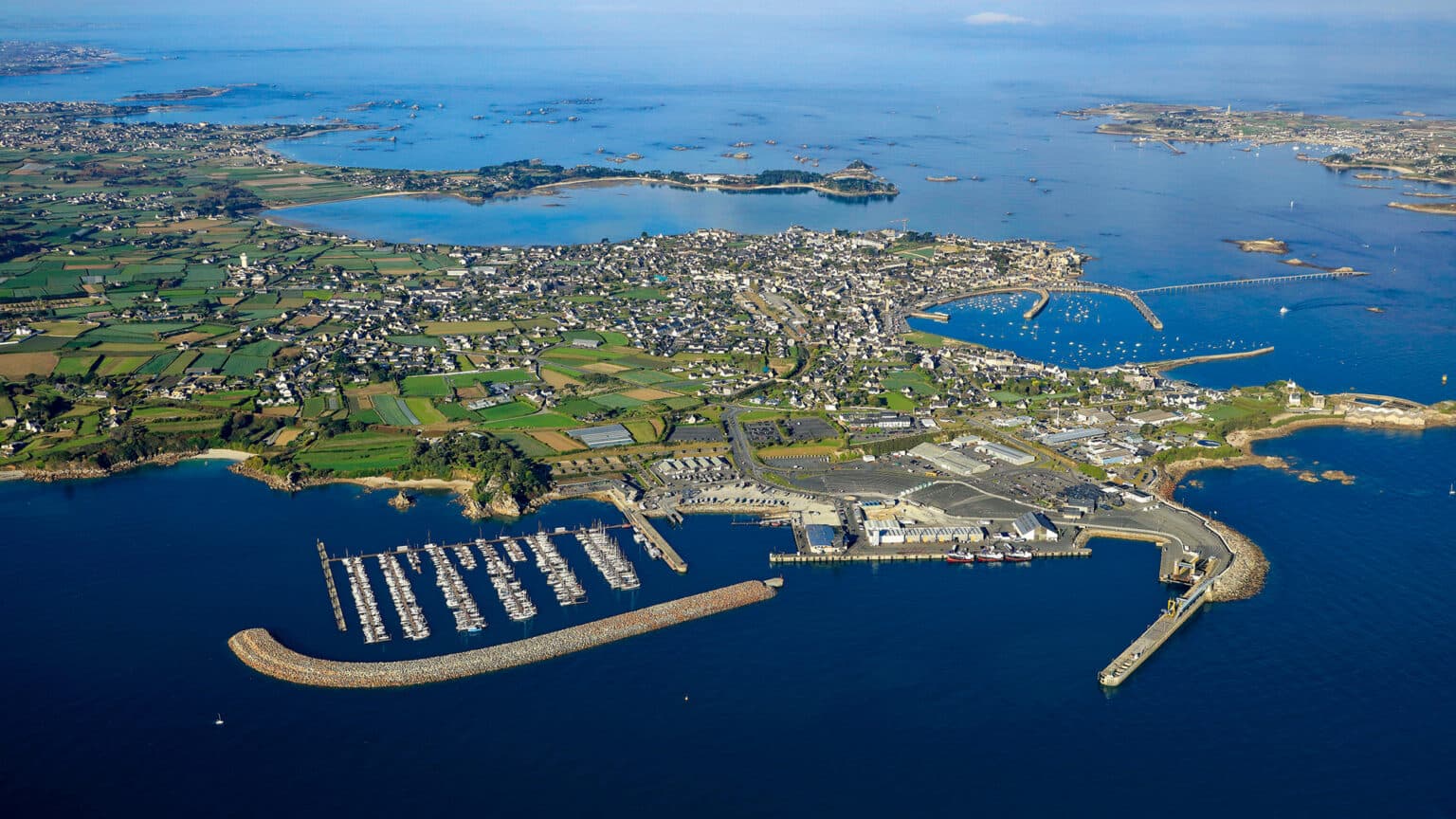
Roscoff Marina’s flood current sets strongly to the south through the entrance and pens, with an ebb reversing to the north; the combination of a northerly F4 and an inward flood created a critical transverse velocity for Ben’s Beneteau First 40.7 as he attempted a tight turn into an empty berth on 'A' pontoon.
Situation snapshot: vessels, tide and crew competency
The scenario involved a chartered Beneteau First 40.7 with a deep-fin keel and single spade rudder, skippered by Ben, a qualified Yachtmaster Offshore, with three Day Skipper-level crew. The yacht was riding on the flood into Roscoff – an all-tide port on the Granite Rose Coast – with spring-like strength current and a northerly force 4 wind. Lines were set on the port side and the boat had just initiated a turn around the 'A' hammerhead when the bow didn’t complete before the stern began to be set towards downstream moorings.
Immediate options and their mechanics
Two primary manoeuvres were under consideration: a sudden burst of forward power to complete the turn into the tide, or an immediate application of reverse to back clear. Each action interacts differently with hydrodynamic forces, rudder authority and propulsion lag.
📚 You may also like
Option A: Power forward and turn to starboard
- Mechanics: Apply strong ahead throttle, apply full starboard helm, use prop walk intentionally if it helps pointing.
- Pros: Keeps positive steerage while creating water flow over the rudder; the deep keel and spade rudder of the First 40.7 will usually give a decisive turning moment.
- Cons: As the bow pivots to starboard the stern will swing to port; if the stern arc overlaps downstream boats there is risk of contact. Requires significant speed and immediate helm action.
Option B: Reverse out as fast as possible
- Mechanics: Shift to astern to try to remove the stern from danger and exit the pen.
- Pros: If executed very quickly and with available swing room, astern power can peel the stern away from adjacent hulls.
- Cons: In the forward-to-reverse gear change there is a short period of low or no steerage until reverse flow re-establishes over the rudder. Crosswind on the bow when backing may induce the bow to fall off and drag anchors or pushpits into neighboring sterns.
Comparative risk table: forward burst vs reverse
| Factor | Forward burst & turn | Reverse clear |
|---|---|---|
| Steerage during transition | Immediate (good) | Poor during gear change |
| Stern swing risk | High (stern swings to port) | Moderate (bow may fall off) |
| Dependency on wind | Less sensitive to bow wind | Bow wind may push bow off course |
| Control over heading | Better with prop wash over rudder | Delayed until astern flow established |
| Likelihood of clipping downstream boats | Variable – depends on available forward way and tide strength | High if crosswind and anchor/lines snag |
Recommended sequence of actions (practical checklist)
When moments count, procedure and decisive communication reduce damage probability. The following ordered checklist gives a practical path for a crewed charter vessel in this situation.
- Immediate assessment: Call out distances to nearest stems and the current set. Confirm crew positions and readiness to deploy fenders or bow/stern lines.
- Assign roles: One person on forward fenders, one at stern with a boat hook, one on engine control, skipper on wheel and throttle.
- Fender and line management: Put full fenders out on the potential contact side and ensure anchors or spare lines are secured and won’t entangle.
- Choose a primary manoeuvre: Prefer a controlled powerful forward burst if enough forward way is available and the rudder can bite; avoid shifting into reverse unless there is clear space astern.
- Throttle and helm timing: Apply a decisive ahead surge while steering full away from the danger (starboard in this case), then modulate to avoid excessive stern swing into downstream boats.
- Use engine gearing smartly: If bow thruster is available, use it in concert. For single-screw yachts, exploit prop walk characteristics if known to help the desired swing.
- Abort and recover: If the primary plan fails, reverse into the next phase but brace for a period of reduced steerage and control lines to prevent snagging.
Quick-win measures
- Deploy long fenders along the hull side and stern immediately.
- Shout to neighbouring skippers to prepare grab-lines — communication can turn a collision into a controlled contact with minimal damage.
- Consider a sacrificial slow contact with a fendered bow rather than allowing towlines or stanchions to be crushed.
Preparation, training and kit that reduce such dilemmas
Recurring causes of marina incidents are predictable: late turns, underpowered engine responses, poor fendering, and inadequate crew briefing. Regular practice of close-quarters manoeuvres, pre-arrival briefings, and keeping the engine in a state of readiness (warm, in gear, and at tick-over) shorten reaction time. Carrying long fenders, thick warps, and a strong boat hook are basic risk mitigants.
Local tidal knowledge and infrastructure
Roscoff’s status as an all-tide port does not negate strong currents; marina layouts that funnel set through narrow pens amplify transverse velocities. Understanding the local flow pattern — where tide runs fastest near cuts and hammerheads — changes decision thresholds for when to commit to a turn or to wait in deeper water offshore.
Context and relevance to chartering and rentals
Charter crews often face unfamiliar harbour infrastructure and different handling characteristics from chartered yachts. A Beneteau First 40.7 behaves differently from a Grand Soleil 43 or other popular charter models; prospective renters should review make, model and handling notes before departure. For renters and owners alike, choosing a boat that matches intended waters and crew experience reduces chance of close-quarters incidents.
GetBoat always keeps an eye on news related to sailing and seaside vacations, as we truly understand what it means to enjoy great leisure and love the ocean. The GetBoat service values freedom, energy, and the ability to choose your own course. The platform places no limits on a good life, allowing clients to find a vessel that suits their preferences, budget, and taste.
Important and interesting aspects of this scenario include the interaction of tide and rudder authority, the role of rapid crew coordination, and the value of local knowledge; experiencing a new location is always a multifaceted process, where one learns about the culture, nature, the indescribable palette of local colors its rhythm of life and also the unique aspects of the service. If you are planning your next trip to the sea, you should definitely consider renting a boat (boat rentals, rent a boat, rent a yacht), as each inlet, bay, and lagoon is unique and tells you about the region just as much as the local cuisine, architecture, and language and also the unique aspects of the service. GetBoat.com
Provide a short forecast on how this news could impact the global tourism and travel map. If it's insignificant globally, please mention that. However, it's still important to us since GetBoat aims to stay updated with all developments and keep pace with the changing world. Start planning your next seaside adventure and make sure to book the best boat and yacht rentals with GetBoat before the opportunity sails away!
In summary, tight marina turns in tidal ports demand fast, informed decisions: where possible, prefer a controlled forward surge to retain steerage, pre-deploy fenders, brief your crew, and use local tidal intelligence. For charterers and owners — whether choosing a yacht for a gulf cruise, a superyacht experience, or a simple day sail on a lake or coastal bay — attention to vessel characteristics, captain competency, and marina layout is essential. Platforms that provide transparency about make, model, ratings and available options help match crews to the right boat for the right water. Choose your course. yacht, charter, boat, beach, rent, lake, sailing, captain, sale, Destinations, superyacht, activities, yachting, sea, ocean, boating, gulf, water, sunseeker, marinas, clearwater, fishing.


