Right Whale Protections and Boater Responsibilities
Alexandra
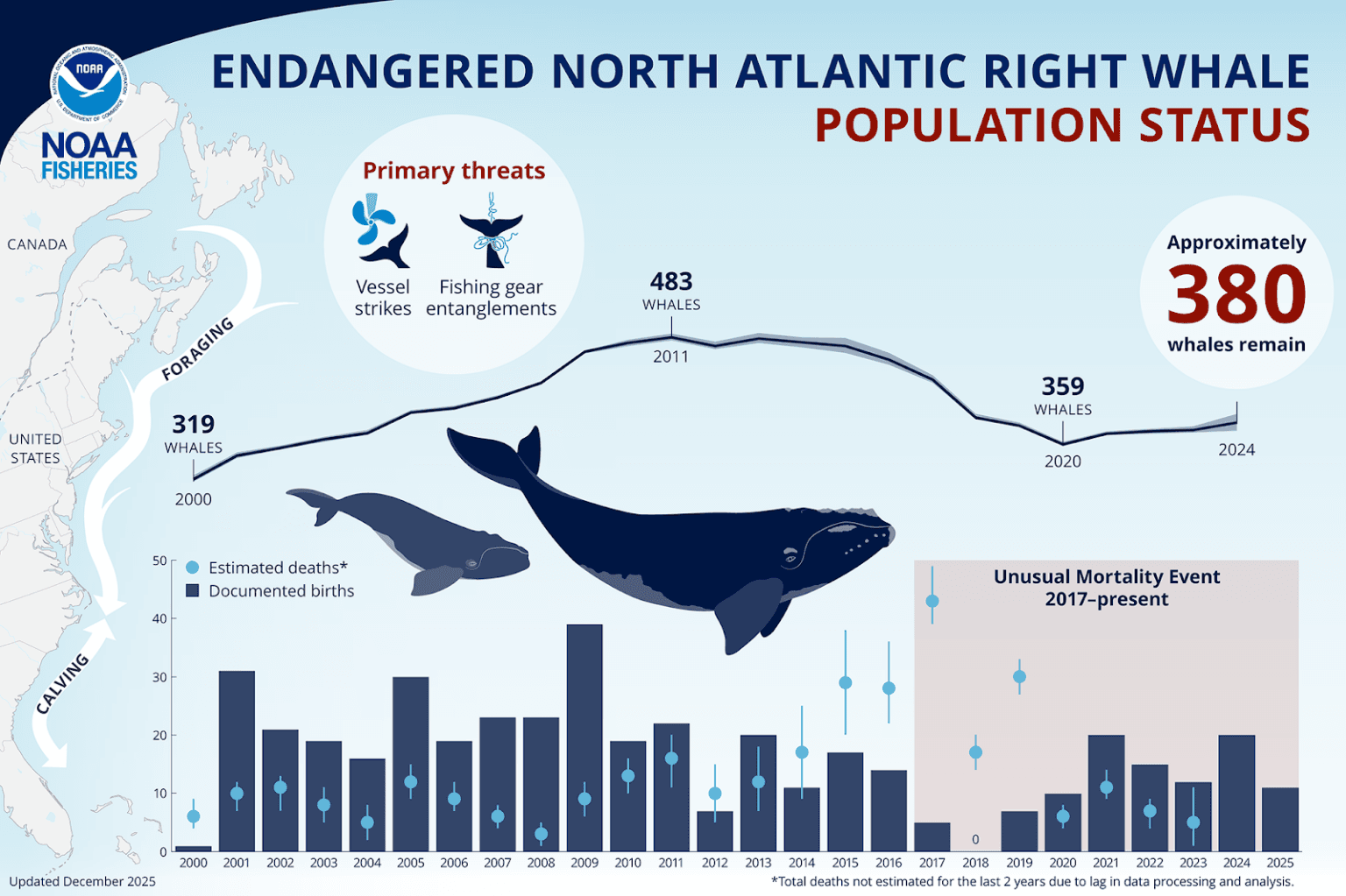
In U.S. Seasonal Management Areas (SMAs) along the eastern seaboard, vessels 65 feet (19.8 m) and longer are restricted to a maximum speed of 10 knots when right whales are present, and any vessel within designated zones must adhere to spatial separation and reporting rules to reduce collision risk.
Current population signals and seasonal movement
The North Atlantic right whale remains critically endangered, with annual migrations running from Canadian feeding grounds to calving areas off Florida and North Carolina. This season produced 22 documented calves, the highest recorded since 2010. Monitoring teams working in the southern calving grounds also identified nearly 70 additional individuals, approximately a quarter of the known surviving population. Many of the observed whales are either pregnant females or mothers with calves, increasing the likelihood of near-surface behavior and elevating collision risk for transiting vessels.
Where restrictions apply
Speed and proximity rules are currently active in key SMAs including Cape Cod Bay, Mid‑Atlantic, and the Southeast Seasonal Management Area. Although most mandatory speed limits apply to larger vessels, recreational boats, charters, and rental skippers should note that smaller vessels can inflict fatal injuries to whales and must exercise caution.
📚 You may also like
Reporting channels and legal buffers
Rapid reporting allows researchers and managers to respond to sightings and advise mariners. Report sightings as follows:
- From North Carolina to Florida: call (877) WHALE-HELP / (877) 942-5343
- From Maine to Virginia: call (866) 755-6622
- Any right whale sighting can also be reported to the U.S. Coast Guard on VHF Channel 16
Federal rules also prohibit approaching within 500 yards (457 m) of a right whale. Violations can lead to enforcement actions and fines; vessel operators should be familiar with both national and local regulations before sailing in or near SMAs.
Quick-reference compliance table
| Region | Speed limit (vessels ≥65 ft) | Reporting phone | Minimum distance |
|---|---|---|---|
| Cape Cod Bay | 10 knots | (866) 755-6622 | 500 yards |
| Mid‑Atlantic | 10 knots | (866) 755-6622 | 500 yards |
| Southeast SMA | 10 knots | (877) 942-5343 | 500 yards |
Practical steps for skippers, charter operators and renters
Mariners—especially those operating rented boats, charters, or day‑boats—should build right‑whale awareness into pre‑departure checks and onboard briefings. Key measures include:
- Brief passengers and crew on whale avoidance zones and what to do if whales are seen.
- Reduce speed proactively in known migratory corridors or when visibility is limited.
- Maintain a vigilant lookout at the forward and stern stations; whales can surface unexpectedly.
- Use AIS and radar to monitor traffic and coordinate safer routes where possible.
- Report sightings immediately to the appropriate number or to the USCG on VHF 16.
Checklist for rental companies and captains
- Update rental paperwork and safety briefings with seasonal SMA information.
- Train relief captains on reporting protocols and legal buffers.
- Adjust itineraries to avoid high-risk zones or schedule slower passage times.
- Maintain evidence of compliance (logbooks, recorded wheelhouse decisions) to assist in any post-incident review.
Detection, research and enforcement challenges
Detecting right whales remains difficult: sightings depend on sea state, observer training, and the whales’ shallow, brief surfacings. Mothers with calves often remain near the surface, increasing risk but also offering opportunities for timely detection if teams and mariners remain alert. Enforcement depends on aerial and at-sea patrols, acoustic monitoring, and community reporting; however, resource constraints and the whales’ wide range limit coverage. Emerging tools—passive acoustic buoys, dedicated aerial surveys, and real‑time sighting apps—are improving situational awareness but do not replace prudent seamanship.
Why this matters to sailing and boat rental communities
Charter operators, yacht owners, and rental platforms must weigh conservation obligations alongside customer experience and safety. Route planning may require detours or speed reductions that affect fuel use and scheduling. Insurance and liability exposures increase if operators cannot demonstrate adherence to speed and distance rules. For skippers and renters, the responsibility is straightforward: slow down, look out, and report.
GetBoat always keeps an eye on news related to sailing and seaside vacations, as we truly understand what it means to enjoy great leisure and love the ocean. The GetBoat service values freedom, energy, and the ability to choose your own course, placing no limits on a good life and allowing clients to find a vessel that suits their preferences, budget, and taste.
Important highlights: the seasonal movement of right whales, the arrival of an unusually high number of calves this season, and the presence of nearly 70 identified individuals in southern calving areas make observance of SMAs especially critical. Remember that even small recreational boats can harm whales, so compliance is a community responsibility. If you are planning your next trip to the sea, you should definitely consider renting a boat (boat rentals, rent a boat, rent a yacht), as each inlet, bay, and lagoon is unique and tells you about the region just as much as the local cuisine, architecture, and language GetBoat.com
Short forecast on impact: regionally, increased protections and reporting requirements can shift routing and day‑charter behavior, but this is unlikely to radically alter the global tourism map. However, these regulations are highly relevant to customers and operators who sail the eastern seaboard; GetBoat aims to stay abreast of developments and keep pace with the changing world. If you are planning your next trip to the seaside, consider the convenience and reliability of GetBoat.
In summary: adhere to the 10‑knot limit for vessels over 65 feet in Seasonal Management Areas, respect the 500‑yard buffer, and report sightings promptly to the listed hotlines or the U.S. Coast Guard on VHF 16. These simple, concrete actions protect the critically endangered right whale and reduce collision risk for boats, yachts and charters. For sailors, captains, and rental customers, integrating these practices into voyage planning and briefings supports safer, more responsible boating. Whether you're searching for a yacht charter, a small boat to rent for a day at the beach or planning a longer sailing cruise—on the lake, gulf or open ocean—transparency in listings, clear specifications of make and model, and pre‑trip information make it easier to choose the right vessel for fishing, yachting, or sunseeker‑style leisure. Bookings and sales decisions benefit from knowing how local conservation measures affect routes and activities; GetBoat’s global platform helps connect you with suitable options for marinas, destinations and memorable boating experiences. Choose your course freely.


