The Prismatic Coefficient's Influence on Yacht Performance
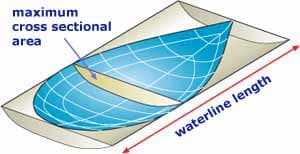
Understanding the Prismatic Coefficient
The Prismatic Coefficient (Cp) serves as a vital metric in yacht design, specifically measuring the longitudinal fullness of a hull's underwater shape. It calculates the ratio of the hull's submerged volume to a theoretical box of matching length and maximum cross-sectional area. This parameter helps designers create vessels that perform optimally under various sailing conditions, directly influencing performance, stability, and handling.
Specifically, a lower Cp indicates a finer, more streamlined hull with pointed ends, favoring lower speeds and reduced wave resistance. Conversely, a higher Cp reflects a fuller hull with increased volume at both the bow and the stern, beneficial for achieving higher speeds, particularly in semi-displacement or planing scenarios. Yacht designers continuously experiment with this delicate balance to align the hull's characteristics with intended purposes and expected sailing conditions.
An Overview of Key Components
To fully grasp the significance of the Prismatic Coefficient, one must explore additional hull ratios that further illuminate a yacht's performance.
📚 You may also like
Block Coefficient (Cb): This ratio compares the hull's immersed volume to a rectangular block of the same length, beam, and draft. A higher Block Coefficient suggests a fuller, boxy hull, while a lower Cb relates to a streamlined design.
Midship Section Coefficient (Cm): Indicating the fullness of a boat's midsection, this ratio compares the largest cross-sectional area to the area of a rectangle with corresponding beam and draft measurements.
Waterplane Coefficient (Cwp): This critical coefficient measures the waterplane area compared to a rectangle of the same length and beam, providing insight into initial stability.
The relationship between these various coefficients ultimately reveals how the yacht's submerged volume is tailored, greatly impacting its performance on the water.
Factors Impacting the Prismatic Coefficient
While the Prismatic Coefficient is represented by a single value for a hull, it is essential to note that this measurement can vary under real conditions.
Heel and Trim Effects
- Heel: As a sailboat heels, changes in the submerged hull form occur. The leeward side submerges deeper, while the windward side lifts, shifting the longitudinal center of buoyancy and changing the distribution of underwater volume. Consequently, this can alter the effective Cp and the vessel's performance profile.
- Trim: Variations in weight distribution, such as crew, gear, and sail forces, create a trim effect that can also impact hull performance. A boat trimmed by the stern, for example, might experience increased drag at lower speeds due to a fuller aft end immersed in the water.
Speed and Hull Shape's Impact on Cp
Historical research, notably by Admiral David W. Taylor during early 20th-century warship designs, established a strong correlation between a vessel’s speed and its ideal prismatic coefficient. The results indicated that minimizing drag often accompanies optimizing the Cp for specific speed-length ratios.
| Speed/Length Ratio | Optimum Prismatic Coefficient (Cp) |
|---|---|
| 1.0 and below | 0.525 (fine) |
| 1.1 | 0.54 |
| 1.2 | 0.58 |
| 1.3 | 0.62 |
| 1.4 | 0.64 |
| 1.5 | 0.66 |
| 1.6 | 0.68 |
| 1.7 | 0.69 |
| 1.8 and above | 0.70 (full) |
This ultimatum often presents challenges for designers, especially when considering the varied performance demands based on wind speed and sea conditions. While a racing yacht may perform exceedingly well in brisk winds, it may not handle lighter winds as efficiently.
Other Design Considerations Related to Cp
While speed and the Prismatic Coefficient stand out as significant factors, other design considerations must be taken into account:
- Stability: A higher Cp often results in increased initial stability due to a wider stern. However, such design can also increase the risk of broaching in strong tailwinds. Conversely, a lower Cp design typically has reduced stability but may be more predictable in dynamic conditions.
- Buoyancy & Volume: Higher Cp values provide increased interior volume for storage and accommodation, advantageous for cruising yachts. In contrast, racing yachts prioritize speed by adopting lower Cps, often compromising living space.
- Maneuverability: The hull shape, influenced by its Cp, can also affect the vessel's agility. Fuller-ended designs might struggle in tight maneuvering situations compared to sleeker hull shapes.
The complexities of hull design ratios extend beyond mere technical metrics; they also influence the overall sailing experience. At GetBoat, we understand how critical such nuances are when one seeks to rent or charter a boat for their ideal seaside vacation. We aim to bridge the gap between freedom and incredible experiences on the water, ensuring that clients find vessels tailored to their budget, preferences, and sailing ambitions.
Conclusion
In summary, the Prismatic Coefficient plays a pivotal role in yacht performance, interlinked with other metrics that affect stability, speed, and maneuverability. As one explores new destinations, engaging in sailing not only allows for leisure but also immerses one in the local culture, nature, and vibrant landscapes that herald the joy of nautical exploration. To savor unique coastal experiences this season, consider renting a boat to forge unforgettable memories at sea, as every inlet, bay, and lagoon offers a storytelling journey much like a delicious local meal or breathtaking architecture. Dive into your next maritime adventure with GetBoat.com for diverse boating options perfectly crafted to elevate your seaside escapade. Explore the endless possibilities from yacht charters to fishing trips, enveloped by the allure of the ocean.