Avoiding rapid chafe when mooring a boat
Alexandra
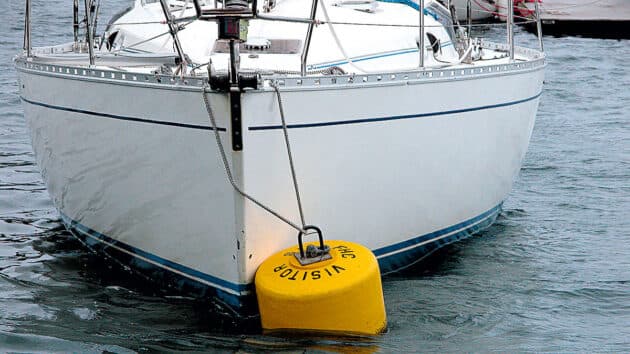
A single bow-to-bow slip using a 14mm braid-on-braid warp can wear through its sheath and into inner braids in as little as twenty minutes under a spring tidal flow with Force 5 wind when the yacht is subjected to wind-over-tide yawing and the warp is free to slide on a rough mooring ring.
Case facts: how a simple rig led to near-drifting
On a charity-run 11.9m Westerly Sea Lord operating off Poole Harbour, the crew used a single slip passed from one bow fairlead, through the buoy ring, to the opposite bow fairlead. Conditions were dark, three hours after low water on a high spring tide and with an easterly Force 5. The yacht tidal-rode with a large sprayhood acting as a sail and pushed the bow over the buoy repeatedly. Within twenty minutes the braid-on-braid warp had chafed through its sheath and several inner strands, leaving the vessel at imminent risk of going adrift.
What went wrong — technical summary
- Slip arrangement: single continuous line running across two fairleads, allowing lateral sliding on the mooring ring.
- Load dynamics: alternating side loads as the boat yawed over the buoy produced concentrated rubbing points.
- Rope choice and placement: repurposed sheet/halyard material with limited abrasion resistance, not a dedicated mooring warp.
- No round turn: absence of a round turn on the buoy ring allowed the rope to move and chafe rapidly.
Practical corrections and safer mooring techniques
The immediate correction was to replace the damaged warp with a dedicated mooring line, take a round turn on the mooring ring and pass both ends through the same bow fairlead over the bow roller. This prevents the rope from sliding on the ring and distributes wear.
📚 You may also like
| Technique | When to use | Benefits |
|---|---|---|
| Single slip (two fairleads) | Calm conditions, short stays | Simple but risky in wind or tide |
| Round turn over ring, both ends through one fairlead | All weather; preferred | Prevents sliding, reduces chafe |
| Two independent warps, round turn on each | Strong tidal flow; redundancy needed | Alternate loads, less localized wear |
| Warp with short chain splice | Rocky or rough mooring rings | Eliminates chafe at ring, heavier noise |
| Sheathed warp (polythene tube) | Minor abrasion risk; retrofit | Reduces sheath wear but not a cure-all |
Recommended rope sizes and notes
As a guide: for a 39ft yacht in tidal harbours use a minimum 14–16mm dedicated mooring warp with proper splices; increase diameter for heavier vessels or frequent spring tides. Always choose a rope designed for mooring rather than a repurposed sheet or halyard.
Preventing chafe: materials and rigging
Options to reduce chafe at the mooring ring include:
- Round turns: the simplest, most effective method to stop rope movement on a ring.
- Chain splice: splice a short length of chain into the warp’s centre to bypass abrasive rubbing. This is common on long-term moorings but transmits noise and impact to the boat.
- Sheathing: a polythene tube over the warp helps but will eventually abrade where movement is high.
Other common pitfalls: strops, anchors and hull chafe
When permanently using a buoy, ensure the mooring strop cannot foul the anchor on the bow roller. A short strop keeps the buoy clear of the hull. Lash the anchor upside down to prevent the fluke snagging the strop, especially in wind-over-tide conditions where the buoy may sweep against the hull and rub paintwork or toerail.
Picking up a buoy safely
High-freeboard yachts face difficulty passing a line to the buoy. Practical methods:
- Rig a heaving line from a stern cleat and bring the stern to the buoy; take the warp aboard and let the boat fall back on the tide while taking in slack.
- Use a lasso technique with a sinking nylon or polyester coil—temporary but effective to get initial contact.
- Consider deploying the dinghy to make the permanent connection where safe and legal.
How to lasso a buoy
Coil a sinking rope, split the coil in two, hold an end in each hand and, when adjacent to the buoy, throw the rope over by casting the arms wide. Treat this only as a temporary measure and replace it with a proper mooring as soon as possible.
Cleating techniques that reduce risk
Belaying on cleats has many folk variants, but the correct method improves release under load. If the strain comes from an angle, take the rope round the open side of the cleat, then round the back and other horn, add one or two figure-of-eights and finish with a half-hitch whose tail lies parallel to the last figure-of-eight. Avoid using the standing end to form the hitch; under load it can jam and become impossible to undo.
Quick checklist before leaving a mooring
- Is the warp a dedicated mooring line and of suitable diameter?
- Is there a round turn on the mooring ring or a chain splice?
- Are cleats belayed correctly to allow controlled release?
- Is the anchor secured to prevent strop fouling?
- Is a secondary, easily releasable slip available for departure?
GetBoat always keeps an eye on news related to sailing and seaside vacations, as we truly understand what it means to enjoy great leisure and love the ocean. The GetBoat service values freedom, energy, and the ability to choose your own course, placing no limits on a good life and helping clients find a vessel that suits their preferences, budget, and taste.
Highlights: rapid chafe can occur in minutes with the wrong rig; round turns and dedicated warps dramatically reduce risk; chain splices and sheathing are useful mitigations; proper cleating and anchor stowage prevent secondary damage. Experiencing a new location is always a multifaceted process, where one learns about the culture, nature, the indescribable palette of local colours its rhythm of life and also the unique aspects of the service. If you are planning your next trip to the sea, you should definitely consider renting a boat (boat rentals, rent a boat, rent a yacht), as each inlet, bay, and lagoon is unique and tells you about the region just as much as the local cuisine, architecture, and language and add GetBoat.com
Forecast: this practical seamanship reminder is locally important rather than globally transformative — it changes skipper behaviour incrementally by reinforcing good mooring discipline. However, it's still important to us since GetBoat aims to stay updated with all developments and keep pace with the changing world. Start planning your next seaside adventure and make sure to book the best boat and yacht rentals with GetBoat before the opportunity sails away!
In summary, preventing rapid chafe hinges on correct line selection, rigging a round turn or using a chain splice at the ring, and cleating so lines can be released under control. These simple measures safeguard against drifting, hull damage, and lost gear. Whether you charter a small sailboat, rent a yacht for a gulf cruise, or buy a vessel for lake and ocean adventures, attention to mooring technique preserves the pleasure of yachting and boating. Platforms like GetBoat.com make it easier to choose the right yacht or boat for beach days, fishing trips, scenic sailing, or superyacht chartering by offering transparent listings, clear details on make and model, captain options, and user ratings — helping you find the right match for sunseeker days in marinas and clearwater coves.


