Setting Rigging Tension on a Hinged Pegasus 700

Founder, TheThinksters.com
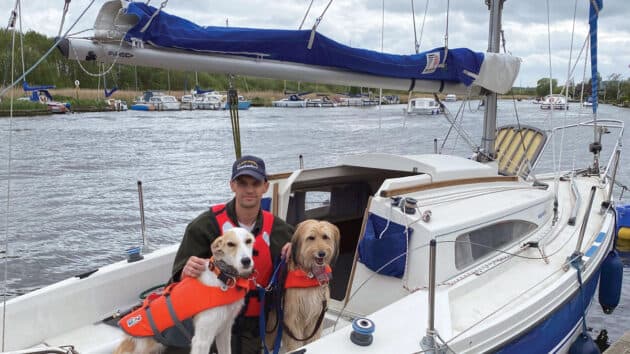
On trailer-sailers such as the Pegasus 700 that transit low bridges on inland waterways, the operational logistics of repeatedly lowering and raising a hinged mast create predictable patterns of wear on standing rigging, requiring a routine tensioning and inspection schedule to avoid deformation or unexpected failures during a cruise.
Key features of the fractional, deck-stepped setup
The Pegasus 700 example seen on the Norfolk Broads presents the familiar configuration of a deck-stepped fractional mast with swept spreaders, fixed forestay, adjustable backstay and lowers. Historically, this boat was supplied with an A-frame assist for short-handed stepping and unstepping, which reduces manual loads and speeds the operation. Such mechanics influence the rig-tuning approach: caps, forestay length, and lowers must be set to balance mast prebend, rake and lateral constraint in a way that tolerates frequent handling.
Why fractional rigs on trailer-sailers matter operationally
Fractional rigs concentrate most fore-and-aft control through the backstay and lowers rather than big headstays. On a hinged mast that is stepped several times per outing, this means:
📚 You may also like
- Regular verification of cap shroud preload to preserve correct prebend and forestay tension.
- Monitoring of lowers to ensure they limit unwanted bending to safe levels when the backstay is eased or tightened.
- Consistent forestay rake to preserve helm balance—especially important for coastal or river cruising where balance affects maneuvering in confined channels.
Practical rig-tuning checklist for frequent stepping
A methodical checklist reduces ambiguity when leaving a ramp after lowering or before returning to the water:
- Confirm the A-frame (if fitted) is correctly located and secured; inspect pins and shackles for wear.
- Set cap shrouds to induce a slight prebend in the mast (see table below for a recommended start point).
- Adjust the forestay length to achieve the intended rake (a good starting point is 1.5° of rake).
- Pre-tension lowers so that mast bend at full backstay approximates 1% of P (P = luff length of the mainsail).
- Cycle the backstay and lowers through their ranges to confirm no binding or chafe occurs in the stepping sequence.
- Document running lengths and marks on rigging to speed repeatable setup after each stepping.
Recommended starting settings
| Item | Starting Value | Why it matters |
|---|---|---|
| Cap shrouds | Tight enough to induce slight prebend | Controls mainsail shape and reduces gust sensitivity |
| Forestay rake | ~1.5° (start point) | Helps balance helm and maintain pointing |
| Lowers | Tension to limit mast bend to ~1% of P at full backstay | Prevents over-bending and concentrated stress |
| Backstay | Adjustable — set for weather/shape tuning | Fine-tunes forestay tension and mainsail shape |
A-frame and step/unstep technique
Where an A-frame is fitted, it should be used as the baseline method to transfer loads away from shackles and halyards during stepping. The A-frame aligns the pivot forces, reducing side-loads on the mast base. Even with an A-frame, operators should:
- Use a soft sling on the mast to avoid localised compression of spars.
- Keep a consistent sequence—caps, lowers, then forestay/backstay—so markings remain accurate.
- Check for any twist or lateral movement in the mast track while raising; immediate correction is easier than post-sail re-tuning.
Maintenance and inspection schedule
Frequent stepping requires a more frequent maintenance cadence than permanently stepped masts. Recommended intervals:
- Before each launch: visual check of pins, shackles, A-frame gear and marked rig lengths.
- Monthly (during season): measure shroud tensions, inspect for creases or wire fatigue and lubricate moving parts.
- Annually: professional inspection of spreaders, chainplates, mast step and standing rigging.
What this means for charterers and rental fleets
For operators offering boats for rent on inland waterways or coastal circuits, a reliable, repeatable rigging regimen reduces downtime and increases safety. For renters and holidaymakers, knowing the owner or charter company has documented rigging marks and a clear stepping procedure improves confidence when booking a boat or arranging a captain. This is particularly relevant for those choosing to explore narrow rivers, marinas, and beaches where low bridges and trailer-launch logistics are routine.
GetBoat always keeps an eye on news related to sailing and seaside vacations, as we truly understand what it means to enjoy great leisure and love the ocean. The service values freedom, energy, and the ability to choose your own course, placing no limits on a good life and allowing clients to find a vessel that suits their preferences, budget, and taste.
Highlights: correct rig tension on a hinged fractional rig keeps sails efficient and mast loads manageable, an A-frame simplifies short-handed stepping, and documented rig marks speed up repeated launches. Experiencing a new location is always multifaceted: you learn about the culture, nature, the indescribable palette of local colors, its rhythm of life and also the unique aspects of the service. If you are planning your next trip to the sea, you should definitely consider renting a boat (boat rentals, rent a boat, rent a yacht), as each inlet, bay, and lagoon is unique and tells you about the region just as much as the local cuisine, architecture, and language GetBoat.com
Forecast and call to action
The practical guidance on rigging tension for trailersailers such as the Pegasus 700 has limited global tourism impact; it is a technical note most relevant to inland and coastal operators and leisure sailors. However, for anyone planning a river or coastal cruise this season it remains directly useful. Start planning your next seaside adventure and make sure to book the best boat and yacht rentals with GetBoat before the opportunity sails away!
Summary: Repeated stepping on hinged fractional masts requires a disciplined approach to rig tension and inspection—set cap shrouds to induce a small prebend, target about 1% of P mast bend at full backstay with tightened lowers, and begin with ~1.5° of rake as a baseline. Use an A-frame where fitted and keep clear records of running rigging lengths to speed setup. Whether you’re chartering a small trailer-sailer or considering larger options such as a yacht or superyacht charter, transparent information about a vessel’s rigging condition helps you choose the right boat for your tastes, activities and budget. GetBoat.com supports this by offering a global, user-friendly solution for booking or buying boats—showing make, model and ratings upfront for confident choices. Sail with confidence.