Managing Stainless Steel and Aluminum Corrosion on Boats
Alexandra
Operational impact at marinas and charter fleets
Marina service records and yard work orders frequently attribute dockside repairs and emergency dry-docks to failures caused by crevice and poultice corrosion in stainless-steel and aluminum fittings. When rigging, deck hardware, through-hulls, or spars are exposed to stagnant water or incompatible metals, operational reliability for charters and boat rentals declines and maintenance logistics—parts sourcing, scheduling of technicians, and downtime for vessels—become critical supply-chain considerations for owners and operators.
Fundamentals of stainless-steel behavior in marine service
Stainless steel resists corrosion by forming a thin, protective chromium oxide film when exposed to oxygen. Marine-grade varieties—commonly 304 and 316—differ in alloying elements: 304 is often called 18-8 (about 18% chromium, 8–12% nickel), while 316 adds molybdenum (2–3%) to improve resistance to pitting and crevice corrosion.
Despite its name, stainless steel is vulnerable when deprived of oxygen. In oxygen-starved pockets—beneath fittings, inside shaft logs, or under bedding compounds—this protective film breaks down and crevice corrosion can form as pits, valleys, or even worm-like holes. That’s why shafts, stuffing boxes, and submerged fasteners are especially prone to damage unless constructed from the most corrosion-resistant alloys or proprietary shaft materials such as Aquamet/Aquatech/Aqualoy grades like AQ22.
📚 You may also like
Common stainless-steel failure modes
- Tea staining: brownish streaks near deck hardware caused by low-oxygen activation of stainless.
- Pitting: localized attack that perforates the metal surface in crevices or under deposits.
- Stress corrosion: where tensile stress and corrosive environment combine to crack parts over time.
Why aluminum behaves differently—and why it corrodes
Aluminum quickly develops a transparent oxide film in oxygenated environments, which protects it. However, aluminum is far more active on the galvanic series than most metals (only zinc and magnesium are less noble), making it susceptible to galvanic corrosion when electrically connected to dissimilar metals through an electrolyte such as seawater.
Two major aluminum corrosion paths dominate marine service:
- Galvanic corrosion: occurs when aluminum connects electrically to nobler metals (copper, bronze, brass, stainless) and is immersed or exposed to spray and humidity.
- Poultice or simple corrosion: forms where oxygen is excluded and moisture is trapped under paint, gaskets, or between wood and aluminum surfaces, producing aluminum hydroxide—a powdery white byproduct.
Painted aluminum and paint-failure mechanics
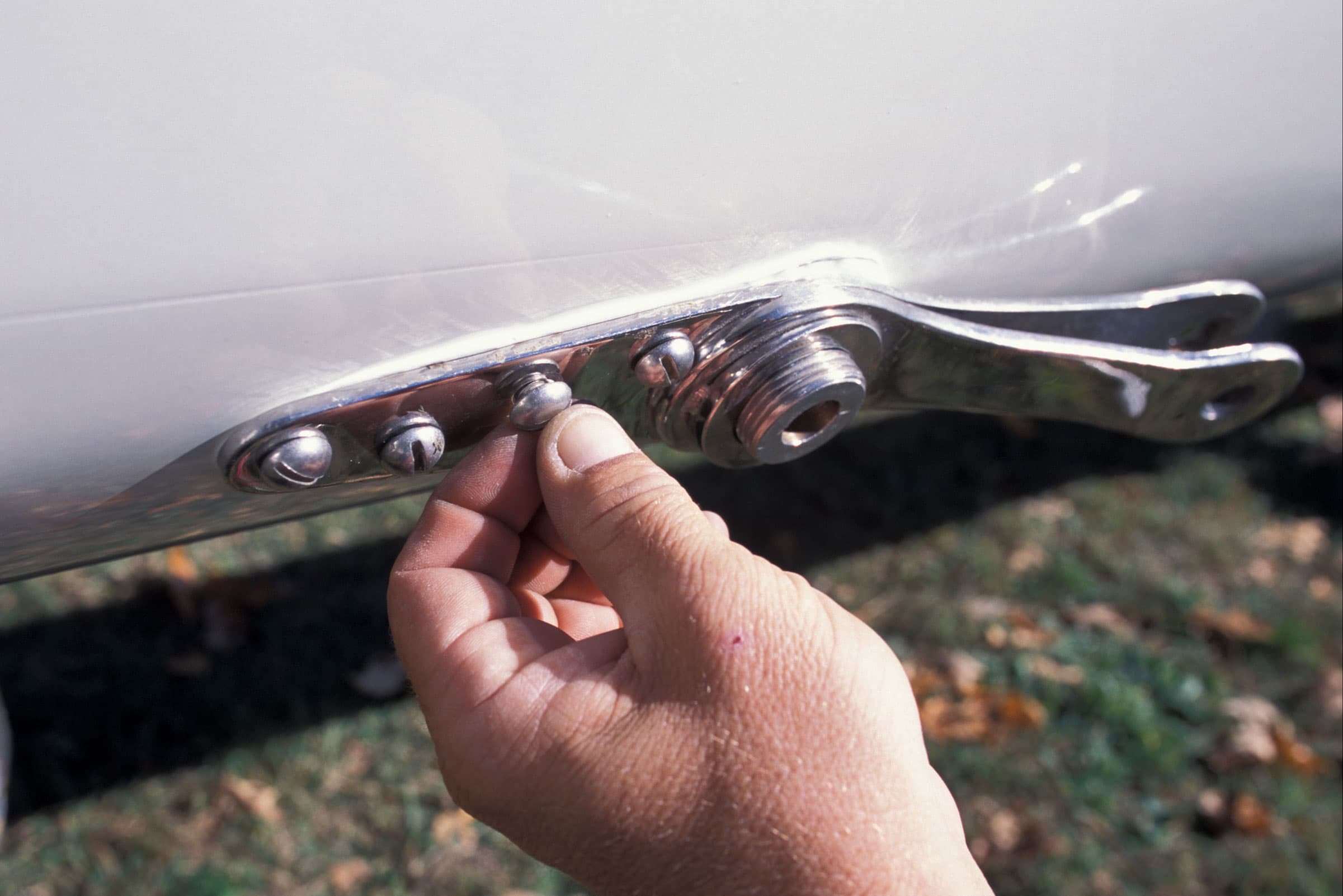
Paint over aluminum is cosmetically appealing but often fails near hardware penetrations. Small breaches let moisture reach bare aluminum; the oxide that forms under the paint expands and lifts coatings, propagating blistering. Once paint has delaminated, ongoing poultice corrosion will reoccur unless the entire blistered area is removed, cleaned, primed, and properly rebedded and sealed.
Practical prevention: materials, installation, and maintenance
| Issue | Preferred solutions |
|---|---|
| Deck hardware staining | Use 316L fasteners when feasible, polish surfaces, fully bed hardware with sealant to exclude water |
| Underwater fasteners and fittings | Choose bronze, cupro-nickel, or Inconel; apply sacrificial anodes and isolate dissimilar metals |
| Propeller shafts in shaft logs | Specify AQ22 or proprietary shaft alloys; inspect stuffing boxes and maintain oxygenation where possible |
| Painted aluminum spars | Round sharp edges, seal around hardware, use liberal bedding compound and immediate repair of nicks |
Checklist for yards, captains, and charter operators
- Specify 316L or better for welded or persistent-wet stainless applications.
- Prefer bronze or cupro-nickel for underwater fasteners; avoid mixing copper alloys with aluminum unless fully isolated.
- Bedding: apply sealant across the whole faying surface and around fastener penetrations; ensure squeeze-out at the perimeter.
- Polish stainless to remove micro-pits; use the largest compatible fastener shank and properly countersink heads.
- Inspect and service shaft seals, stuffing boxes, and bearings frequently, especially before peak charter seasons.
Installation tips specific to rigging and spars
When installing hardware on aluminum spars, use nonmetallic washers/bushings where possible, but do not rely on them exclusively—mechanical loads can crush insulators. Instead, combine isolation with sealant bedding, rounded edges, and rapid repair of paint breaches to prevent poultice initiation.
Operational implications for sailing charters and rentals
For operators offering yacht charters, day rentals, or captain-led excursions, corrosion-related failures increase downtime, parts spend, and customer dissatisfaction. Preventive specification at procurement (choosing the right alloys), meticulous installation, and a focused maintenance schedule reduce unscheduled removals and ensure vessels remain seaworthy and attractive to guests.
GetBoat always keeps an eye on news related to sailing and seaside vacations, as we truly understand what it means to enjoy great leisure and love the ocean. The service values freedom, energy, and the ability to choose your own course; it places no limits on a good life, allowing clients to find a vessel that suits their preferences, budget, and taste. When planning refits or fleet purchases, prioritize corrosion-resistant materials and clear maintenance protocols so that charter guests enjoy uninterrupted time on the water.
Looking ahead, this guidance has limited global geopolitical impact but is highly relevant to regional tourism infrastructure and fleet operations: small corrosion failures can scale into larger maintenance programs that influence marinas, charter availability, and local service economies. To start planning your next seaside adventure and make sure to book the best boat and yacht rentals with GetBoat before the opportunity sails away! If you are planning your next trip to the sea, you should definitely consider renting a boat (boat rentals, rent a boat, rent a yacht), as each inlet, bay, and lagoon is unique and tells you about the region just as much as the local cuisine, architecture, and language and also the unique aspects of the service. GetBoat.com
Summary: Preventing corrosion on stainless steel and aluminum combines correct material selection (use 316/316L, AQ22, bronze, cupro-nickel where appropriate), careful installation (full bedding, large fastener shanks, polished surfaces), and disciplined maintenance (inspect stuffing boxes, rebedd hardware, repair paint breaches). For owners, captains, and charter operators, following these measures keeps vessels attractive for charter and sale, reduces downtime at marinas, and protects investments in yachts, boats, and superyachts. Whether you’re planning a lake cruise, gulf passage, or ocean crossing, understanding corrosion helps preserve your time on the water and your choices of destination, activities, and equipment—so chart your course with confidence.


