UAE–Bahrain one-point travel to speed arrivals
Alexandra
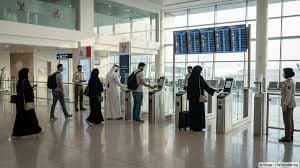
Preclearance operations will shift immigration, customs and security screening to the departure side at Zayed International Airport and Bahrain International Airport, allowing passengers to bypass routine arrival checks and reducing port-of-entry dwell time by an estimated 30–50% on pilot routes.
How the one-point travel system functions
The system relocates the usual arrival checkpoints to the point of departure. Under the pilot, travellers complete identity verification, visa and customs preclearance before boarding, so flights arrive with passengers already cleared for entry. Implementation rests with the UAE’s Federal Authority for Identity, Citizenship, Customs and Port Security and Bahrain’s Ministry of Interior, in coordination with the General Secretariat of the GCC.
Step-by-step flow
- Check-in and biometric capture at the departure terminal.
- Preclearance customs declaration and security screening before boarding.
- Data exchange between authorities to mark the passenger as cleared.
- On arrival, passengers exit the aircraft and proceed directly to baggage reclaim and onward transport.
Pilot airports and scope
The pilot is limited to Zayed International Airport in Abu Dhabi and Bahrain International Airport initially. Operations at these hubs will test cross-border data-sharing, baggage handling adjustments and staffing models before any regional expansion. Smaller airports and maritime ports were not included in the initial trial, but the implications for coastal tourism and charter operators are immediate.
📚 You may also like
| Aspect | Traditional Arrival | One-Point Preclearance Pilot |
|---|---|---|
| Immigration processing | On arrival at destination | At departure airport |
| Customs checks | Possible secondary inspection on arrival | Conducted pre-departure where applicable |
| Passenger dwell time | Higher, variable | Reduced, more predictable |
Operational challenges and logistics considerations
Shifting checks upstream creates new logistics tasks: secure cross-border data links, synchronized biometrics systems, and revised baggage-handling protocols so that luggage entering a cleared state remains compliant with receiving-country rules. There’s also the human factor—training officers at origin airports to apply destination rules accurately. In short, the devil’s in the details, and those details live in the conveyor belts and databases.
Customs, baggage and chain of custody
Preclearance demands a chain-of-custody model for baggage: once cleared, luggage must not re-enter any uncontrolled area before loading. Airlines and ground handlers must coordinate to avoid offloading cleared bags at intermediate stops. For cargo and yacht provisioning, this can speed up port handovers—but only if manifest and customs data are integrated.
Tourism, yachting and boating impacts
Faster entry at the airport translates into more on-water time. For day-trippers, charter guests and crew arriving to board a private yacht or a Sunseeker-style motorboat, shaving an hour or two on arrival logistics can mean an afternoon sail rather than a rushed evening cruise. The region’s push toward a Unified GCC Tourist Visa (also called the GCC Grand Tours Visa) complements the one-point move by reducing visa friction across multiple destinations.
- Marinas and charter companies can schedule embarkation later in the day with less risk of passenger delays.
- Captains and provisioning teams benefit from predictable arrival windows for supplies and crew changes.
- Superyacht brokers and boat rental operators may see increased demand for short-term charters as seamless entry reduces travel friction.
Victor Abou-Ghanem of Story Hospitality (a subsidiary of Abu Dhabi Capital Group) noted that a unified visa “would effectively integrate six destinations into a single, connected itinerary,” which hints at larger itinerary products such as GCC yacht circuits and multi-port charters.
Practical tips for boat renters and marinas
- Confirm arrival preclearance status before scheduling pickup or check-in.
- Coordinate with charter operators about estimated time of arrival to the marina.
- Prepare digital copies of passenger IDs and manifests to accelerate local checks.
I once missed a sunset sail because passport queues gobbled my afternoon—if preclearance had been in place, I’d have been on the water. That little personal slice of regret is exactly what operators hope to avoid for future guests: less waiting, more sailing.
Conclusion
In summary, the UAE–Bahrain one-point preclearance pilot at Zayed International Airport and Bahrain International Airport, implemented by the Federal Authority for Identity, Citizenship, Customs and Port Security and the Ministry of Interior with the General Secretariat of the GCC, moves immigration and customs to departure airports to cut arrival processing time. The approach pairs well with the Unified GCC Tourist Visa or GCC Grand Tours Visa, promising smoother itineraries across GCC Destinations. For the boating and charter sector—yacht and superyacht operators, marinas, captains and day-charter companies—this can mean faster embarkation, better scheduling for rentals and charters, and more time enjoying the beach, lake or sea. Whether you’re renting a boat, booking a captain, eyeing a sale or planning yachting activities, the pilot could nudge more travellers toward boating and ocean adventures in the gulf, with clearer timetables for marinas and clearer water for fishing and leisure.


