Last Delivery: Magic Bus Sinks Offshore
Alexandra
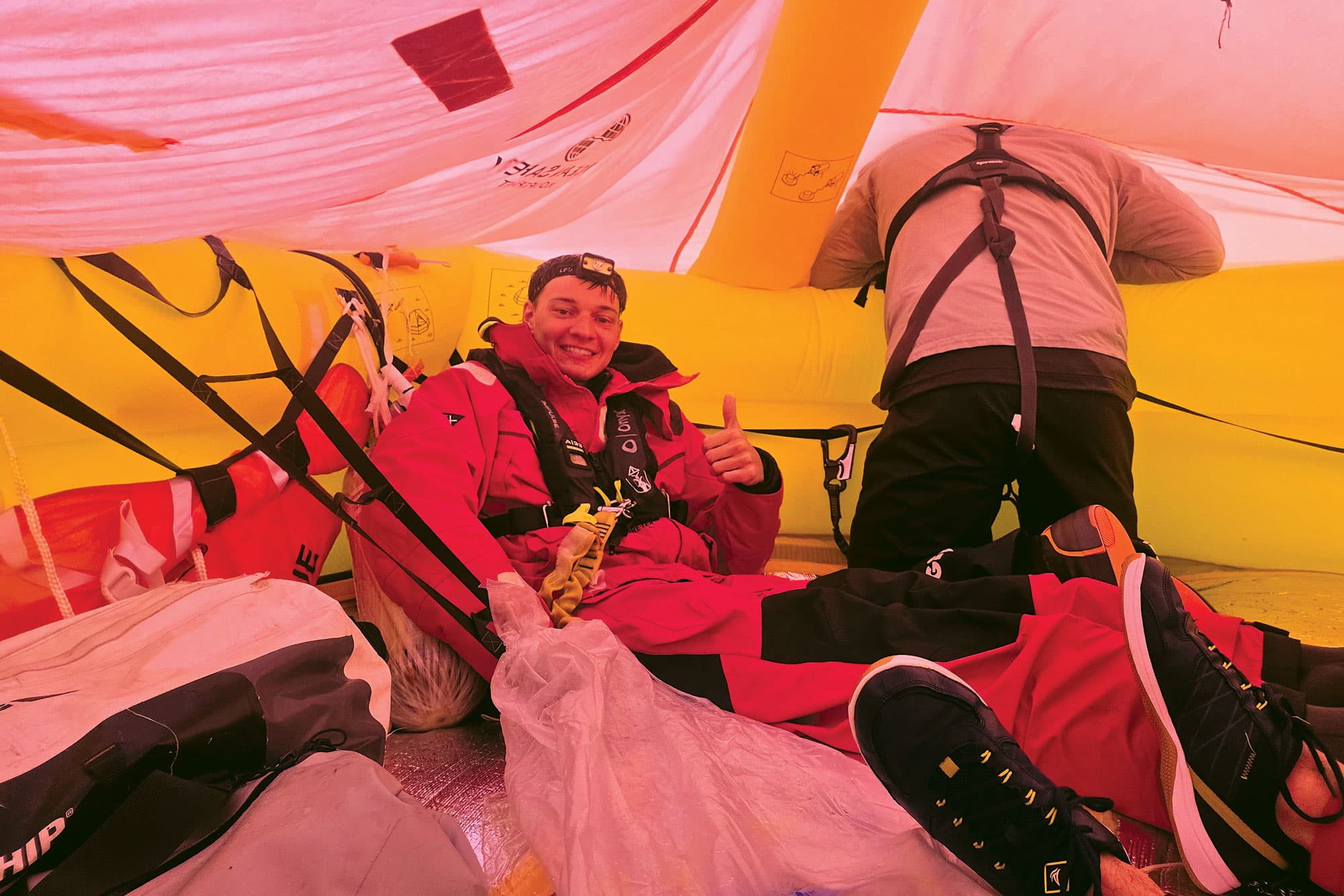
280 miles off the coast of North Carolina, a 54-foot catamaran in a 45-knot gale experienced progressive flooding and complete loss of propulsion, forcing a crew of five to abandon ship into a 12‑person life raft before morning rescue by a C-130 and USCG helicopter.
How the emergency unfolded at sea
The delivery began like many long-distance transfers: recent engine installs, a checked mast, a serviced 12‑man liferaft and weather-model confirmation. The vessel, known as Magic Bus, left Fort Lauderdale with a mixed crew led by a veteran delivery skipper, Buster Pike, and four younger sailors including Zach Doerr, Evan Spaulding, Sam Gryska, and the family member recorded as the owner’s son.
Within 24 hours the crew recorded strong performance—speeds averaging above 10 knots and brief bursts to 18. Then progressive flooding was detected in the port engine room. Onboard mitigation relied on multiple portable pumps, jury‑rigged raw‑water intakes and the rapid troubleshooting of through‑hulls and strainers. Despite these measures water ingress outpaced dewatering and, by the early hours, both engines and the generator failed.
📚 You may also like
Key actions taken before abandonment
- Immediate assessment of bilge and through‑hull systems; manual clearing of strainers.
- Activation of all spare bilge pumps and rigging an emergency pump from the raw water intake.
- Decision to head for Florida after coastal options like Staniel Cay were deemed out of range.
- Preparation of lifejackets, harnesses, emergency ditch bag with passports, water and rations.
- Deployment and successful inflation of a 12‑man life raft aft of the vessel.
Timeline (selected events)
| Time (Local) | Event |
|---|---|
| 19:00 (Day 0) | Cast off; normal departure |
| 24–36 hours | Flooding detected in port engine room; pumps engaged |
| 01:30 (early AM) | Deck hatch blown out; starboard engine fails |
| 03:30 | All crew aboard life raft; vessel sinking |
| 05:30 | C-130 sighting; supply drop; EPIRB signals confirmed |
| ~08:00 | USCG helicopter recovery and transfer to USS George H.W. Bush |
Equipment and communications that mattered
Critical gear that improved survivability included a serviced 12‑man life raft, an EPIRB that intermittently transmitted position, a short window of Starlink connectivity and the use of a handheld VHF after the supply drop. The crew’s ditch bag planning—passports, water, protein bars and a working handheld radio—proved essential.
Common failure points observed
- Through‑hull and strainer vulnerability when debris or corrosion blocks raw water intakes.
- Generator fragility under overloaded electrical configurations.
- Deck hardware (hatches) failing under high sea state, creating sudden internal flooding.
Human factors and seamanship
Leadership from an experienced delivery captain reduced panic and kept tasks ordered: one team managed the raft, one handled emergency broadcasts, and two assisted high‑priority repairs. Clear role assignments—Zach and Sam on the raft, Evan and the owner’s son supporting—helped the team pivot quickly from damage control to survival mode.
The crew’s calm demeanor, adherence to basic safety drills and the simple act of packing essential documents in a plastic sleeve made the difference between chaos and an orderly abandonment. One lesson: practice inflating and boarding the raft under daylight conditions; it’s not as intuitive as it looks.
Checklist: What every delivery crew should verify
- Service dates for liferaft, lifejackets and EPIRB; functional manual pump.
- Redundant means of communication (VHF, satellite link, personal locator beacons).
- Clear schematic of bilge system and labeled through‑hulls/strainers.
- Known personnel roles for abandon‑ship, medical and communications tasks.
- Provisioned ditch bag for every person with water, nutrition, spare clothing and IDs.
Relevance to charter and boat rental operators
Operators and charter companies who offer long transits or delivery legs should re‑examine maintenance logs and pre‑departure checklists. For GetBoat.com users—owners, captains and renters alike—this account underscores that even well‑prepared vessels can escalate to a life raft scenario when multiple failures align. Rental agreements and skipper briefings must explicitly cover life raft drills, EPIRB operation and emergency communications.
There’s old salt wisdom here: “hope for the best, prepare for the worst.” The Magic Bus final voyage reinforced that redundancy in pumps, disciplined drills, and keeping essential gear accessible can buy time for rescue assets to arrive.
In summary, the case of Magic Bus highlights decisive maintenance checks, redundancy in safety gear, and clear crew roles as the core survival factors during an offshore abandonment. For anyone involved in yachting, chartering or boat rent operations, these takeaways apply whether managing a yacht, a superyacht delivery, a coastal charter or a sunseeker day rental: train crews, service EPIRBs and liferafts, and always treat every long passage like a real voyage. Destinations matter, but so does readiness—be it on the sea, ocean, gulf or clearwater bay—and those lessons translate directly to yacht, boat and charter safety, marinas, boating activities and future sale or rental operations.


