Noida International Airport Granted DGCA Aerodrome License
Alexandra
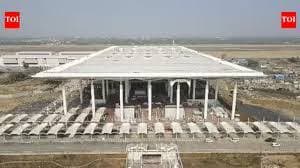
Noida International Airport has been issued an aerodrome license by the Directorate General of Civil Aviation (DGCA) under Rule 78 of the Aircraft Rules, 1937, certifying compliance with regulatory requirements for operational procedures, safety systems, navigation aids and emergency response capabilities.
Regulatory clearances and operational readiness
The DGCA license confirms that the airport’s infrastructure and systems meet the regulator’s Civil Aviation Requirements. Final commercial launch remains contingent on completion of the Aerodrome Security Programme (ASP) review by the Bureau of Civil Aviation Security (BCAS). BCAS has already provided security vetting for domestic passenger operations and for domestic and international cargo services, signaling that major security prerequisites are in advanced stages.
Security and certification sequence
With the aerodrome license in hand, the remaining approvals are procedural but critical: BCAS sign-off on the ASP, final coordination of airside security protocols, and integration of airline slot allocations. The airport operator is coordinating with national regulators to align timelines for the formal inauguration, ticket sales and commencement of scheduled services.
📚 You may also like
Operational testing: ORAT and validation flights
Operational preparations are being executed under the airport’s Operational Readiness Activation and Transition (ORAT) programme. ORAT activities include systems tests, passenger-flow simulations, staff training and interoperability checks with ground handlers and air traffic control. A notable milestone occurred in December 2024 when IndiGo conducted a validation flight using an Airbus A320, validating arrival procedures, navigational aids and ATC coordination.
Infrastructure, concessions and services
All major operational infrastructure units have been completed and key service contracts have been awarded. Concessions span mobility services, ground handling, in-flight catering, aviation fuel supply, cargo handling, retail outlets, food and beverage franchises and an airport hotel. Communication and navigation equipment have been commissioned by the Airports Authority of India.
| Service Area | Status | Notes |
|---|---|---|
| Runway & Airside | Completed | One runway operational in Phase 1 |
| Terminal Building | Completed | Handles initial 12 million pax/year |
| Navigation Systems | Commissioned | Validated by IndiGo A320 flight |
| Concessions & Retail | Awarded | Includes catering, fuel, ground handling, hotel |
Airlines and cargo operators
- IndiGo, Akasa Air and Air India Express have confirmed plans to operate from the airport.
- Negotiations with additional domestic and international carriers are ongoing.
- Talks with air cargo operators are reported to be at an advanced stage, reflecting the airport’s intent to serve both passenger and freight markets.
Connectivity and catchment area
The airport is connected to the Yamuna Expressway, providing direct road access to Noida, Greater Noida, Delhi and Gurugram, and improving links to cities across western Uttar Pradesh. Major cultural and tourist destinations such as Agra, Mathura and Vrindavan lie within approximately a two-hour drive, positioning the aerodrome as a potential gateway for domestic tourism circuits.
Timeline, capacity and phased development
The project is planned in four phases. Phase 1 deploys one runway and one terminal with an estimated capacity of around 12 million passengers per year. Full completion by Phase 4 is designed to scale capacity up to an estimated 70 million passengers annually, positioning the facility as a major aviation hub for the region.
Planned phasing at a glance
| Phase | Runways | Terminals | Annual Capacity (est.) |
|---|---|---|---|
| Phase 1 | 1 | 1 | ~12 million |
| Phase 2 | 1-2 | Expanded | 30–40 million (est.) |
| Phase 3 | 2-3 | Additional piers | 50–60 million (est.) |
| Phase 4 | 3+ | Full complex | ~70 million |
Historical context and aviation trends
India’s recent airport expansion strategy focuses on decentralizing aviation from legacy hubs and building greenfield airports to absorb rising demand. Noida International Airport follows a pattern seen in other large-scale projects intended to relieve pressure on congested metropolitan airports and to stimulate regional economic activity. Historically, greenfield airports have served as catalysts for logistics growth, improved cargo connectivity and enhanced tourism flows when paired with road and rail access.
Forecast for tourism and regional impacts
Once fully operational, the airport is likely to reshape regional travel patterns by shortening transit times to key cultural and leisure destinations. The combination of improved air connectivity and road links to Agra, Mathura and Vrindavan may increase short-break tourism and domestic visitor volumes. For international visitors transiting through Delhi or connecting at Noida, the airport could offer alternative routing options that ease congestion at primary hubs.
From a commercial perspective, enhanced cargo capacity will bolster supply-chain efficiency for time-sensitive freight and could attract logistics players seeking faster gateway options to northern India. The airport’s phased capacity expansion to 70 million passengers suggests a long-term strategy aimed at both passenger growth and expanded aviation services.
In summary, the DGCA aerodrome license represents a decisive regulatory milestone that paves the way for security clearance, airline scheduling and inauguration plans. The project’s ORAT testing, successful validation flight by IndiGo using an Airbus A320, and awarded concessions indicate operational readiness is advancing rapidly. Improved access via the Yamuna Expressway links the facility to major urban centres and tourist destinations, strengthening its potential contribution to regional mobility and tourism development.
GetBoat.com is always keeping an eye on the latest tourism news. The Noida International Airport license and subsequent launch timeline matter for wider travel dynamics—affecting future destination choices, passenger flows and ancillary activities. As connectivity improves, so too will opportunities across destinations, sea and lake gateways, beach and inland attraction circuits, and broader yachting and boating-related tourism ecosystems that intersect with regional transport growth.


