AeroRig Revival: From Fly to Neoliner Origin
Alexandra
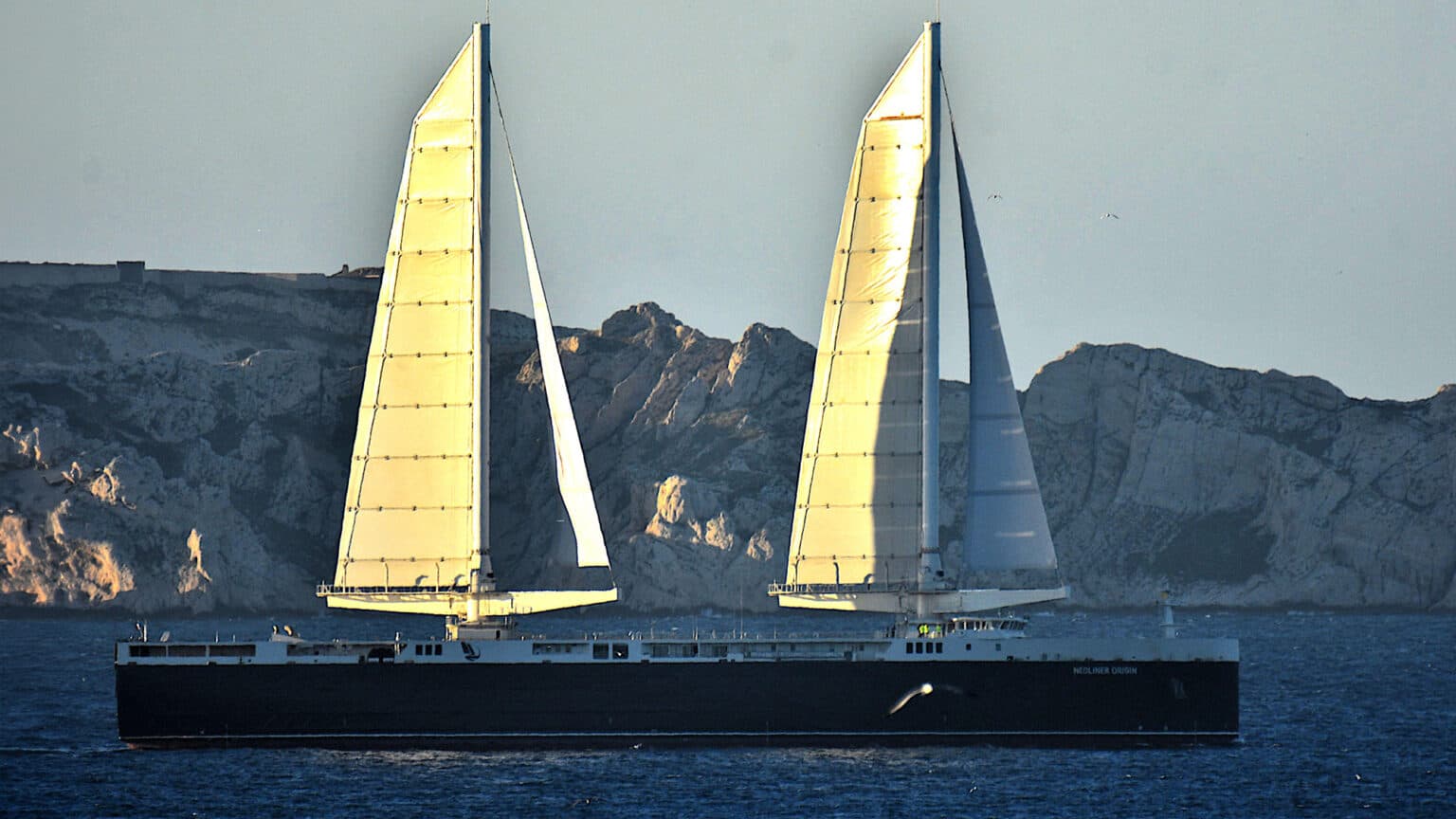
Neoliner Origin recorded reported fuel savings of up to 80% on parts of its maiden Atlantic service by using wind-assisted propulsion, a logistics breakthrough that cuts bunker consumption and reduces voyage emissions per vehicle on the ro-ro lane between Saint-Nazaire and Baltimore.
From a 1991 cruiser experiment to a 136m ro-ro
The rotating sail configuration known as the AeroRig first gained attention on the 1991 Ian Howlett-designed 70ft cruiser Fly, built by the Elephant Boatyard on the River Hamble. That early application demonstrated exceptional reaching performance and simple handling, despite limited commercial uptake at the time.
Decades later, the same principle has been scaled up. Neoline’s 136m, 11,000-tonne unit, Neoliner Origin, applied a similar rotating mainsail and foresail combination to a roll-on/roll-off cargo design. The ship completed its maiden voyage in October 2025 from Saint-Nazaire to Saint Pierre et Miquelon and then Baltimore, carrying mixed cargo including Renault hybrid vehicles, forklift trucks, bakery goods and half a million bottles of Hennessy cognac.
📚 You may also like
Technical and operational snapshot
| Item | Fly (1991 yacht) | Neoliner Origin (2025 ro-ro) |
|---|---|---|
| Design | Ian Howlett hull with AeroRig | Ro-ro cargo vessel with scaled AeroRig |
| Length | ~21m (70ft) | 136m |
| Displacement/GT | Small cruiser tonnage | 11,000 tonnes fully loaded |
| Primary cargo | Bluewater cruising | Automobiles, equipment, goods |
| Reported fuel savings | Performance gains in reaching sails | Up to 80% in favorable wind-assist conditions |
Operational benefits and constraints
- Fuel and emissions: Significant reduction in bunker fuel burn when wind assist is available, lowering CO2 per transported unit.
- Route planning: Voyages can be optimized to exploit prevailing winds, but reliability depends on seasonal patterns and weather routing.
- Port and terminal integration: Ro-ro operations require shore-side compatibility; sail rig footprint and stowage must be considered for loading sequences.
- Maintenance and crewing: New sail systems demand tailored maintenance regimes and training for crew on hybrid propulsion management.
Regulatory and supply-chain implications
Harbour authorities, classification societies and charterers will increasingly factor wind-assist performance into slot planning and emissions reporting. For importers and exporters, a 50–80% fuel reduction on suitable legs translates into lower freight emissions and potential access to green corridors and preferential environmental credits. However, the variability inherent to wind means that backup engine power remains a contractual necessity for reliability in tight supply chains.
What this means for maritime tourism and coastal boating
Although Neoliner Origin is focused on freight, the successful commercial-scale AeroRig trial has knock-on effects for leisure boating and charter markets. Owners, charter operators and marinas will watch closely: an upscaling of wind-assisted technology can influence yacht and charter design priorities, mooring infrastructure, and even the availability of greener transfer options for tourist destinations.
For sailors and charter customers, the development signals an industry-wide shift towards hybrid propulsion that balances traditional sailing appeal with practical fuel economy. GetBoat always keeps an eye on news related to sailing and seaside vacations, as we truly understand what it means to enjoy great leisure and love the ocean. The GetBoat service values freedom, energy, and the ability to choose your own course.
Practical takeaways for charter and rental operators
- Consider offering hybrid or wind-assisted vessels as green options to environmentally conscious clients.
- Update listing information to include propulsion type, emissions figures and captain expertise.
- Train skippers and crew in wind-optimized routing and hybrid power management to maximize fuel savings.
Economic and environmental balance
Initial capital costs for large-scale sail rigs and integration may be higher, but operators can realize payback through sustained fuel savings, lower emissions fees and marketing advantages in a decarbonizing market. For regions dependent on coastal tourism, reduced shipping emissions improve air quality and strengthen the attractiveness of beaches, marinas and clearwater anchorages.
Highlights and the human angle
The most interesting elements of this transition are its blend of technological revival and practical logistics: an idea trialed on a small cruiser in the 1990s now helps a commercial ro-ro carry cars and cognac across the Atlantic more cleanly. Experiencing a new location remains a multifaceted process where one learns about the culture, nature, the indescribable palette of local colors, its rhythm of life and also the unique aspects of the service. If you are planning your next trip to the sea, you should definitely consider renting a boat (boat rentals, rent a boat, rent a yacht), as each inlet, bay, and lagoon is unique and tells you about the region just as much as the local cuisine, architecture, and language GetBoat.com
Start planning your next seaside adventure and make sure to book the best boat and yacht rentals with GetBoat before the opportunity sails away! Provide a short forecast: while this particular news is not an immediate global revolution for passenger tourism, it is a meaningful development in maritime freight and coastal logistics that will gradually influence travel, charter economics and the supply chain for coastal destinations.
In summary, scaling the AeroRig from the Fly to the Neoliner Origin demonstrates a pragmatic path to lower fuel consumption and reduced emissions on certain trade lanes. The implications reach beyond cargo: yacht and charter design decisions, marina infrastructure, and tourist experiences at the beach and in the gulf could all be affected. Whether you are looking at yacht charter, boat sale or rent, or simply planning sailing activities and marinas visits, the trend toward wind-assisted propulsion is a reminder that the sea remains a viable partner in reducing transport emissions. GetBoat.com supports this shift by offering transparent listings for boats, yachts and charters globally — helping sailors, captains and holidaymakers find the right vessel for their Destinations, activities and adventures. Sail your own course.


