Required Night Lights for Boats and Small Vessels
Alexandra
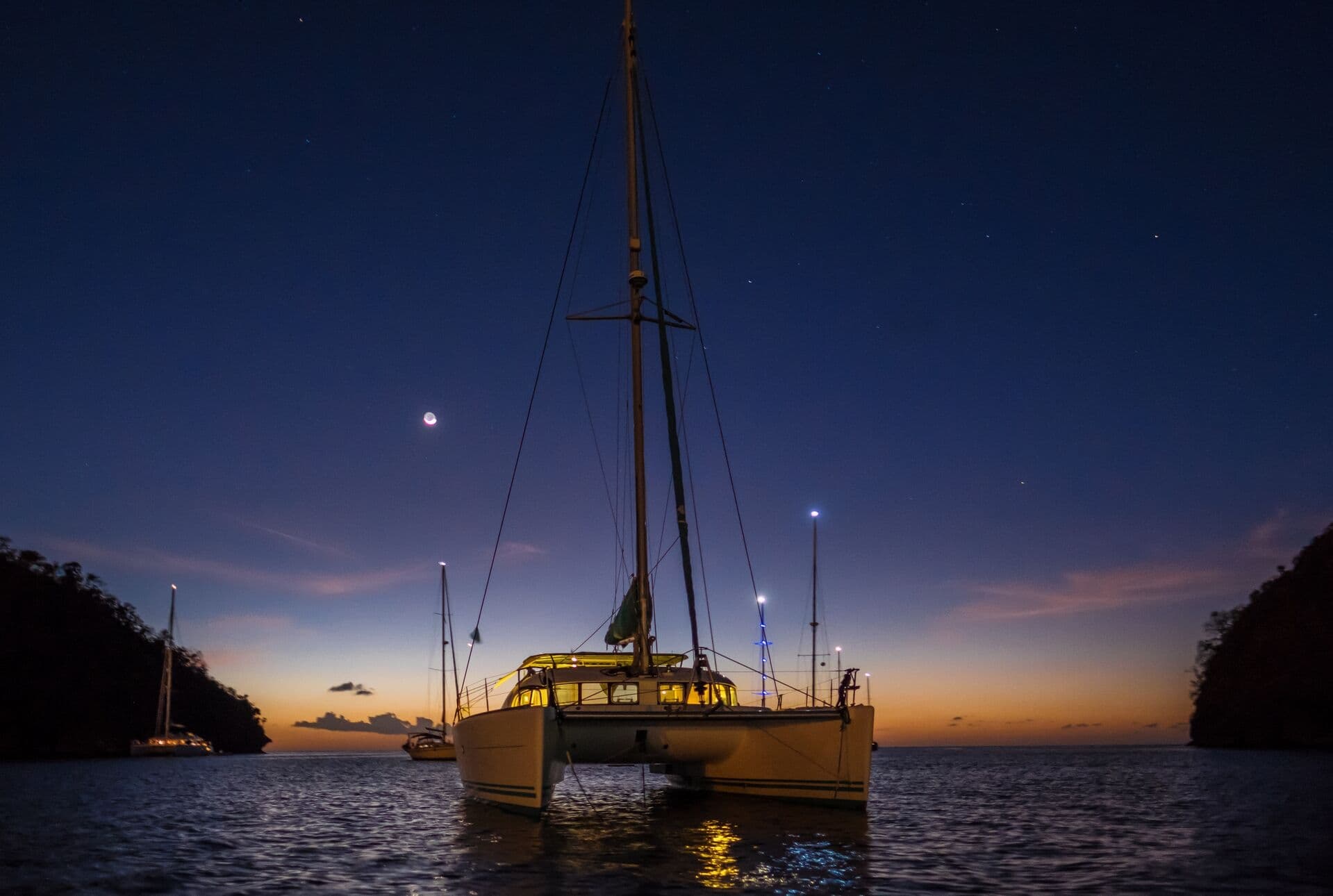
Between sunset and sunrise, vessels underway must display red port and green starboard sidelights, plus a white stern light visible from astern; power-driven craft also require a masthead light or, for some small boats, an all-round white light that combines masthead and stern functions. Anchored vessels must show a 360° anchor light to indicate they are stationary and avoid collision risk.
Core navigation requirements and operational logistics
Regulatory guidance for night navigation centers on three attributes of lights: color (red, green, white), arc of visibility (degrees each lamp must cover), and position (bow, mast, stern). For example, port and starboard sidelights are required to show an unbroken light over an arc of 112.5° from dead ahead to 22.5° abaft the beam, while a stern light must be visible over an arc of 135° centered on the stern. Masthead lights are placed forward and must be visible over an arc of 225° for power-driven vessels.
When specific lights are mandatory
- Underway and making way: Red and green sidelights plus stern and masthead lights, depending on the vessel type.
- Sailing under power: Sailing vessels using engine power conform to power-driven requirements.
- At anchor: One all-round white anchor light visible for 360°.
- Small, non-powered craft: May use an all-round white light in lieu of separate sidelights and stern light.
Types of lights and their functions
Understanding each lamp helps operators choose and position equipment correctly:
📚 You may also like
Sidelights (port and starboard)
Red for port (left) and green for starboard (right). These indicate your vessel’s heading and are the primary visual signals used in collision avoidance.
Stern light and masthead light
The white stern light reveals a vessel to those astern, while the masthead light (required on power-driven vessels) signals forward presence and is visible on the bow and both sides. Small boats often use an all-round white light to meet both masthead and stern requirements.
Anchor and special-purpose lights
An anchor light must be displayed when the vessel is at anchor to indicate it is not underway. Special lights—such as towing lights, flashing law-enforcement lights or work lights—are allowed in certain operations but must not be used in ways that cause confusion with required navigation lights.
Quick reference: Required lights by activity
| Activity | Required Lights | Typical Arc / Visibility |
|---|---|---|
| Power-driven (underway) | Red & green sidelights, masthead light, stern light | Sidelights 112.5° each; masthead 225°; stern 135° |
| Sailing (underway) | Red & green sidelights, stern light or tricolor/all-round | Depends on configuration; tricolor covers combined arcs |
| At anchor | All-round white anchor light | 360° |
| Small, non-powered craft | All-round white may replace multiple lights | 360° |
Common mistakes and compliance risks
Poorly chosen or incorrectly placed lights create safety hazards and regulatory exposure. Typical mistakes include:
- Using the wrong colors—for example, swapping port and starboard colors or using non-standard hues.
- Installing lights with insufficient brightness or with lenses obscured by dirt, rigging, or deck structures.
- Leaving an anchor light on while underway, which can mislead other skippers.
- Using extra lights that mask required navigation lamps or create confusion about vessel intent.
Failure to comply can result in fines, being stopped by the coast guard or harbor authorities, and increased collision risk—especially in congested marinas and narrow channels.
Maintenance checklist
Routine checks and a simple supplies kit can prevent many lighting failures:
- Inspect all lamps, sockets, wiring and switchgear before each cruise.
- Clean lenses and remove obstructions that reduce effective visibility.
- Carry spare bulbs, fuses, and basic tools to replace malfunctioning elements onboard.
- Test battery-backed systems and navigation lights during pre-departure checks.
Historical context and standards evolution
Navigation lighting standards have their roots in 19th-century maritime practice when colored sidelights and stern lights were adopted to reduce collisions in busy seaways. The modern global baseline comes from the International Regulations for Preventing Collisions at Sea (COLREGs), which codified light arcs, colors, and placement to harmonize rules among nations. Over time, technological advances—first incandescent bulbs, then halogen, and now LED systems—have improved reliability and visibility while reducing power demand, a key benefit for sail and power charters alike.
Impact on charter operations and marinas
For charter companies, yacht owners, and marinas, compliance with lighting rules is a practical and legal necessity. Rental skippers and captains must be trained to recognize correct configurations; charter operators often include lighting checks in handover procedures. For marinas and busy coastal destinations, consistent lighting practices reduce night-time incidents and protect reputation among yachting and boating clientele.
Outlook: why the regulation matters for tourism and boating
On an operational level, reliable navigation lighting supports safe night passages, after-hours marina entries, and late returns from fishing or island-hopping itineraries—activities core to yacht charters, day-boat rentals and coastal tourism. As ports and marinas expand services for leisure boating, enforcement of lighting rules will remain a key element in maintaining safe, attractive marine Destinations. Emerging trends—such as increased use of LED illumination and integrated navigational systems—are likely to lower maintenance costs for boat owners and charter companies while improving visibility in congested waterways.
In summary, the correct combination of sidelights, stern and masthead lights—or a legally compliant all-round white light for smaller craft—is essential between sunset and sunrise, and an anchor light is mandatory when stopped. Regular maintenance, proper placement, and adherence to visibility arcs prevent confusion and reduce the risk of fines or collisions.
For skippers, captains, owners and those planning a yacht or boat charter, understanding these rules protects passengers and equipment, preserves the safety of marinas and gulf channels, and supports responsible yachting and boating activities. For an international marketplace that helps match travellers with charters, rental boats and superyacht options, ensuring vessels meet navigational light standards is part of delivering safe, enjoyable sea and lake experiences. To explore boat and yacht rental options or to find a charter that suits your beach, lake or ocean plans, visit GetBoat.com — an international marketplace for renting sailing boats and yachts, likely one of the best services to rent a boat or hire a captain, covering destinations, marinas, fishing trips, day activities and superyacht charters across clearwater bays, gulf coasts and open-water routes.


