Final Systems and Deck Work on a Melges 30 Refit
Alexandra
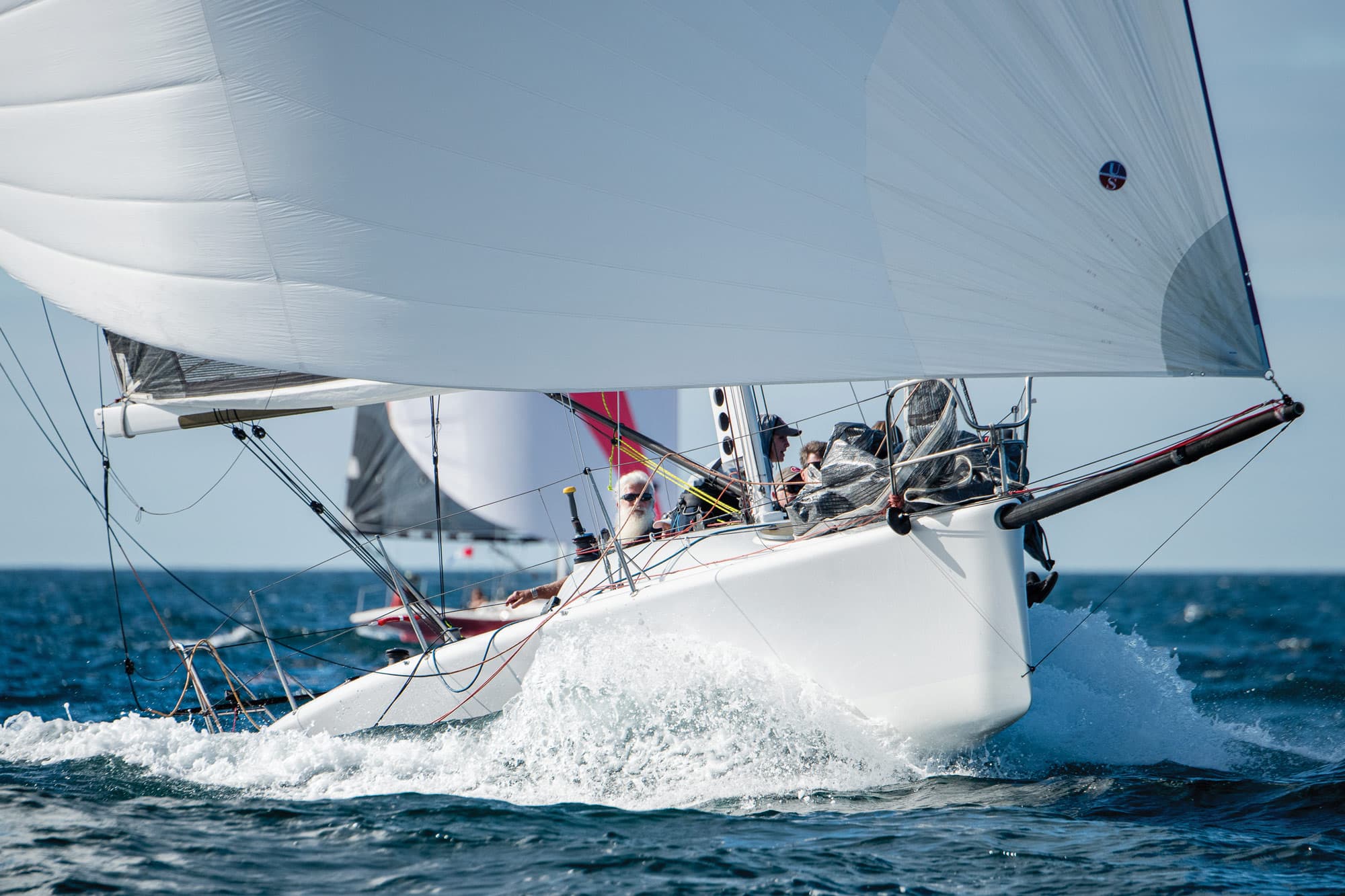
Coordinating the refit required precise logistics: scheduled shipments of a Triton Edge processor, a DST-810 triducer, and Nemesis 9 displays were synced with local metalwork and upholstery timelines to avoid berth downtime and minimize marina storage fees.
System backbone and instrument choices
The project replaced legacy electronics with a modern, modular suite centered on an NMEA 2000 backbone to simplify integration and future upgrades. The core processor selected was the Triton Edge Sailing processor, chosen for its compact size and multi-sensor processing speed. Using NMEA 2000 made it straightforward to add or swap components without extensive rewiring—important for transportable raceboats that travel to regattas.
Primary sensors installed
- DST-810 triducer: combined paddlewheel knot meter, depth, and temperature sensor to avoid extra hull penetrations.
- WS710 wind sensor with WS700 wired interface: mounted on a vertical carbon wand above rig upwash for reliable wind data.
- ZG100 GPS/compass module: supplies GPS position, heel, and trim to the network.
- Precision 9 Compass: a faster, higher-accuracy heading source installed low in the boat to complement the ZG100.
Displays and human-machine interface
Displays were arranged for clear in-ride visibility and multifunction capability: a Zeus 7 chartplotter belowdecks, a Nemesis 9 Sailing Display on deck for big, readable numbers (boatspeed, heading, true wind direction, true wind angle, heel) and an H5000 Graphic display to provide navigation, start-timing, wind plotting, and cross-track visuals.
📚 You may also like
| Component | Primary Function | Notes |
|---|---|---|
| Triton Edge | Data processing | Central NMEA 2000 hub |
| DST-810 | Speed, depth, temp | Paddlewheel triducer minimizes hull holes |
| WS710 / WS700 | Wind sensing | Wired for rig stability |
| Nemesis 9 | On-deck sailing display | Highly customizable alarms and colors |
| H5000 | Graphic display & timing | Start line and set/drift tools |
Calibration, testing, and commissioning
Accurate output depends on deliberate calibration. Compass swings and boatspeed runs were conducted in flat water with negligible current. Boatspeed was correlated against GPS-derived speed-over-ground in opposite directions, then heading offsets were tuned so Course over Ground matched compass readings. The wind sensor angle was adjusted after sea trials to correct small installation biases. These steps are logistical as much as technical: scheduling low-wind windows and securing marina access impacts how quickly a boat can be race-ready.
Practical deck and cockpit upgrades
Beyond electronics, cockpit ergonomics and materials were updated for durability and barefoot comfort. A custom soft deck from Raptor Deck was fabricated using a Melges 32 template adapted to fit the Melges 30 cockpit, matching nonskid color and improving grip. The project also produced a scanned Delrin keel plate to replace a damaged section without cutting new molds.
- Custom soft-deck installation for comfort and traction
- Delrin keel plate created from scanned template to ensure hull integrity
- Reinforced stern pulpits and stanchion knees fabricated for additional crew support
Rigging, sails, and creative storage solutions
Sail inventory was refreshed with help from Ullman Sails. The reaching kite inventory was upgraded with a 1.5A and a 3A for a wider VMG window, and staysails were added to improve reaching legs. For outboard stowage, a Dyneema bridle and halyard tote system was devised to lift and lower the engine into a mesh cradle seated on a recycled trolley made from old Harken sheaves—an efficient solution that removes the need for additional cockpit hatches and preserves structural integrity.
Metalwork and fabrication
High-end modifications, such as beefed-up stern pulpits with additional supports and stanchion knees, were executed by local specialist Steve Harrison to create stronger handholds and greater stiffness under load.
Operational outcomes and racing results
After several sea trials and race weekends, the refit resulted in reliable systems and tangible performance gains. Calibration and iterative tweaks produced consistent data across devices, and the deck modifications enhanced crew efficiency and safety. The project highlights that with the right combination of modern electronics, thoughtful fabrication, and measured logistics, older sportboats can regain competitiveness.
GetBoat always keeps an eye on news related to sailing and seaside vacations, as we truly understand what it means to enjoy great leisure and love the ocean. The GetBoat service values freedom, energy, and the ability to choose your own course; it places no limits on a good life, allowing clients to find a vessel that suits their preferences, budget, and taste.
Forecast and planning
Option 3 — Start planning: This kind of refit underscores a broader trend toward upgrading classic raceboats with modern sensors and comforts, which can modestly influence local charter and regatta circuits but is not a major global disruption. However, because refinements increase boat usability and appeal, owners and charter operators can expect improved guest experiences. Start planning your next seaside adventure and make sure to book the best boat and yacht rentals with GetBoat before the opportunity sails away!
Highlights: the project demonstrates important lessons—accurate electronics calibration, thoughtful component placement, and clever space-saving solutions such as the Dyneema outboard bridle. Experiencing a new location is always a multifaceted process, where one learns about the culture, nature, the indescribable palette of local colors, its rhythm of life and also the unique aspects of the service. If you are planning your next trip to the sea, you should definitely consider renting a boat (boat rentals, rent a boat, rent a yacht), as each inlet, bay, and lagoon is unique and tells you about the region just as much as the local cuisine, architecture, and language GetBoat.com
In summary, modernizing a Melges 30 combined logistics, electronics, sail inventory, and bespoke fabrication to create a nimble, reliable raceboat. Key takeaways include the value of an NMEA 2000 backbone, careful calibration routines, and integrating crew-focused deck upgrades. Whether you're considering a private refit, a charter upgrade, or shopping for a used sportboat, platforms that emphasize transparency—listing make, model, condition, ratings, and clear rental terms—help match captains and guests to the right vessel. From yacht charter and sale listings to boat and captain services, a well-executed refit adds value across destinations, marinas, and activities—enhancing sailing, yachting, boating, fishing, and beach adventures on the sea, ocean, gulf, lake or clearwater bays. Ready to set sail.


