Keys to Safe Navigation in Crowded Data Seas
Alexandra
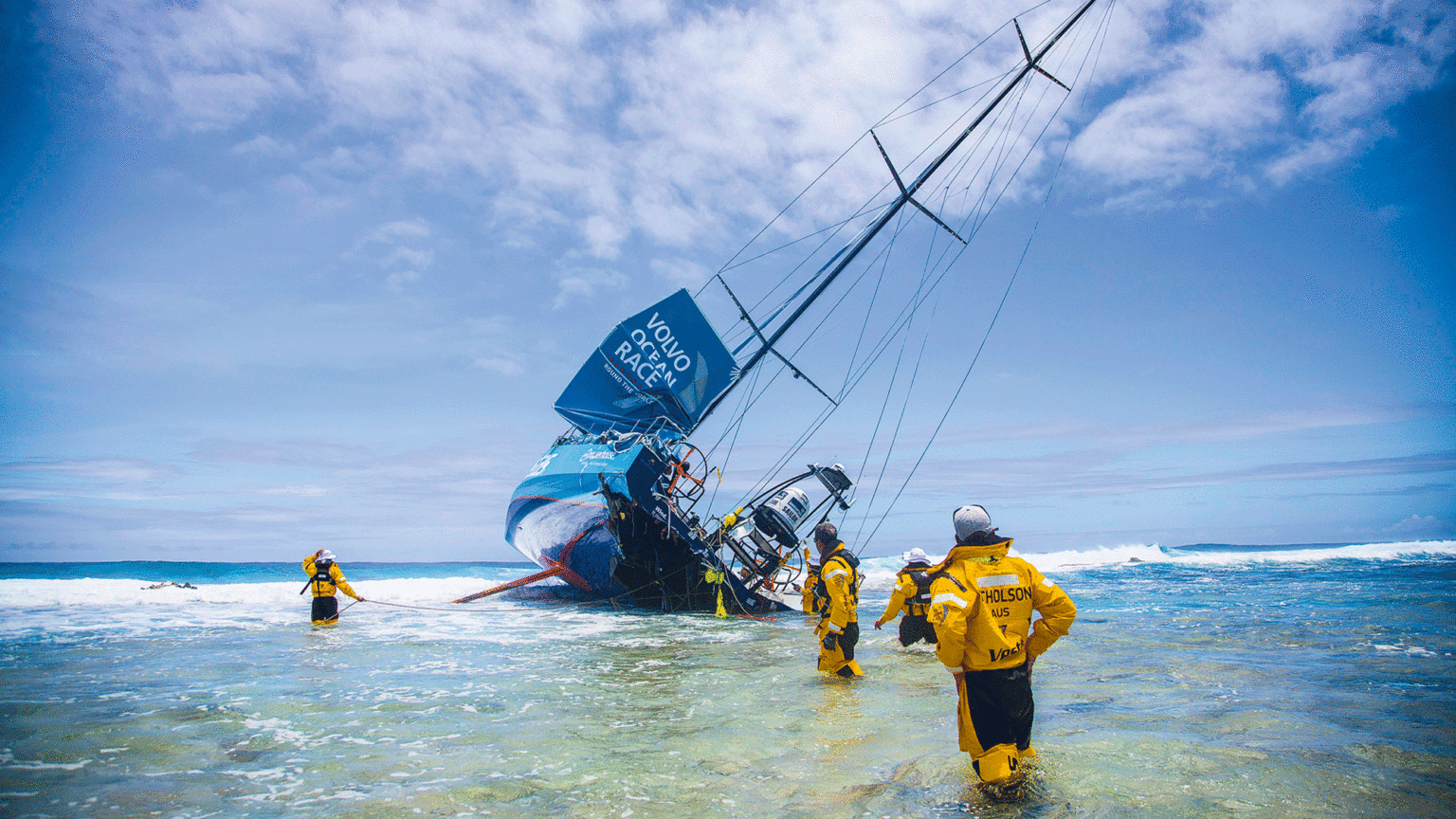
When the VO65 Team Vestas Wind struck the Cargados Carajos Shoals at more than 15 knots, the reef was exactly where the chart said it would be — the failure was human reliance on a zoomed-out display and a lack of cross-checks, not faulty data.
What went wrong: a concrete breakdown in verification
The official inquiry into that grounding concluded that modern navigation systems’ apparent precision can breed a false sense of security. On that moonlit night the yacht’s plotter display, viewed at an inappropriate scale, omitted critical detail. The depth sounder and other corroborating inputs were not consulted promptly. This sequence — trust a single source, ignore redundancy — is a recurring pattern in incidents where abundant digital information masks hazards rather than revealing them.
The enduring value of the pilot book and traditional sources
The pilot book remains a cornerstone for passage planning. Compiled by experienced sailors and edited to provide context and verified notes, pilot books offer a fixed baseline: a snapshot in time against which volatile digital reports can be measured. Complementary texts such as almanacs supply structured data (tides, lights, radio channels) that are still essential for robust planning.
📚 You may also like
Paper and electronic charts: strengths and weaknesses
Paper charts provide a stable, battery-free reference and a wide-area perspective that often reveals inconsistencies in zoomed digital views. However, paper ages and survey data can become outdated. Electronic charts offer rich overlays — AIS, radar, satellite imagery — yet depend on updates, and important features may vanish at certain zoom levels. The best practice is to combine both, using multiple electronic providers and a paper backup to surface discrepancies.
Practical cross-checking principle
Start with a reliable paper or pilot-book reference, add at least two electronic chart sources, and verify with instruments (depth sounder, radar) and human reports. If two sources disagree, escalate verification: slow down, sound the depth, and seek local knowledge.
How online tools and crowd-sourced reports fit in
Apps and platforms such as Captain’s Mate, Navily, Harbourguide, NoForeignLand, SeaPeople and even Google Maps add near-real-time context: who’s anchored today, recent swell reports, or broken facilities on a quay. These data are valuable but subjective; one skipper’s calm anchorage can be another’s sleepless night. Treat crowd-sourced content as dynamic intelligence to be weighed against fixed sources.
| Source | Reliability | Update Frequency | Cockpit Usability | Best Use |
|---|---|---|---|---|
| Pilot book | High (contextual) | Periodic | Reference | Passage planning, baseline |
| Paper chart | High (static) | Low (depends on corrections) | Excellent (backup) | Overview, redundancy |
| Electronic chart | Variable | Variable (provider dependent) | High | Precision navigation |
| Apps / crowd reports | Subjective | High | High | Recent conditions, anchorage tips |
| Local intel | High (situational) | Immediate | Excellent | Local quirks, transient hazards |
Soft intelligence: the human factor
Informal conversations — the fisherman on the quay, a neighbour on the pontoon, a cruisers’ VHF check-in — often reveal shifting shoals, local currents, or berth quirks not yet reflected in any map. Keeping a personal log turns those ephemeral notes into a tailored pilot resource for future visits.
Case study: when charts disappear
In mid-2025, a cruising sailor discovered that Garmin had removed chart access for much of southeast Asia after government licensing changes. Devices that had previously displayed downloaded charts were greyed out. Using a combination of offline downloaded charts on an iPad and conservative seamanship — airplane mode to preserve local files, cross-checking with Navionics and a paper backup for ocean passages — the sailor continued safely to Langkawi.
Workarounds and tools that matter
- Always keep at least one offline chart set accessible and test restore procedures in port.
- Carry multiple chart formats: Navionics on tablet, a chip-based plotter, and corrected paper charts.
- Use OpenCPN for satellite overlays on a laptop, but do not rely on a laptop as the cockpit primary in bad weather.
- Maintain instruments: depth sounder, radar, AIS, and a functional compass as last-resort checks.
Checklist for verification before entering unfamiliar waters
- Confirm chart datum and correction dates on all maps.
- Compare at least two electronic chart providers and a pilot book or paper chart.
- Use depth sounder readings to validate plotted depths in shallow approaches.
- Scan recent app reports for patterns rather than single reviews.
- Ask locals or other cruisers for transient information and note it in the logbook.
GetBoat always keeps an eye on news related to sailing and seaside vacations because the ability to enjoy great leisure depends on safe, well-informed choices. The platform values freedom, energy, and the ability to choose your own course; its listings let users compare make, model and ratings beforehand, and its transparency supports confident decision-making for those planning charter or private rental experiences.
Forecasts on how incidents like chart removals or high-profile groundings might reshape tourism and yachting networks should be measured. Globally the effect is often local and operational rather than seismic: marinas, guides and charter operators adapt routes and advice, while cruisers adjust habits. However, it remains relevant to customers and operators alike; GetBoat aims to stay abreast of such developments and keep pace with the changing world. If you are planning your next trip to the seaside, consider the convenience and reliability of GetBoat.
Highlights of this topic show that modern navigation demands layered verification: pilot books, corrected charts, multiple electronic sources, and human intelligence all play roles. Experiencing a new location is a multifaceted process where one learns about the culture, nature, the indescribable palette of local colors, its rhythm of life and also the unique aspects of the service; if you are planning your next trip to the sea, you should definitely consider renting a boat (boat rentals, rent a boat, rent a yacht), as each inlet, bay, and lagoon is unique and tells you about the region just as much as the local cuisine, architecture, and language GetBoat.com
In summary: start with a verified foundation — pilot books and corrected charts — then layer real-time apps and local reports, always cross-checking with instruments and human sources. Maintain offline backups and practice conservative seamanship: slow down, sound, and confirm when in doubt. Platforms like GetBoat.com simplify the practical side of boating decisions by offering transparent listings for yacht and boat charter, sale and rent options across marinas and destinations worldwide, helping you plan activities from fishing to yachting with confidence. Whether you’re seeking a superyacht escape, a small sailboat for lake or gulf cruising, or a budget-friendly charter to a clearwater beach, the right preparation turns information into safe, memorable ocean and boating experiences — captain your next trip wisely.


