Rail link drives surge in Mizoram tourism numbers
Alexandra
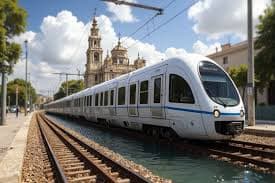
The 51.38-km Bairabi‑Sairang railway line, inaugurated on 13 September last year, directly raised passenger throughput to Aizawl and coincided with a measured increase in tourist arrivals: Mizoram registered 1,268,000 visitors across 2024–2025, according to the state tourism ministry.
Attendance breakdown and year‑on‑year growth
State figures presented in the assembly show discrete year totals and the domestic/foreign split that underpin the surge. In 2024 the state recorded 427,302 visitors; in 2025 arrivals climbed to 841,322. Over the two‑year period international visitors accounted for 16,898 of the total, with foreign arrivals rising from 5,414 in 2024 to 11,484 in 2025 — an increase of roughly 112% year‑on‑year.
| Metric | 2024 | 2025 | Total (2024–25) |
|---|---|---|---|
| Total tourists | 427,302 | 841,322 | 1,268,624 |
| Domestic tourists | 421,000 | 829,000 | 1,250,000 (≈98.66%) |
| Foreign tourists | 5,414 | 11,484 | 16,898 |
Primary drivers of the increase
- Transport integration: the Bairabi‑Sairang rail connection integrated Aizawl into the national rail grid, reducing travel friction and cutting multi‑modal transfer times.
- Promotional campaigns: targeted marketing emphasising eco‑tourism, cultural festivals and homestay experiences amplified awareness outside the region.
- Infrastructure investment: high‑value projects in accommodation, roads and visitor facilities have increased the state's capacity to host tourists, particularly during winter months.
- Policy focus: state government initiatives aimed at improving quality of stay and local participation in tourism value chains.
Assembly statements and political context
Tourism Minister Lalnghinglova Hmar reported the statistics to the state assembly in response to a question from Mizo National Front leader and Opposition member Lalchhandama Ralte. Governor Vijay Kumar Singh has described Mizoram as one of the fastest‑growing tourist destinations in the Northeast, a shift he ties to both the historic rail arrival and stepped‑up capital spending.
📚 You may also like
Key quotations and official priorities
The state emphasised that domestic visitors form the bulk of arrivals, and officials set out priorities to improve visitor accommodation and seasonal positioning — notably enhancing winter attractions. The government also highlighted collective engagement between public bodies and local communities to package culture and nature experiences more attractively.
Challenges and operational constraints
Despite the positive trend, several logistical and capacity issues remain:
- Seasonal limits on access to higher‑altitude attractions due to weather and road maintenance windows.
- Need for last‑mile transport solutions connecting railheads to remote sites and homestays.
- Skills gaps in hospitality and event management where rapid arrivals outpace workforce development.
- Environmental pressure on sensitive ecosystems if visitor management and waste systems are not scaled.
Infrastructure priorities for sustained growth
To convert short‑term interest into sustainable tourism economy, planners identify several priorities:
- Upgrading feeder roads and bus services from Sairang and Bairabi to core destinations.
- Developing certified homestay networks and training local hosts.
- Investing in targeted international marketing to diversify source markets beyond the domestic base.
- Implementing visitor caps and conservation fees at ecologically sensitive sites.
Historical context and evolution of connectivity
Mizoram's tourism economy historically depended on road and limited air connections, which constrained visitor flows and kept numbers modest compared with coastal and hill destinations elsewhere in India. The Bairabi‑Sairang rail project represents the most significant modal shift in decades: it shortens travel time, reduces inter‑city friction and enables higher throughput of passenger traffic to Aizawl. Prior to rail integration, expansion focused on niche eco‑tourism, tribal culture festivals such as Chapchar Kut and small‑scale adventure trekking; recent investment and promotional momentum have scaled those offerings for larger audiences.
How the present moment compares to the past
Where earlier growth was incremental and seasonally constrained, the current pattern shows both a quantitative jump and qualitative change: faster scaling of accommodation supply, broader marketing reach and a clearer pipeline of infrastructure projects. International interest remains small compared with domestic demand but is growing at a faster percentage rate, signalling improved visibility abroad.
Implications for regional tourism and inland water activities
Mizoram is primarily a highland, landlocked state, but it contains inland water bodies such as Tam Dil and several rivers and reservoirs that support fishing and modest boating or water‑based activities. These assets can complement hill trekking, cultural experiences and nature tourism, adding value for visitors seeking multi‑activity itineraries. However, the region lacks marine infrastructure, marinas, or beaches that attract yachting, superyacht or large charter markets; market growth is therefore expected to favor eco‑lodges, homestays and small‑scale adventure operators rather than large‑scale yachting or seaside leisure.
Opportunities for product diversification
- Developing low‑impact water activities (kayaking, guided fishing) on existing lakes.
- Creating themed itineraries that combine culture, birdwatching and light boating.
- Improving training for local guides and captains of small craft where applicable.
Forecast and international tourism significance
Given the recent transport milestone, a cautious projection suggests continued growth in domestic tourism into the near term, especially during winter and festival seasons. International arrivals may rise further as connectivity and high‑quality accommodation improve, but Mizoram will likely retain a niche position in the global market—attractive to travellers seeking off‑the‑beaten‑path destinations rather than mass international beach or yachting tourism. Risk factors include infrastructure bottlenecks, environmental limits and regional travel costs that could moderate growth without calibrated public‑private investment.
In summary, the chief takeaways are: the Bairabi‑Sairang railway has materially altered access to Aizawl and correlates with a substantial uptick in tourist numbers; the surge is overwhelmingly domestic; infrastructure and workforce scaling remain urgent priorities; and inland water features offer complementary activities such as fishing and boating but do not position the state for oceanic yachting or marina‑based tourism.
GetBoat is always keeping an eye on the latest tourism news and how destinations evolve; this Mizoram update highlights transport‑driven visitor growth, landscape‑led activities around lakes and rivers, and the broader dynamics that shape Destinations and activities across regions. For readers tracking trends in yacht, charter, boat, beach, rent, lake, sailing, captain, sale, superyacht, yachting, sea, ocean, boating, gulf, water, sunseeker, marinas, clearwater and fishing markets, these inland developments illustrate how improved connectivity can reshape visitor patterns even where coastal access is absent. For further updates on tourism shifts and destination news, visit GetBoat.com.


