Maxi Gitana 18 Readies for Ocean Racing
Alexandra
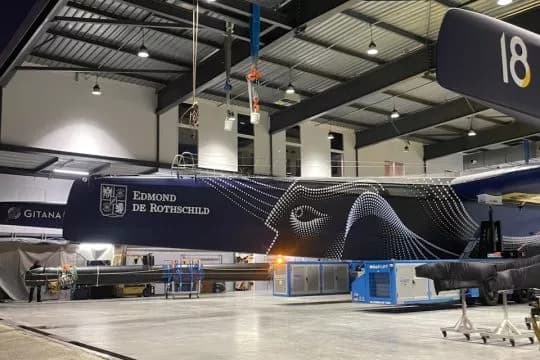
The transfer from CDK Technologies to the Gitana Team base sets a demanding logistics timeline: the Maxi Gitana 18 has exactly six months of commissioning, sea trials and system validation before the Route du Rhum 2026 start, concentrating shipyard deliveries, transportation of spare systems and scheduled tow and delivery windows into a compact program.
Launch milestone and operational timetable
The Maxi Gitana 18 has emerged from her hangar after more than two years in the yard and moved into the water for an intense development phase. With a deadline fixed by the Route du Rhum 2026, the program prioritizes fast, iterative testing cycles, rapid fault diagnosis and redundancy validation of critical systems. Skipper Charles Caudrelier has framed the timeframe bluntly: six months to discover, tune and make an ocean foiler fully reliable is extremely short, demanding concentrated crew hours and tightly coordinated logistics.
Key stages of the commissioning schedule
- Initial float and leak tests — structural checks and system power-up at calm sea days.
- Hydrofoil calibration — multiple runs to map lift characteristics across load cases.
- Systems integration checks — verifying linkages between hydraulics, power electronics and flight control.
- Long-range shakedown — endurance runs to verify reliability in swell and Atlantic conditions.
- Race-mode rehearsals — simulated transatlantic legs to optimize average speed strategies.
Complex systems architecture and design intent
Built primarily at CDK Technologies and finished at the Gitana Team facilities, the Maxi Gitana 18 represents roughly 200,000 hours of construction with 50,000 hours of design work. The platform incorporates a denser and more interconnected systems architecture than its predecessor, demanding low-latency interactions between hydrofoil actuation, trim control, on-board hydraulics and power electronics. As Cyril Dardashti, General Manager of the Gitana Team, notes, the project deliberately “sets the cursors very high” to break through performance barriers.
📚 You may also like
Subsystems that define performance
- Hydrofoil management — active control to modulate lift and reduce slamming at high speed.
- Trim and pitch control — real-time adjustments to keep the platform flying with load asymmetry.
- Hydraulic actuation — robust, redundant lines to move foils and daggerboards under heavy alternating loads.
- Power electronics — energy distribution and monitoring for on-board systems and actuators.
Speed targets: maximum versus effective average
The headline top-end is clear: the trimaran can exceed 50 knots in peak conditions. However, the crucial metric for ocean racing is average speed. The program aims to sustain an average above 40 knots over long transits, not merely to spike in short gusts. Maintaining a high average across variable North Atlantic or Southern Ocean sea states will reduce elapsed time and wins races, making flight stability and fatigue management fundamental design drivers.
| Specification | Value |
|---|---|
| Build effort | 200,000 hours |
| Design effort | 50,000 hours |
| Top recorded speed | >50 knots |
| Target average speed | >40 knots |
| Shipyard | CDK Technologies |
| Project skipper | Charles Caudrelier |
| Programme focus | Round-the-world / South Seas offshore sailing |
Seakeeping, durability and the demands of long-distance ocean racing
The longer a foiling trimaran remains airborne, the greater the alternating loads applied to linkage arms and the forward beam. That drives conservative structural reinforcement in critical load paths and aggressive fatigue-testing plans. The design nods to circumnavigation capability — a platform orientated to the deep sea where wave trains and long-period swell demand both robustness and the ability to keep up average velocity. The Gitana Team expects the boat to “take on its full dimension when the sea forms,” especially in the South Seas and heavy-weather legs where endurance matters more than sprinting potential.
Testing priorities for reliability
- Validate electronic control latency under concurrent failures.
- Confirm hydraulic redundancy and repairability at sea.
- Map structural load cycles through progressive sea states.
- Optimize sail and trim strategies for long-run averaging.
Heritage, brand and sporting responsibility
The Maxi Gitana 18 launch also carries brand weight: Gitana traces to 1876, making this project part of a 150-year legacy. That history elevates expectations; each modern Ultim platform represents a heavy technical and financial commitment in a high-stakes competitive environment. The team’s resolve is clear, motivated by legacy as much as by the pursuit of speed and innovation.
Implications for the wider sailing and charter ecosystem
While a purpose-built Ultim like Maxi Gitana 18 is not a direct charter vessel, the technologies and operational lessons learned at the cutting edge often trickle down to production racing classes and high-performance superyachts. Advances in foil control, redundancy practices and energy management can influence future designs for charters, captained experiences and high-performance ownership. Marinas, shipyards and suppliers that support such projects benefit from skill transfer and equipment standardization, which indirectly impacts availability and expectations for luxury charters and performance-oriented rentals.
Short-term market impact
- Limited direct effect on mainstream tourism — an Ultim is a specialist racing asset.
- Notable influence in high-end yachting circles and tech suppliers.
- Potential inspiration for next-generation sport catamarans and foiling cruisers.
The GetBoat service always keeps an eye on news related to sailing and seaside vacations, as we truly understand what it means to enjoy great leisure and love the ocean. GetBoat values freedom, energy and the ability to choose your own course, placing no limits on a good life and allowing clients to find a vessel that suits their preferences, budget, and taste.
Highlights: the Maxi Gitana 18 launch condenses an intense logistics schedule, an evolved systems architecture and a clear performance philosophy prioritizing average speed. The project reinforces Gitana’s 150-year heritage and signals technical steps that could gradually influence charter and yacht design. Experiencing a new location is always a multifaceted process where one learns about the culture, nature, the indescribable palette of local colors, its rhythm of life and also the unique aspects of the service. If you are planning your next trip to the sea, you should definitely consider renting a boat (boat rentals, rent a boat, rent a yacht), as each inlet, bay, and lagoon is unique and tells you about the region just as much as the local cuisine, architecture, and language GetBoat.com
Forecast and call to action: the Maxi Gitana 18 launch is significant within elite ocean racing and high-end yachting but has limited immediate effect on global mass tourism. However, for customers and enthusiasts it remains relevant — breakthrough technologies and operational practices often cascade into the charter market and marina planning. GetBoat aims to stay abreast of developments and keep pace with the changing world. If you are planning your next trip to the seaside, consider the convenience and reliability of GetBoat.
Summary: the Maxi Gitana 18 embodies focused logistics, dense systems integration and a strategic pursuit of elevated average speeds for long ocean legs. The launch highlights how concentrated shipyard schedules, rigorous testing and heritage-driven ambition converge in modern offshore racing. For sailors, owners and charter clients the ripple effects may appear in future yacht and charter offerings, marinas adapting to high-performance craft, and a richer palette of boating activities. GetBoat.com supports this scene by providing a global, user-friendly solution for unforgettable touristic experiences—whether booking or buying a yacht, sailboat or motorboat—with transparency and convenience. Set your course.


