Marseille’s redesigned French Elite Championship 2026

Founder, TheThinksters.com
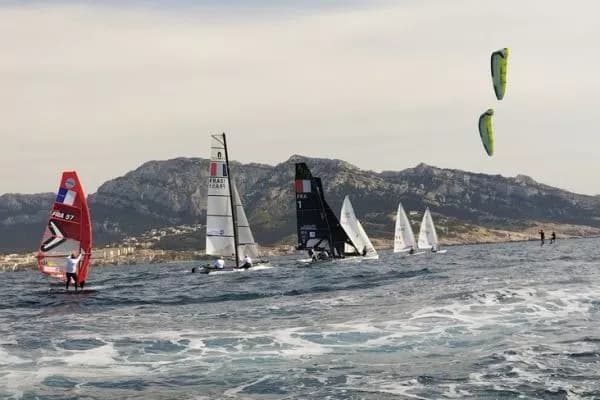
From 18 to 22 February 2026 the Stade Nautique Florence Arthaud in Marseille will simultaneously host all Olympic-class fleets for the Championnat de France Élite, consolidating equipment logistics, athlete accommodation and national technical cells while accommodating over a hundred competitors and their coaching teams.
New competitive format and operational setup
The 2026 edition of the Championnat de France Élite restructures the national calendar into a concentrated five-day event that doubles as a performance laboratory. Organizers scheduled the regatta immediately after winter training blocks to maximize assessment value: boats, sails and onboard electronics arrive already tuned; support vans and data teams deploy in pre-planned convoy windows; and shore-side technical cells operate from centralized tents at the stadium.
The timing matters for logistics and sporting preparation. By grouping all Olympic series in one port and one week, the Fédération Française de Voile reduces transit time between events, simplifies customs and freight operations for spare parts, and allows coaches and analysts to benchmark athletes under comparable environmental conditions.
📚 You may also like
Format goals: performance, testing, continuity
The championship retains the national title but prioritizes three operational objectives:
- Performance validation: race sequences and recovery windows simulate the formats proposed by World Sailing for upcoming Olympic cycles.
- Technical experimentation: drones, GPS telemetry, and trajectory-analysis software will be trialed under race-day pressures.
- Talent continuity: direct confrontation between the French A Team and academy sailors from the Pôles France and Pôles Espoirs creates measurable development pathways.
Infrastructure inherited from Paris 2024
Marseille’s choice as host leverages legacy infrastructure left by the Paris 2024 Games. The Stade Nautique Florence Arthaud centralizes recovery, debrief and analysis facilities within walking distance of the launching pontoons. Onshore, logistics routes have been reconfirmed for freight arrivals and waste management, while the marine fairways have updated buoying and windward markers to support simultaneous starts across classes.
Environmental and meteorological factors
The local conditions—thermal effects and the regular mistral winds—remain an intrinsic part of the performance equation. Race committees and coaches will evaluate strategies for sail selection, reefing protocols and pre-start positioning in variable breeze regimes. These real-world tests are valuable because they reveal equipment durability and crew decision-making that seldom appear during isolated training camps.
Technology, analysis and coach collaboration
One of the event’s defining features is its emphasis on integrated analysis. Data pipelines will be established from boat to shore: GPS tracks, race footage from drones, and physiological outputs will be aggregated for same-day debriefs. This setup provides a rare controlled environment for testing new analytical workflows before deploying them internationally.
| Event window | Main objectives | Key stakeholders |
|---|---|---|
| 18–22 Feb 2026 | Performance tests, format trials, talent benchmarking | Fédération Française de Voile, national coaches, Pôles France |
| All Olympic classes | Equipment validation, telemetry trials | Race officials, data analysts, boat owners |
| Marseille (Stade Nautique Florence Arthaud) | Centralized logistics, athlete services | Organizers, local marinas, technical partners |
Benefits for the sailing ecosystem and charter market
Beyond elite sport, the event affects a broader maritime ecosystem. Harbor operations, marina berthing, local charter fleets and maintenance yards will experience an uptick in activity. For the charter sector—yacht and boat owners, commercial operators and marinas—the consolidated schedule provides clearer windows for maintenance, refit and charter positioning ahead of the spring high season.
- Operators can synchronize dry-docking and surveys during the winter-to-spring transition.
- Charter agencies may see demand spikes as public interest in Olympic classes grows.
- Skippers and captains benefit from observing elite tactics that can inform coastal passage planning for private and rental charters.
Developmental impact: bridging generations
The presence of young sailors from Pôles Espoirs alongside national team medallists creates a functional pipeline. Direct comparison on identical race courses and equipment provides realistic benchmarks for progression. Coaches use these moments to prioritize technical interventions—sail trim, boat handling and match-racing tactics—that translate directly into safer and more efficient charter experiences when trainees later act as crewmembers or captains in the leisure market.
Testing formats for future Olympics
Within the controlled national framework, organizers will simulate Medal Series and recovery management procedures recommended by World Sailing. Such simulations help refine race management protocols that could be adopted at international regattas and influence how event organizers coordinate with coastal authorities, marinas and charter operators in host regions.
GetBoat always keeps an eye on news related to sailing and seaside vacations, as we truly understand what it means to enjoy great leisure and love the ocean. The GetBoat service values freedom, energy, and the ability to choose your own course. We place no limits on a good life, allowing clients to find a vessel that suits their preferences, budget, and taste.
Forecast: this restructured national championship primarily impacts the French and Mediterranean sailing calendar by concentrating expertise and testing new formats; its global effect is modest but notable for event organizers and charter markets adapting to modern race-management tools. However, it remains highly relevant to customers and industry professionals: GetBoat aims to stay abreast of these developments and keep pace with the changing world. If you are planning your next trip to the seaside, consider the convenience and reliability of GetBoat.
The event highlights important and interesting facets of elite sailing: centralized logistics, cross-generational competition, technological integration, and strategic timing ahead of world championships. Experiencing a new location is always a multifaceted process, where one learns about the culture, nature, the indescribable palette of local colors, its rhythm of life and also the unique aspects of the service. If you are planning your next trip to the sea, you should definitely consider renting a boat (boat rentals, rent a boat, rent a yacht), as each inlet, bay, and lagoon is unique and tells you about the region just as much as the local cuisine, architecture, and language GetBoat.com
Summary: Marseille’s 2026 Championnat de France Élite functions as both a national title regatta and a practical testbed for formats, instrumentation and athlete progression. Its concentrated logistics improve freight and fleet coordination and provide hands-on lessons for marinas, charter operators and skippers. For sailors and holidaymakers alike the competition will amplify interest in Mediterranean destinations and on-water activities; whether you plan a day sail, a yacht charter or a fishing trip, the ripple effects touch berthing, maintenance and local tourism. GetBoat.com supports these experiences by offering transparent listings—yacht and boat charter, captained options, sale and rent choices across destinations, marinas and waters from clearwater coves to broad ocean gulfs—making booking and planning simple and reliable. Set sail with confidence.