Marples No 6808: Precision Mitre Jig for Timber Work
Alexandra
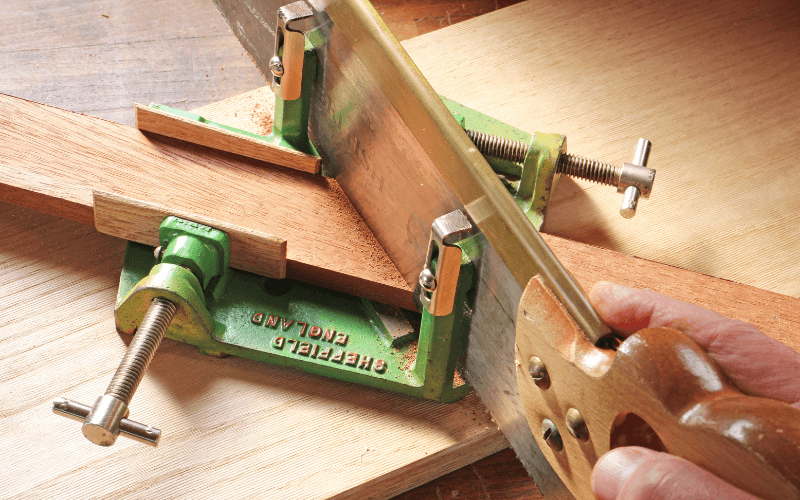
Transporting seasoned teak or mahogany from supplier to marina workshop requires attention to moisture content, crate orientation and weight limits; a compact, 1.5kg mitre jig such as the Marples No 6808 minimizes space and handling complexity aboard service launches and marina vans while preserving accurate cutting geometry for trim and cabin joinery.
What the Marples No 6808 Offers for Boat Joinery
The Marples No 6808 is best described as a robust mitre jig rather than a powered cutter: it is a simple, heavy-duty tool with fixed 45° saw slots, screw clamps and machined bearing surfaces. For marine carpentry where small trim pieces, handrails and mouldings must meet at crisp right angles, the jig’s compact footprint and repeatable setup are practical advantages over bulky mitre machines that require electricity and larger workshop space.
Key Specifications
| Feature | Detail |
|---|---|
| Weight | 1.5 kg (3 lb 6 oz) |
| Angles | Fixed 45° guides |
| Saw compatibility | Works with deep-back saws (min 2.5 in / 6.5 cm blade depth) |
| Base features | Countersunk holes for bench mounting; machined flat supports |
| Extras | Adjustable depth stops to protect saw teeth against metal base |
Why the Design Matters for Nautical Work
The jig’s raised supports and machined rear faces keep the workpiece parallel to the bench—critical when producing matching pairs of trim for port and starboard sides. Screw clamps secure mouldings during sawing and again during glue-up, reducing slippage and the need to handle the workpiece repeatedly in the tight confines of a boatyard van or small shipwright’s loft.
📚 You may also like
Practical Use: Tips and Workflow
For accurate mitres on boat mouldings and cabinetry follow a compact, repeatable workflow:
- Mounting: Fasten the jig to a sacrificial board or direct to your bench using countersunk screws to ensure stability during transport and work.
- Clamping: Use thin wood slips of consistent thickness between clamp jaws and the workpiece to avoid introducing twist or uneven surfaces.
- Saw selection: Use a tenon or back saw with at least 2.5 in (6.5 cm) tooth depth beneath the spine; blades around 0.028 in thick fit snugly in the guides—beeswax on the blade eases the cut.
- Protection: Use the adjustable depth stops to prevent saw teeth from contacting the metal base as the cut exits the workpiece.
- Joint reinforcement: Where strength is critical—such as in rubbing strakes, toe rails or handrail returns—add dowels or splines to mitigate the weakness of end-grain-to-end-grain glue joints.
Maintenance and Compatibility
The narrow guide slots are intentionally tight to register the saw plate accurately; check your back saw for clearance before committing expensive mouldings. Periodically clean and wax the slots to reduce friction and rust risk. Given the jig’s simple cast construction, a careful user can preserve factory squareness for decades—an asset for ongoing refit or in-service repairs on charter yachts and privately owned boats alike.
Comparing Jig vs Electric Mitre Machines
| Aspect | Marples No 6808 (Jig) | Typical Electric Mitre Machine |
|---|---|---|
| Portability | High—compact and light | Low—bulky, heavy |
| Setup time | Minimal—clamp and cut | Longer—align fences, adjust stops |
| Repeatability | Excellent for consistent pieces | Excellent but requires recalibration |
| Power needs | None | Requires electricity—less suitable for remote boatyards |
| Cost | Low–moderate | High |
Historical Note
Introduced when a Marples No 6808 cost thirty nine shillings and sixpence in the 1960s, the design’s longevity stems from simplicity: few moving parts, clear morphology and serviceable castings. For wooden boat restorers who value classic joinery and a quiet workshop, that heritage translates into a practical shop staple.
Use Cases in Boatbuilding and Repair
Timber trim, instrument bezels, hatch coamings and decorative mouldings all benefit from clean mitres. On charter boats and yachts where cosmetic finish affects charter ratings and guest satisfaction, accurate mitre joints reduce rework and downtime between bookings. For owners who rent or charter their vessels, keeping a small toolkit with a reliable jig like the Marples No 6808 helps maintain standards without hauling large machinery to marinas.
Checklist for Workshop-to-Marina Operations
- Pack jig in padded case to avoid corrosion and protect machined faces.
- Include at least one deep-back tenon saw and beeswax for blade lubrication.
- Carry matching slips and a set of dowels or spline stock for joint reinforcement.
- Record saw and jig pairings so replacements fit the guide slots precisely.
GetBoat always keeps an eye on news and innovations that affect sailing and seaside vacations, because the service understands what it means to enjoy great leisure and love the ocean; we value freedom, energy and the ability to choose your own course GetBoat.com
Start planning your next seaside adventure: this detail on workshop technique may seem niche but it affects the look and longevity of the fittings you will enjoy aboard. To gain a broader view of how equipment improvements and maintenance practices influence charter readiness and vessel appeal, start planning your next seaside adventure and make sure to book the best boat and yacht rentals with GetBoat before the opportunity sails away!
Highlights: precise mitre work elevates joinery quality, reduces time in refit and improves guest impressions; jig portability simplifies on-site repairs at marinas; consistent saw-to-jig pairing and dowel reinforcement eliminate weak end-grain joints. Experiencing a new location is always multifaceted—you learn about the culture, nature, the indescribable palette of local colors, its rhythm of life and also the unique aspects of the service; if you are planning your next trip to the sea, you should definitely consider renting a boat (boat rentals, rent a boat, rent a yacht), as each inlet, bay, and lagoon is unique and tells you about the region just as much as the local cuisine, architecture, and language GetBoat.com
In summary, the Marples No 6808 is a pragmatic, low-maintenance solution for clean 45° mitres, ideal for boatbuilders, restorers and anyone maintaining timber trim on yachts and charters. Its compactness and reliability reduce logistical burden when moving between workshops and marinas. Whether you are preparing a small sailing yacht for charter, fitting teak trim on a motorboat or repairing cabin joinery between bookings, a dependable jig helps ensure quality and speed. For those booking or buying yachts, charters or day rentals—whether a small boat, superyacht or anything in between—choosing tools and service providers that value transparency and convenience makes maintenance and onboard activities smoother. Explore options for yacht and boat rentals, charter planning and equipment-ready vessels—the combination of good tools, skill and the right platform makes days on the sea more rewarding, from marinas to clearwater bays, lakes and open ocean.


