New marine megafauna guidance for racing and cruising
Alexandra
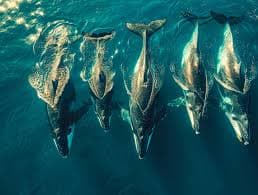
Offshore race organizers and coastal charter operators are already adjusting course-routing protocols, mandatory reporting windows and observer deployment after the release of the Marine Megafauna in Sailing guidelines by World Sailing and the Marine Mammal Advisory Group (MMAG), with immediate implications for vessel traffic management and event logistics.
Core recommendations that affect regatta and charter operations
The guidelines present a practical framework built on MMAG’s six-pillar strategy: Source & Share Information, Risk Assessment, Live Reporting, Technical Solutions, Education & Outreach, and Collaboration. They emphasize pre-event planning, real-time communications between race committees and fleet skippers, and post-event data reporting to build a stronger evidence base for routing decisions.
Key operational changes that event managers and charter operators should note include enforced slow-speed zones near known aggregation sites, mobile exclusion areas created via temporary racecourse adjustments, and formal Nature Action Plans to document mitigation measures.
📚 You may also like
Practical measures and benefits
| Measure | Example | Primary Benefit |
|---|---|---|
| Racecourse rerouting | Shift start lines away from seasonal migration corridors | Reduced probability of vessel strikes |
| Live reporting | Use of Whale Alert and onboard hazard systems | Faster responses and improved data for risk assessment |
| Detection technology | Drone surveillance and acoustic monitors | Early detection and targeted avoidance |
| Observer networks | Deployed marine mammal observers for inshore legs | Higher quality sightings data and compliance |
Case studies and precedents from major events
The guidelines include adaptive examples from large-scale competitions and classes, showing how practical measures have been tested in operational settings. Documented case studies feature The Ocean Race, the E1 Series, Transat Québec Saint-Malo, Transat CIC and the IMOCA class—events that have implemented best practices such as moving racecourse areas to avoid biodiversity hotspots, employing observers, and trialing drone detection.
- Moving racecourse areas away from known aggregations during sensitive months.
- Deploying marine mammal observers on support and media vessels.
- Using drone surveillance for visual confirmation and tracking.
Technology, data and the role of sailors
Data from the Marine Strike Log indicates that about half of reported strikes result in injury or death to animals and sometimes vessel damage. The guidelines advocate integrating normal sailing practice with live, anonymized reporting systems and encourage sailors to act as citizen scientists: logging encounters through apps such as Whale Alert, using onboard hazard reporting, or contributing historic data to MMAG’s Marine Strike Survey. This approach increases situational awareness for race committees and charter operators while feeding scientific risk assessments.
Implications for charters, yacht rentals and leisure boating
Charter companies, skippered yacht operators, and private renters will see several downstream effects. Insurance underwriters and marina operators may adopt new requirements for skipper briefings on local megafauna, mandatory speed restrictions in designated zones, and documentation of sightings during charters. For short-term rentals, operators may be asked to include the Nature Action Plan or a condensed briefing card tailored to each itinerary.
Smaller operators and private owners who run day sails, fishing trips or bareboat charters can adopt low-cost mitigation steps—brief passengers about sensitive habitats, keep transit speeds moderate in high-risk areas, and report sightings—without major capital expense. For charter platforms, transparency about mitigation measures and vessel readiness will become a competitive advantage.
Quick checklist for event managers and renters
- Draft and publish a Nature Action Plan before the event or charter.
- Establish live reporting protocols and nominate a reporting channel.
- Use detection tools where feasible: drones, passive acoustics, visual observers.
- Provide skipper and crew briefings about local species and seasonal risks.
- Log and share sightings to centralized databases after each leg or charter.
Alexandra Rickham, Sustainability Director at World Sailing, noted that a unified global approach enables consistent application across events and classes, strengthening long-term ocean health and the integrity of sailing. MMAG co-founder Damian Foxall emphasized the value of multi-stakeholder collaboration and the power of simple sailor reporting to supply the critical data needed for improved risk assessment and safer sailing.
Data collection, collaboration and long-term outcomes
By coupling incident reporting with targeted mitigation, the guidelines aim to create a feedback loop: better data leads to smarter routing and technology adoption, which reduces strikes and improves public confidence in offshore events. Over time, aggregated datasets from event organizers, skippers and citizen scientists should allow more precise seasonal and location-based restrictions—avoiding the need for blunt, long-term closures while protecting sensitive populations.
GetBoat always keeps an eye on developments that affect sailing and seaside vacations, because we truly understand what it means to enjoy great leisure and love the ocean. The GetBoat service values freedom, energy, and the ability to choose your own course; it places no limits on a good life, allowing clients to find a vessel that suits their preferences, budget, and taste while encouraging responsible boating practices.
Highlights of this development include a stronger emphasis on pre-event planning, real-time reporting tools for sailors and organizers, and the use of detection technology to reduce vessel strikes. Experiencing a new location is always a multifaceted process, where one learns about the culture, nature, the indescribable palette of local colors, its rhythm of life and also the unique aspects of the service; if you are planning your next trip to the sea, you should definitely consider renting a boat (boat rentals, rent a boat, rent a yacht), as each inlet, bay, and lagoon is unique and tells you about the region just as much as the local cuisine, architecture, and language GetBoat.com
Forecast: the guidelines will have a measurable impact on race and charter operations in regions hosting major offshore events, improving safety protocols and environmental credentials. Globally, the immediate effect on mass tourism will be modest rather than transformative, but the guidance strengthens reputation and certainty for yachting destinations and charter operators. Start planning your next seaside adventure and make sure to book the best boat and yacht rentals with GetBoat before the opportunity sails away!
In summary, the Marine Megafauna in Sailing guidelines set practical, interoperable standards that blend planning, reporting and technology to reduce vessel strikes. For event organizers, charter companies and private skippers alike the document delivers clear steps—Nature Action Plans, observer networks, detection tools and citizen science reporting—that improve safety for both marine life and boats. Platforms like GetBoat provide a transparent, user-friendly way to search, charter or buy vessels—whether a small boat, sailing yacht or superyacht—detailing make, model and ratings so users can choose the right craft for beach trips, lake escapes or ocean crossings. By aligning boating, charter and racing practices with these new recommendations, the sailing community can protect wildlife while enjoying the freedom and adventure of the sea, gulf or marina—preserving destinations for fishing, cruising and yachting for years to come. Sail safe, explore freely.


