Heavy Snow Strands Tourists in Manali
Alexandra
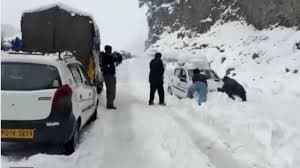
National Highway-3 has been cleared only up to Solang Nala and is currently open to light vehicles alone, while bus services remain suspended with buses operating until Patlikuhal (about 16 km from Manali) as heavy snowfall has left local link roads blocked and hundreds of tourists stranded.
Current situation and route status
The Kullu-Manali region is experiencing significant winter disruption: local thoroughfares within Manali and adjacent valleys are obstructed by fresh snow, resulting in extended traffic queues and isolated accommodations. Road clearance operations are ongoing, but crews face repeated accumulation and low-visibility conditions. Authorities have implemented selective traffic controls, allowing only four-wheel-drive vehicles on approaches from Patlikuhal and limiting access in avalanche-prone corridors.
| Route | Current status | Notes |
|---|---|---|
| National Highway-3 (to Solang Nala) | Cleared up to Solang Nala | Light vehicles only; buses terminated at Patlikuhal |
| Patlikuhal–Manali | Restricted / Risk of closure | Possible slippery conditions; four-wheel-drive recommended |
| Manikaran–Bhuntar | Vulnerable to blockage | Watch for alternate routes if closed |
| High-altitude passes (Kullu, Kinnaur, Chamba, Lahaul & Spiti) | Under orange alert | Heavy snowfall forecast; travel discouraged |
Operational measures and traveller advisories
Local administration and police forces are coordinating snow clearance and traffic management. The India Meteorological Department (IMD) has issued an orange alert for several districts, indicating the possibility of extremely disruptive weather in higher elevations. Authorities advise avoiding non-essential travel, particularly to high-altitude and river-adjacent areas.
📚 You may also like
- Avoid unnecessary journeys until weather improves and roads are declared safe.
- Carry warm clothing and supplies if already in the affected zone; accommodations may be the only safe shelter for stranded visitors.
- Prefer four-wheel-drive vehicles for any essential travel on slippery or steep sections.
- Stay away from avalanche-prone slopes and frozen waterways where snowpacks may be unstable.
- Monitor official bulletins for real-time road clearance and alternate-route advisories.
Impact on travellers and local services
Tourists who reached Manali before the snowfall are largely confined to hotels and guesthouses as movement on primary and secondary streets is restricted. Retail, hospitality, and transport operators are operating at reduced capacity; supplies and fuel deliveries may be delayed until clearance operations restore safe passage. In prior similar events, extended closures have required hotels to ration essentials and coordinate with local authorities for emergency assistance.
Historical overview: winter disruptions in the Western Himalaya
Manali and surrounding valleys have a long history of winter weather causing temporary isolation. Seasonal snow accumulation in the Pir Panjal and Dhauladhar ranges routinely forces road closures and necessitates contingency planning by both local administrators and tourism operators. Over the decades, rescue protocols, avalanche-warning systems, and road-clearing capacities have improved, yet episodic intense snowfall still produces sharp, short-term impacts on mobility and supply chains.
Historically, the combination of narrow mountain arteries, frequent snowfall, and tourism spikes during holiday periods has produced recurrent bottlenecks — from long traffic standstills to passengers walking along icy stretches with luggage when motor transport becomes impossible. These patterns underline the need for adaptive logistics during the winter season, including pre-positioning of supplies, flexible transport scheduling, and clear traveler communication.
Forecast, risk levels and contingency planning
The IMD colour-coded system currently signals heightened concern: a yellow alert denotes severe weather that may disrupt daily life; an orange alert warns of likely disruption to road and rail transport and possible power interruptions; a red alert represents extreme conditions with substantial risk to life and infrastructure. Local authorities are preparing for the potential escalation from orange to red in isolated sectors.
| Alert color | Meaning |
|---|---|
| Yellow | Severe weather; disruptions possible |
| Orange | Extremely bad weather; likely transport and power interruptions |
| Red | Very severe; significant threat to life and services |
Alternate routing and logistics options
If primary roads close, travellers heading to Kullu and nearby areas are being advised to use alternative approaches where available. Freight and emergency supplies are being rerouted through less-affected corridors and staged at intermediate points to support hotels and essential services. Operators with high-altitude expertise are coordinating convoy movements and emergency evacuations where necessary.
Implications for tourism and outdoor activities
Winter closures in mountain destinations like Manali have immediate effects on tourism flows, hiking agendas, and adventure activities. While ski and snow-related activities may appear attractive in deep snow, access limitations and safety risks can reduce the viability of scheduled excursions. For inland lake destinations and mountain reservoirs, sudden inflows of tourists or supply delays can strain local resources. The disruption also has knock-on effects for broader travel networks, affecting connecting services to lower-elevation destinations and domestic flight linkages via nearby airports.
Checklist for tourists stranded in mountain resorts
- Confirm current road and weather status via local authorities before attempting travel.
- Keep mobile devices charged and share location with friends or family.
- Maintain adequate food, water, and warm clothing in case of extended sheltering.
- Follow instructions from police and district administration for evacuations or convoy movements.
- Avoid walking on icy roads at night; visibility and footing can be treacherous.
In summary, heavy snowfall has disrupted road and transport logistics around Manali, with National Highway-3 currently open only to light vehicles up to Solang Nala and bus services curtailed to Patlikuhal. Authorities have issued an orange alert across several districts and continue active snow clearance while advising travellers to avoid unnecessary journeys. Historically, the Western Himalaya sees recurrent winter closures that require coordinated emergency logistics and adaptive tourism planning. For visitors, prioritizing safety, following official advisories, and preparing for limited mobility are the immediate steps to take.
GetBoat.com is always keeping an eye on the latest tourism news and will report developments that may affect popular destinations, from mountain resorts to beach and lake locales. Whether the situation involves highland closures that alter travel to inland lakes and boating activities or disruptions that ripple across Destinations and outdoor leisure, readers should monitor updates for impacts on travel plans, activities, and local services.


